Whippet
Calm, sensitive, dignified and catlike indoors. From United Kingdom.
Houndmedium breedUnited KingdomStandards checked
Standards checked: this profile's facts are checked against the breed standards of the AKC, The Kennel Club and the FCI, as described on our methodology page.
Gallery
Real photos from licensed sources only, each credited to its creator.
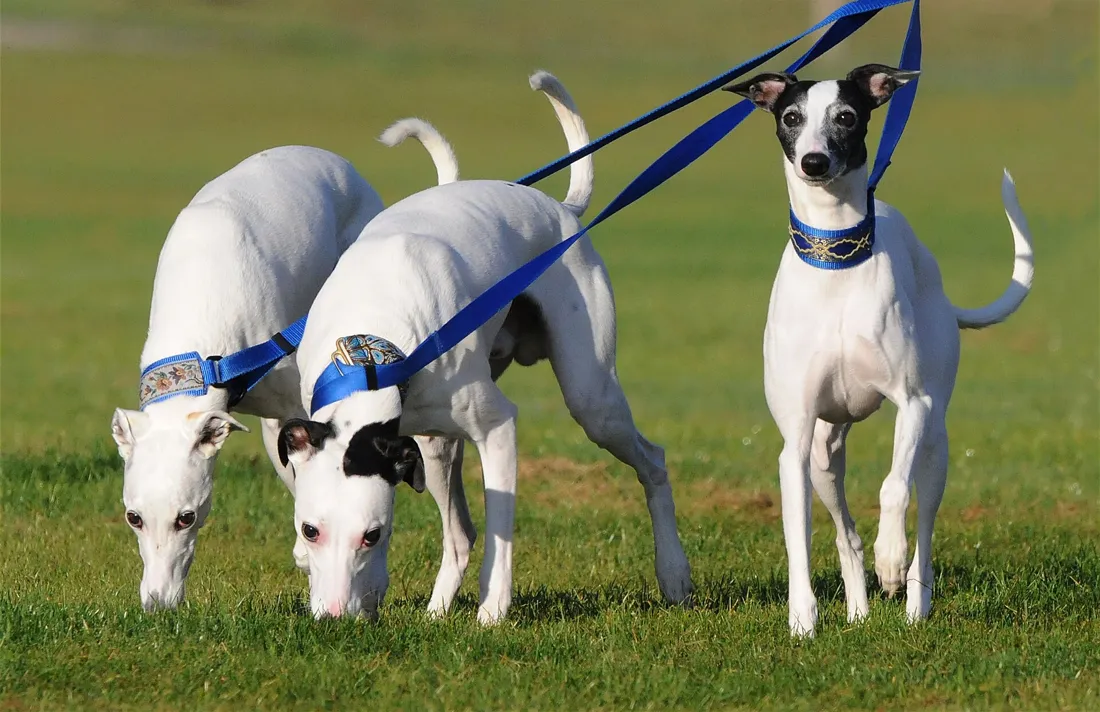


Photos show different individual dogs from licensed libraries, not one dog growing up. Stage labels are approximate, the way a careful editor would judge them.
About the Whippet
From United Kingdom, the Whippet is a medium sized sighthound whose traditional work was to course game by sight at full speed, from hares to gazelles depending on the homeland. Gentle, quiet and undemanding indoors, explosive outdoors. Sighthounds suit calm households and owners who understand the off switch is built in.
History
Sighthounds are the oldest recognizable dog type, coursing game in the deserts and steppes of the ancient world long before written breed records. The AKC recognizes the breed today, and its standard is the reference most US breeders work to. It is also known as the Snap dog (archaic).
Personality
Calm, sensitive, dignified and catlike indoors is the Whippet in its own home, and a 40 mile an hour hunter the moment a field opens. The split personality is the breed's charm: Whippets were bred to course game by sight at full speed and then to live quietly in working class homes, and both halves are fully present. They are gentle, undemanding companions that bond closely, follow sunbeams and soft furniture around the house and ask mainly for a sprint, a warm bed and their people nearby. Puppies are delicate and enchanting; adults are serene. Owners describe the easiest dog they have ever lived with, attached to the fastest animal they have ever seen.
Temperament and traits
Energy (3/5)
Trainability (2/5)
Grooming needs (3/5)
Shedding (4/5)
Barking (2/5)
Good with children: Good with children
With other dogs: Usually good with dogs
With strangers: Reserved with strangers
Apartment life: With enough exercise
Coat and care
Coat: Fine, dense, short.
Colors: The standard accepts a range of colors and patterns, and individual markings vary a lot.
Measure meals rather than free feeding; this breed does best on a routine of consistent meals, training in short sessions and daily exercise matched to its type. Weekly brushing keeps the coat healthy, with extra work when the undercoat sheds in spring and autumn. Thin skin and low body fat mean coats in cold weather, soft bedding for bony joints, and care with anaesthetics, which sighthound bodies handle differently.
Exercise and grooming
Exercise
Forty five to ninety minutes a day captures the Whippet rhythm: one or two proper outings with a real sprint in a secure area, then hours of Olympic level resting. Whippets were bred to course game at full speed, and the burst is the point; a dog denied any chance to run becomes restless, while one good gallop satisfies for the day. Between sprints they are among the lowest energy house dogs alive. Puppies need protected exercise while growing, and thin skin means cuts and scrapes from rough ground are routine. Cold and wet weather genuinely bother this thin coated, low fat breed, so a fitted coat in winter is equipment, not costume, and many Whippets vote against rain entirely.
Grooming
The fine, short coat is among the easiest in dogs: a weekly brush with a soft brush or mitt keeps it clean and gleaming, shedding is modest, and baths are rare because Whippets are naturally clean and low odour dogs. The breed specific care is skin and warmth: thin skin tears more easily than in coated breeds, so check for nicks after runs and keep small first aid supplies at home. Nails grow fast relative to wear on a dog that rests this much, teeth need regular brushing, ears take a weekly check and winter demands a coat and warm bedding, because bony joints on hard floors develop sores. That is the whole list, and it is a short one.
Training and daily life
Training
Whippets are sensitive, intelligent and biddable within the limits of a dog bred to think at speed. They learn quickly with quiet, reward based training and shut down under harsh voices or force, so keep sessions short, soft and successful. Priorities are a recall proofed as honestly as a sighthound's can be, with sprinting reserved for secure areas, lead manners, and a settle that the breed mostly supplies itself. Socialisation in puppyhood is what keeps the natural reserve as dignity rather than shyness. Housetraining follows the standard routine. A trained Whippet is a polished, gentle companion whose obedience work can be surprisingly precise when the handler is kind.
Living with a Whippet
Whippets are the great compromise of the dog world: a proper sized, athletic dog outdoors and a catlike, silent, cushion shaped companion indoors. They are good with children who are gentle, usually good with other dogs, especially sighthounds, and reserved but polite with strangers. Flats suit them beautifully once the daily sprint is arranged, because indoor Whippets are quiet, clean and practically furniture. Other small animals and cats outdoors are at risk from the chase instinct, while household cats are usually accepted. Thin skin, cold sensitivity and a need for soft bedding are the practical notes. Calm households get one of the easiest, sweetest dogs in existence.
What a Whippet costs
Food cost
About $23 per month for a typical 32 lb adult eating roughly 2.2 cups a day of a standard quality food ($1.60 per lb). Full breakdown in our food expense calculator.
Activity and exercise
Plan 45 to 90 minutes a day of walks, play and training. Under exercised dogs of most breeds invent their own projects, and they rarely pick good ones.
Insurance cost
Typical US range $34 to $61 per month for accident and illness cover. Estimate only, based on market ranges for this breed's risk profile; see the insurance estimator and the insurance guide.
On the monthly figures above, a typical adult year runs to about $281 for food and $408 to $732 for insurance, before routine vet care, grooming and gear. Year one costs more: vaccinations, spay or neuter surgery, a crate, bedding and training all land at once.
Growth: puppy to senior
How weight typically builds with age for a medium breed, and when full size arrives.
| Stage | Age | Typical weight |
|---|---|---|
| Puppy | 8 weeks | about 4 to 6 lb |
| Puppy | 4 months | about 8 to 13 lb |
| Young | 6 months | about 13 to 21 lb |
| Young | 9 months | about 18 to 30 lb |
| Adult | 12 months | about 22 to 35 lb |
| Adult | 18 months | about 25 to 40 lb |
| Adult | Full grown | 25 to 40 lb (standard range) |
| Senior | From about 8 years | Healthy weight stays in the adult range; watch for slow gain or loss |
Growth pattern follows the size class growth curves published by the Waltham Petcare Science Institute, applied to the adult weight range in the breed standard. Individual puppies vary; steady growth matters more than hitting any single number, and your vet's growth checks come first.
Life stages
Puppies are fine boned and delicate: feed measured meals, protect them from rough play and cold, and socialise gently and widely, because sensitivity grows into shyness without input. Housetraining and sprint manners build gradually. Adults settle early into the breed's famous rhythm of sprint and sleep, and the standing jobs are weight kept lean enough to see the outline of the last ribs, skin checks after runs and teeth. With twelve to fifteen years typical, seniors arrive around ten: keep daily walks and the occasional joyful gallop while the dog is keen, add joint friendly routines, warm bedding and twice yearly vet checks. Old Whippets are serene, affectionate and still first to the sofa's warmest spot.
Health
One of the healthiest breeds overall. Eye checks and heart screening are the standard tests, and the thin skin tears more easily than in coated breeds, so minor cuts are a routine part of ownership.
Conditions to know about
- Eye conditions: Eye checks are part of the breed's standard testing, as inherited eye problems occur in sighthounds generally. Ask breeders for eye results and report vision changes promptly.
- Heart conditions: Heart screening is the other standard test for Whippets, because valve disease appears in older dogs of the breed. New murmurs in middle aged Whippets deserve follow up and monitoring.
- Thin skin injuries: The breed's care notes flag it plainly: thin skin tears more easily than in coated breeds, so minor cuts are a routine part of ownership. Keep a first aid kit, clean wounds promptly and vet any deep tear the same day.
- Anaesthetic sensitivity: Sighthound bodies handle some anaesthetics differently, as the breed's care notes warn, and low body fat changes drug dosing. Modern anaesthesia is safe in informed hands, so make sure your vet knows the breed's specifics before any procedure.
Facts follow the Whippet breed standard (AKC, The Kennel Club and FCI standards agree on the essentials for this breed). Health notes summarize the conditions breed clubs and veterinary bodies most often flag for this breed. They are general information for choosing and caring, not a diagnosis or a substitute for your vet.
Gear for Whippet owners
Our team is hands on testing products for this guide right now. Recommendations will only appear here after real testing, and this module will always carry a plain affiliate disclosure at the top.
Whippet questions
How long do Whippets live?
A typical lifespan is 12 to 15 years. Weight control, dental care and screening for the breed's known conditions give a dog the best chance of reaching the top of that range.
How much does it cost to keep a Whippet?
Food for a typical adult runs about $23 a month at a standard quality tier, and accident and illness insurance usually falls between $34 and $61 a month in the US. Try the full cost calculator for a complete year one and yearly picture.
Are Whippets good with children?
Good with children. As with every breed, supervise dogs and children together and teach children to respect the dog's space.
How much exercise does a Whippet need?
Plan on 45 to 90 minutes a day, split between walks, play and training games. Puppies and seniors need gentler, shorter sessions.
Why does my Whippet shiver?
Usually cold, sometimes excitement or nerves. A dog with almost no body fat and a fine coat feels temperature changes keenly. A coat for cold walks and a warm bed solve the physical side; persistent shivering with other symptoms deserves a vet.
Can Whippets be trusted off the lead?
In secure areas, yes; near roads or livestock, caution forever. A Whippet's chase is triggered by sight and reaches forty miles an hour before judgement gets a vote. Choose sprint locations with the care the breed's speed deserves.
Are Whippets good apartment dogs?
They are among the best large-ish breeds for flats: quiet, clean, low odour and professional resters indoors, provided the daily sprint happens somewhere safe.