Weimaraner
Bright, cooperative, outdoorsy and loyal. From Holy Roman Empire.
Sportinglarge breedHoly Roman EmpireStandards checked
Standards checked: this profile's facts are checked against the breed standards of the AKC, The Kennel Club and the FCI, as described on our methodology page.
Gallery
Real photos from licensed sources only, each credited to its creator.


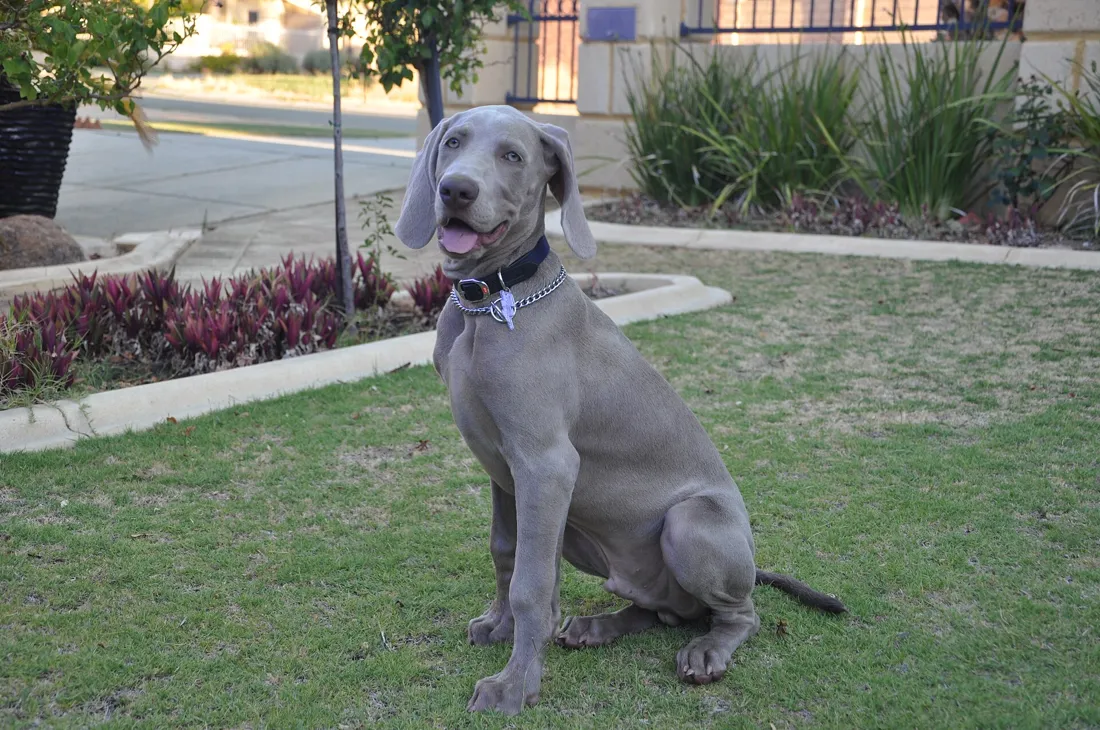



Photos show different individual dogs from licensed libraries, not one dog growing up. Stage labels are approximate, the way a careful editor would judge them.
About the Weimaraner
Holy Roman Empire produced the Weimaraner, a large gundog breed bred to work with hunters in the field, finding, flushing and retrieving game. Bred to work all day beside people, this breed is miserable without exercise and company, and delightful with both.
History
Weimaraner (Holy Roman Empire) is a large gundog breed whose work was to work with hunters in the field, finding, flushing and retrieving game. Today the breed sits in the AKC lists, and American breeders work to its published standard. It is described as bright, cooperative, outdoorsy and loyal. The adult stands 23 to 27 in at the shoulder and weighs 55 to 90 lb.
Personality
Bright, cooperative, outdoorsy and loyal, with an intensity dial set high. The Weimaraner was a nobleman's all purpose gundog, hunting everything from birds to boar beside its owner, and it still behaves like a professional partner: energetic, intelligent, demanding and utterly devoted. They are velcro dogs in silver: following room to room, sleeping against you, monitoring your plans. Puppies are exuberant, mouthy and busy; adults settle into athletic dignity provided the work is real. The breed thinks, problem solves and occasionally argues, which owners find either delightful or exhausting, sometimes before breakfast. No breed rewards an active partnership more completely.
Temperament and traits
Energy (5/5)
Trainability (4/5)
Grooming needs (3/5)
Shedding (3/5)
Barking (3/5)
Good with children: Good with children
With other dogs: Good with dogs
With strangers: Friendly with strangers
Apartment life: Not ideal
Coat and care
Coat: Short, smooth, sleek coat in silver grey, lying flat and feeling dense to the hand. It sheds modestly and needs minimal grooming beyond a weekly brush.
Colors: The standard accepts a range of colors and patterns, and individual markings vary a lot.
Feed to a visible waist tuck and weigh monthly; this breed does best on a routine of consistent meals, training in short sessions and daily exercise matched to its type. Brush weekly and check ears, teeth and nails as part of the routine. Ears, feet and coat all take a beating in the field season; build post walk checks into the routine.
Exercise and grooming
Exercise
Sixty to ninety minutes a day is the baseline the record sets, and serious Weimaraners take that as an opening offer: running, biking, hiking, swimming and field work all suit a dog bred to hunt all day. Mental work is not optional: tracking, retrieving and scent games use the brain that otherwise organises household mischief. The field care rule from the breed's notes applies after every outing: ears, feet and coat take a beating in the field season, so post walk checks are part of the routine. Puppies need joint protection and built up distances. Owners consistently report the same bargain: pay in full and the Weimaraner is the most loyal, delightful shadow imaginable; short change it and the house pays instead.
Grooming
Care is blessedly simple for so intense a dog: brush weekly and check ears, teeth and nails as part of the routine, exactly as the breed's care notes set out. The short, sleek coat sheds moderately and washes fast; the grooming hours saved go straight into the exercise budget. Ears deserve the weekly check and a clean after wet work, because floppy ears over canals trap moisture, and field outings need the post walk check of feet for cuts and thorns. Add nail trims, which heavy exercise helps but does not replace, and tooth brushing a few times a week.
Training and daily life
Training
Weimaraners are bright, cooperative pupils for handlers who exercise them first and stay consistent: a tired Weimaraner concentrates beautifully and an unexercised one attends to everything except you. The priorities are recall, proofed in stages against game; steadiness; lead manners before the power arrives; a proper settle; and alone time built from puppyhood so attachment does not curdle into distress. The breed excels at gundog work, tracking, agility and obedience. Harsh methods fracture trust with a dog this sensitive; structure, fairness and real work build the legendary grey ghost partnership.
Living with a Weimaraner
The Weimaraner suits experienced, highly active households with land, secure fencing and lives built around outdoor work or sport. They are good with children, good with other dogs and friendly with strangers, which makes them poor guards and excellent family adventure partners. Apartments are not ideal, in the record's own rating, because size, energy and voice all push the other way. The famous trait is attachment: Weimaraners follow their people from room to room and suffer when excluded or left long hours. Owners who exercise, train and include this dog get a devoted, funny, athletic companion of rare intensity and beauty.
What a Weimaraner costs
Food cost
About $43 per month for a typical 72 lb adult eating roughly 4.0 cups a day of a standard quality food ($1.60 per lb). Full breakdown in our food expense calculator.
Activity and exercise
Plan 60 to 90 minutes a day of walks, play and training. Under exercised dogs of most breeds invent their own projects, and they rarely pick good ones.
Insurance cost
Typical US range $42 to $77 per month for accident and illness cover. Estimate only, based on market ranges for this breed's risk profile; see the insurance estimator and the insurance guide.
On the monthly figures above, a typical adult year runs to about $517 for food and $504 to $924 for insurance, before routine vet care, grooming and gear. Year one costs more: vaccinations, spay or neuter surgery, a crate, bedding and training all land at once.
Growth: puppy to senior
How weight typically builds with age for a large breed, and when full size arrives.
| Stage | Age | Typical weight |
|---|---|---|
| Puppy | 8 weeks | about 7 to 11 lb |
| Puppy | 4 months | about 15 to 25 lb |
| Puppy | 6 months | about 26 to 43 lb |
| Young | 9 months | about 37 to 61 lb |
| Young | 12 months | about 45 to 74 lb |
| Adult | 18 months | about 52 to 86 lb |
| Adult | 24 months | about 55 to 90 lb |
| Adult | Full grown | 55 to 90 lb (standard range) |
| Senior | From about 7 years | Healthy weight stays in the adult range; watch for slow gain or loss |
Growth pattern follows the size class growth curves published by the Waltham Petcare Science Institute, applied to the adult weight range in the breed standard. Individual puppies vary; steady growth matters more than hitting any single number, and your vet's growth checks come first.
Life stages
Puppies need socialisation, lead and recall foundations early, and protected joints while a big frame grows. Adolescents hit maximum energy and cleverness together, and sport plus training carry the household through. Adults enjoy an athletic prime: keep the miles real, the weight lean and field checks routine. Ten to thirteen years gives senior status around eight to nine: twice yearly checks, joint friendly exercise that keeps the dog in the countryside in kinder form and continued inclusion in everything. Old Weimaraners stay attached, watchful and unbothered by the idea of retirement.
Health
Bloat is the emergency risk in this deep chested breed. Hip screening and eye checks are standard, and a spinal condition (spinal dysraphism) appears in some lines. Ask to see health test results for both parents before you commit to a puppy; a good breeder will offer them before you ask.
Conditions to know about
- Bloat (gastric dilatation volvulus): The emergency risk in this deep chested breed, stated plainly in the record. Learn the signs, restlessness, drooling, retching without vomit and a swelling belly, and treat them as a race to the vet. Some owners elect preventative stomach tacking surgery.
- Hip dysplasia: Hip screening is standard in the breed. Ask for both parents' scores in writing, and protect a growing athlete's hips with lean weight and gradual conditioning.
- Eye conditions: Eye checks are standard alongside hips. Ask for current certificates, and mention any vision change promptly, especially in a dog expected to mark game.
- Spinal dysraphism: A spinal cord malformation that appears in some lines, per the breed's record, causing a distinctive bunny hopping gait in puppies. Knowing the status of the breeding lines matters, so ask breeders directly about it.
Facts follow the Weimaraner breed standard (AKC, The Kennel Club and FCI standards agree on the essentials for this breed). Health notes summarize the conditions breed clubs and veterinary bodies most often flag for this breed. They are general information for choosing and caring, not a diagnosis or a substitute for your vet.
Gear for Weimaraner owners
Our team is hands on testing products for this guide right now. Recommendations will only appear here after real testing, and this module will always carry a plain affiliate disclosure at the top.
Weimaraner questions
How long do Weimaraners live?
A typical lifespan is 10 to 13 years. Weight control, dental care and screening for the breed's known conditions give a dog the best chance of reaching the top of that range.
How much does it cost to keep a Weimaraner?
Food for a typical adult runs about $43 a month at a standard quality tier, and accident and illness insurance usually falls between $42 and $77 a month in the US. Try the full cost calculator for a complete year one and yearly picture.
Are Weimaraners good with children?
Good with children. As with every breed, supervise dogs and children together and teach children to respect the dog's space.
How much exercise does a Weimaraner need?
Plan on 60 to 90 minutes a day, split between walks, play and training games. Puppies and seniors need gentler, shorter sessions.
Why is the Weimaraner called the grey ghost?
For its sleek silver grey coat and its habit of moving quietly and appearing silently at your side. The ghost part doubles as a description of the breed's devotion: a Weimaraner is rarely in a different room from its person.
Do Weimaraners suffer separation anxiety?
The breed is famously people attached, and boredom or long alone time can tip into real distress. Build alone time tolerance from puppyhood, exercise first, and be honest about your schedule before choosing this breed.
Weimaraner or German Shorthaired Pointer?
Close cousins in purpose: the Weimaraner is bigger, more intense and more people glued; the Pointer is a touch more independent and field focused. Both demand serious daily exercise and training.
Breeds similar to the Weimaraner Compare this breed with another