Home / Breeds / Small Münsterländer
Small Münsterländer
Bright, cooperative, outdoorsy and loyal. From Germany.
Sportingmedium breedGermanyStandards checked
Standards checked: this profile's facts are checked against the breed standards of the AKC, The Kennel Club and the FCI, as described on our methodology page.
Gallery
Real photos from licensed sources only, each credited to its creator.


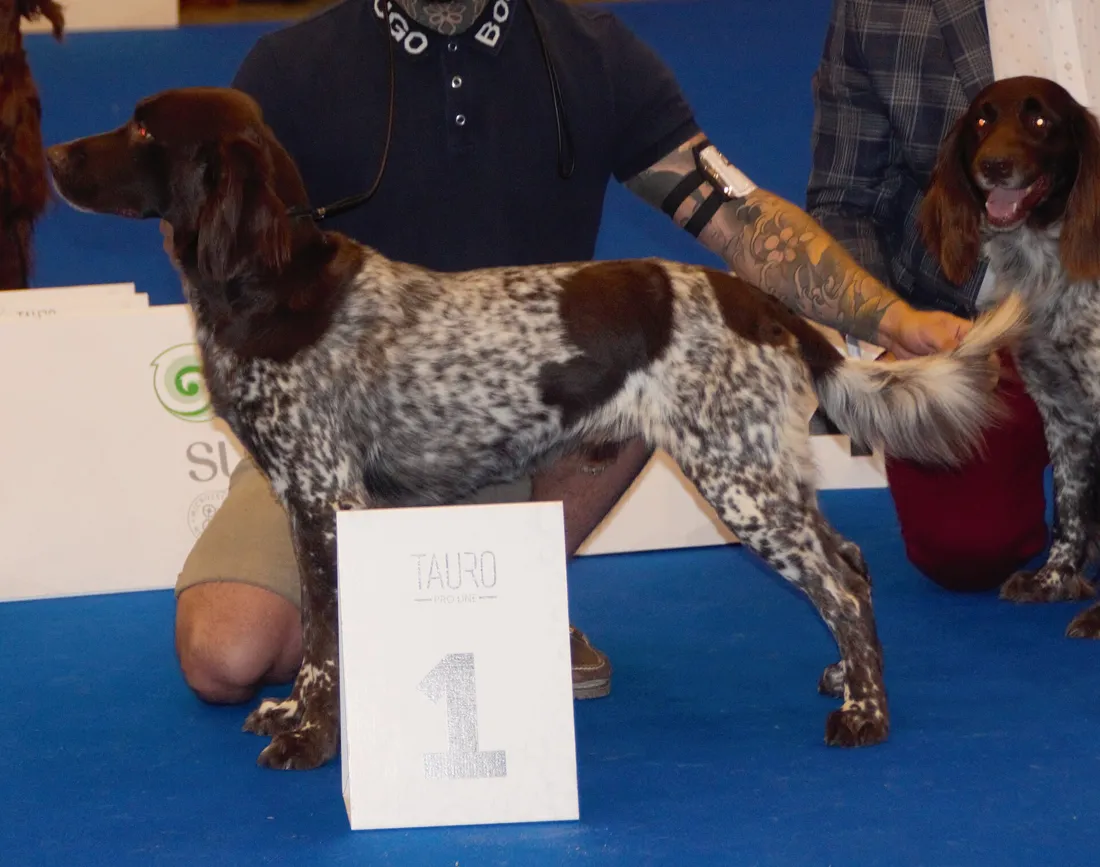

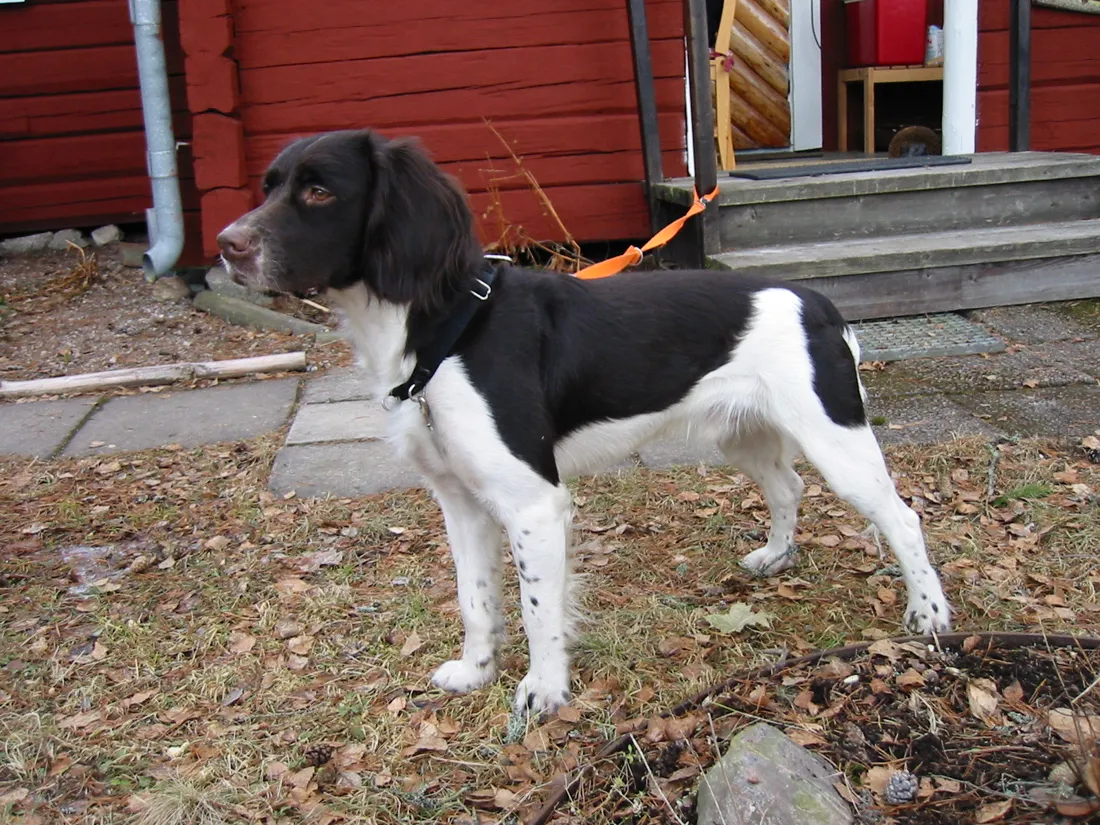

Photos show different individual dogs from licensed libraries, not one dog growing up. Stage labels are approximate, the way a careful editor would judge them.
About the Small Münsterländer
Germany produced the Small Münsterländer, a medium sized gundog breed bred to work with hunters in the field, finding, flushing and retrieving game. Bred to work all day beside people, this breed is miserable without exercise and company, and delightful with both.
History
Among Sporting breeds, the Small Münsterländer is the entry from Germany: a medium sized gundog breed kept to work with hunters in the field, finding, flushing and retrieving game. Today the breed sits in the AKC lists, and American breeders work to its published standard. Dense, medium length coat, straight or slightly wavy and glossy, with feathering on the ears, legs and tail.
Personality
Bright, cooperative, outdoorsy and loyal is the record's Small Munsterlander, the Kleiner Munsterlander: the versatile gundog of the Munsterland in Westphalia, kept for centuries by small farmers and revived as a breed in the early twentieth century (the revival is associated with Edmund Lons), hunting feather, fur and water with equal brilliance. Small Munsterlanders are intelligent, joyful and deeply devoted, among the most versatile of all HPR breeds. Puppies are bright, merry charmers; adults are devoted, capable companions. Owners describe the complete little gundog: every skill in the versatile repertoire, in a brown and white dog of medium size and maximum heart.
Temperament and traits
Energy (5/5)
Trainability (4/5)
Grooming needs (3/5)
Shedding (3/5)
Barking (3/5)
Good with children: Good with children
With other dogs: Good with dogs
With strangers: Friendly with strangers
Apartment life: Not ideal
Coat and care
Coat: Dense, medium length coat, straight or slightly wavy and glossy, with feathering on the ears, legs and tail. It sheds moderately and needs brushing a few times a week.
Colors: The standard accepts a range of colors and patterns, and individual markings vary a lot.
Measure meals rather than free feeding; this breed does best on a routine of consistent meals, training in short sessions and daily exercise matched to its type. Brush weekly and check ears, teeth and nails as part of the routine. Ears, feet and coat all take a beating in the field season; build post walk checks into the routine.
Exercise and grooming
Exercise
Sixty to ninety minutes a day of full gundog exercise: the Small Munsterlander, the Kleiner Munsterlander, is Westphalia's versatile little HPR, the smallholder's dog of the Munsterland that points, retrieves from land and water, tracks and hunts everything from birds to fox. It needs the gundog athlete's programme: long walks, free running, swimming, training and scent work. Bred to work all day beside people, this breed is miserable without exercise and company, and delightful with both, per the overview. Puppies build up gradually. A worked Small Munsterlander is a bright, devoted house dog.
Grooming
Brush weekly and check ears, teeth and nails as part of the routine, per the care notes, working through the medium length brown and white coat so the feathering stays free. Ears, feet and coat all take a beating in the field season; build post walk checks into the routine, in the notes' exact instruction, and this swimming all rounder lives it. Measure meals rather than free feeding, per the notes. Puppies need ear care habituation from the start. Owners budget a genuine weekly session plus the post walk check.
Training and daily life
Training
With a strong train score and top energy, the Small Munsterlander is an excellent, willing pupil: intelligent, cooperative and eager, learning the full versatile repertoire (pointing, retrieving, tracking, water work) and household skills readily under kind, consistent, reward based training. Short, joyful sessions suit a sensitive, biddable dog. Priorities are socialisation, recall, steadiness, delivery to hand, and cooperative ear care. Owners describe one of the most rewarding training partnerships in the gundog group.
Living with a Small Münsterländer
The Small Munsterlander suits very active, devoted households, ideally with water and fields, that want the complete German versatile dog in the smaller size: bright, cooperative, outdoorsy and loyal in the record's summary, good with children, good with other dogs and friendly with strangers. It rates apartments as not ideal because exercise and company push outward: this breed is miserable without exercise and company, per the overview, and delightful with both. Owners describe a dog of unusual quality: the little Munsterlander that does every job in the field and annexes the household sofa after.
What a Small Münsterländer costs
Food cost
About $33 per month for a typical 50 lb adult eating roughly 3.1 cups a day of a standard quality food ($1.60 per lb). Full breakdown in our food expense calculator.
Activity and exercise
Plan 60 to 90 minutes a day of walks, play and training. Under exercised dogs of most breeds invent their own projects, and they rarely pick good ones.
Insurance cost
Typical US range $35 to $62 per month for accident and illness cover. Estimate only, based on market ranges for this breed's risk profile; see the insurance estimator and the insurance guide.
On the monthly figures above, a typical adult year runs to about $393 for food and $420 to $744 for insurance, before routine vet care, grooming and gear. Year one costs more: vaccinations, spay or neuter surgery, a crate, bedding and training all land at once.
Growth: puppy to senior
How weight typically builds with age for a medium breed, and when full size arrives.
| Stage | Age | Typical weight |
|---|---|---|
| Puppy | 8 weeks | about 6 to 8 lb |
| Puppy | 4 months | about 13 to 19 lb |
| Young | 6 months | about 21 to 31 lb |
| Young | 9 months | about 30 to 44 lb |
| Adult | 12 months | about 35 to 53 lb |
| Adult | 18 months | about 40 to 60 lb |
| Adult | Full grown | 40 to 60 lb (standard range) |
| Senior | From about 8 years | Healthy weight stays in the adult range; watch for slow gain or loss |
Growth pattern follows the size class growth curves published by the Waltham Petcare Science Institute, applied to the adult weight range in the breed standard. Individual puppies vary; steady growth matters more than hitting any single number, and your vet's growth checks come first.
Life stages
Puppies need socialisation, ear care habituation, gradual exercise building and gundog foundations in short games. Adolescents are bright, busy and water seeking, and structured training carries the household through. Adults enjoy a long, hardy prime: twelve to fourteen years. Keep ears checked after wet work, weight measured and the swimming regular. Senior status arrives around ten: twice yearly checks with hip, elbow and eye awareness, joint friendly exercise and continued gentle swims. Old Small Munsterlanders stay bright, cooperative and devoted.
Health
Hip and elbow scoring and annual eye checks are the backbone of gundog health testing, and most gundog breeds also have DNA tests for the conditions found in their lines. Ask the breeder for the full panel, not just a vet checked claim.
Conditions to know about
- Hip dysplasia: Hip scoring is the backbone of gundog health testing, per the record. Ask the breeder for the full panel, not just a vet checked claim, in the record's own standard. German versatile breeding associations run famously strict health and performance testing.
- Elbow dysplasia: Elbow scoring stands beside hips in the gundog backbone named in the record. Ask for both parents' grades in writing.
- Eye conditions: Annual eye checks are the third named pillar in the record. Ask for current certificates for both parents.
- DNA tested conditions: Most gundog breeds also have DNA tests for the conditions found in their lines, per the record. Ask which DNA tests apply to the line and see the results.
Facts follow the Small Münsterländer breed standard (AKC, The Kennel Club and FCI standards agree on the essentials for this breed). Health notes summarize the conditions breed clubs and veterinary bodies most often flag for this breed. They are general information for choosing and caring, not a diagnosis or a substitute for your vet.
Gear for Small Münsterländer owners
Our team is hands on testing products for this guide right now. Recommendations will only appear here after real testing, and this module will always carry a plain affiliate disclosure at the top.
Small Münsterländer questions
How long do Small Münsterländers live?
A typical lifespan is 12 to 14 years. Weight control, dental care and screening for the breed's known conditions give a dog the best chance of reaching the top of that range.
How much does it cost to keep a Small Münsterländer?
Food for a typical adult runs about $33 a month at a standard quality tier, and accident and illness insurance usually falls between $35 and $62 a month in the US. Try the full cost calculator for a complete year one and yearly picture.
Are Small Münsterländers good with children?
Good with children. As with every breed, supervise dogs and children together and teach children to respect the dog's space.
How much exercise does a Small Münsterländer need?
Plan on 60 to 90 minutes a day, split between walks, play and training games. Puppies and seniors need gentler, shorter sessions.
Small Munsterlander or Large Munsterlander, what is the difference?
Munster cousins that diverged on colour: the Small is the brown and white dog at 40 to 60 pounds. The Large is the black and white dog, considerably bigger. Both are versatile German HPR breeds of the same Munsterland origin.
Why is a 50 pound dog called small?
Because the Munsterland bred two sizes of versatile pointer, and this is the smaller one. Small is strictly relative; the Kleiner Munsterlander is a full sized, powerful gundog by any other measure.
Are Small Munsterlanders good family dogs?
Yes, for very active families: bright, cooperative and loyal in the record's words, famously attached to their people. Real gundog exercise and company are the conditions.
Breeds similar to the Small Münsterländer Compare this breed with another