Home / Breeds / Slovak Rough-haired Pointer
Slovak Rough-haired Pointer
Athletic, even tempered, alert and hardworking. From Slovakia.
Sportinglarge breedSlovakiaStandards checked
Standards checked: this profile's facts are checked against the breed standards of the AKC, The Kennel Club and the FCI, as described on our methodology page.
Gallery
Real photos from licensed sources only, each credited to its creator.
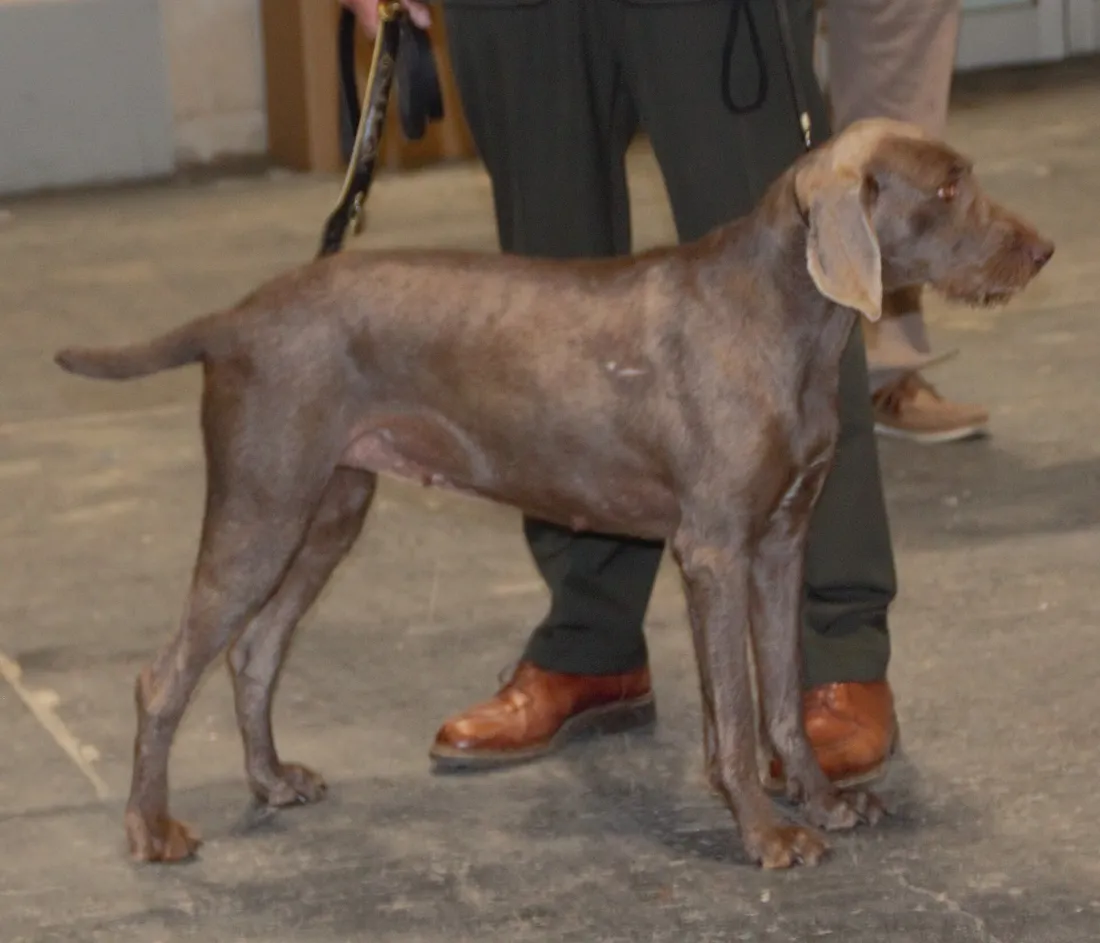


Photos show different individual dogs from licensed libraries, not one dog growing up. Stage labels are approximate, the way a careful editor would judge them.
About the Slovak Rough-haired Pointer
The Slovak Rough-haired Pointer is a large pointing gundog from Slovakia, developed to quarter open ground at speed, find game birds by scent and point them rock steady. This breed's engine is built for all day work. Owners who run, hike or train in field sports get a calm and loyal dog at home.
History
Pointing breeds were developed across Europe wherever sportsmen hunted birds over open ground, and each region kept its own stamp of the type. The AKC recognizes the breed today, and its standard is the reference most US breeders work to.
Personality
Athletic, even tempered, alert and hardworking is the record's Slovak Rough-haired Pointer, the Ohar: Slovakia's silver grey versatile gundog, developed after the Second World War by crossing Weimaraner with German Wirehaired Pointer and Cesky Fousek to make a harsh coated, cold and water proof hunter-pointer-retriever for the Slovak countryside. Ohars are intelligent, willing and deeply devoted, with the Weimaraner's elegance under a working wire coat. Puppies are bright, silver charmers; adults are athletic, loyal companions. Owners describe the complete Slovak gundog: three great breeds distilled into one deliberate, handsome worker.
Temperament and traits
Energy (5/5)
Trainability (4/5)
Grooming needs (3/5)
Shedding (3/5)
Barking (3/5)
Good with children: Good with children
With other dogs: Usually good with dogs
With strangers: Friendly with strangers
Apartment life: Not ideal
Coat and care
Coat: Harsh, wiry double coat of medium length with eyebrows and a moustache, over a dense undercoat, resistant to weather and water alike. It sheds lightly and needs occasional stripping.
Colors: The standard accepts a range of colors and patterns, and individual markings vary a lot.
Feed to a visible waist tuck and weigh monthly; this breed does best on a routine of consistent meals, training in short sessions and daily exercise matched to its type. Brush weekly and check ears, teeth and nails as part of the routine. The short coat is nearly wash and wear; the work is in the exercise column, not the grooming one. Check feet and pads after hard country days.
Exercise and grooming
Exercise
An hour is a floor and the record's range runs to two: the Slovak Rough-haired Pointer, the Slovensky Hrubosrsky Stavac (Ohar), is Slovakia's versatile wirehaired gundog, created in the mid twentieth century (the development is associated with Koloman Slimak) by crossing Weimaraner, German Wirehaired Pointer and Cesky Fousek into a silver grey, all purpose HPR dog for Slovak field, forest and water. It needs the pointing athlete's programme: long, free running exercise, training and scent work. This breed's engine is built for all day work, per the overview. Puppies build up gradually. A worked Ohar is a calm, loyal house dog.
Grooming
The record's care text calls the coat short and nearly wash and wear, which undersells this breed's defining feature: brush weekly and check ears, teeth and nails as part of the routine, per the care notes, working through the harsh, dense wire coat with its beard and eyebrows, combing it through weekly and hand tidying it seasonally so the weatherproof jacket keeps its texture. Check feet and pads after hard country days, per the notes. Feed to a visible waist tuck and weigh monthly. Puppies need grooming habituation from the start. Owners budget a genuine weekly session for the silver wire.
Training and daily life
Training
With a strong train score, the Slovak Rough-haired Pointer is an excellent, willing pupil: intelligent, biddable and versatile, learning field work (hunt, point, retrieve on land and water, plus tracking) and household skills readily under kind, consistent, reward based training. Short, clear sessions suit a methodical worker. Priorities are socialisation, recall, steadiness, delivery to hand, and cooperative grooming for the wire coat. Owners describe one of the most complete training partnerships among the continental pointers.
Living with a Slovak Rough-haired Pointer
The Slovak Rough-haired Pointer suits very active, experienced households, ideally hunting or field sports homes, that want Slovakia's silver HPR: athletic, even tempered, alert and hardworking in the record's summary, good with children, usually good with other dogs and friendly with strangers. It rates apartments as not ideal because exercise and brain push outward. Owners who run, hike or train in field sports get a calm and loyal dog at home, per the overview. Owners describe a dog of quality and versatility: the Ohar, built this century for Slovak forests and still a connoisseur's gundog.
What a Slovak Rough-haired Pointer costs
Food cost
About $39 per month for a typical 64 lb adult eating roughly 3.7 cups a day of a standard quality food ($1.60 per lb). Full breakdown in our food expense calculator.
Activity and exercise
Plan 60 to 120 minutes a day of walks, play and training. Under exercised dogs of most breeds invent their own projects, and they rarely pick good ones.
Insurance cost
Typical US range $40 to $72 per month for accident and illness cover. Estimate only, based on market ranges for this breed's risk profile; see the insurance estimator and the insurance guide.
On the monthly figures above, a typical adult year runs to about $473 for food and $480 to $864 for insurance, before routine vet care, grooming and gear. Year one costs more: vaccinations, spay or neuter surgery, a crate, bedding and training all land at once.
Growth: puppy to senior
How weight typically builds with age for a large breed, and when full size arrives.
| Stage | Age | Typical weight |
|---|---|---|
| Puppy | 8 weeks | about 6 to 9 lb |
| Puppy | 4 months | about 14 to 22 lb |
| Puppy | 6 months | about 24 to 37 lb |
| Young | 9 months | about 34 to 52 lb |
| Young | 12 months | about 41 to 63 lb |
| Adult | 18 months | about 48 to 73 lb |
| Adult | 24 months | about 50 to 77 lb |
| Adult | Full grown | 50 to 77 lb (standard range) |
| Senior | From about 7 years | Healthy weight stays in the adult range; watch for slow gain or loss |
Growth pattern follows the size class growth curves published by the Waltham Petcare Science Institute, applied to the adult weight range in the breed standard. Individual puppies vary; steady growth matters more than hitting any single number, and your vet's growth checks come first.
Life stages
Puppies need socialisation, grooming habituation, gradual exercise building and steadiness foundations from the first games. Adolescents are at maximum stamina and hunting drive, and structured field training carries the household through. Adults enjoy a long, sturdy prime: twelve to fourteen years. Keep the feet checked after hard days, weight at a worker's tuck and the field work real. Senior status arrives around ten: twice yearly checks with hip, elbow and eye awareness, joint friendly exercise and continued gentle field days. Old Ohars stay even tempered, devoted and keen.
Health
Hip and elbow scoring and annual eye checks are the backbone of gundog health testing, and most gundog breeds also have DNA tests for the conditions found in their lines. Ask the breeder for the full panel, not just a vet checked claim.
Conditions to know about
- Hip dysplasia: Hip scoring is the backbone of gundog health testing, per the record. Ask the breeder for the full panel, not just a vet checked claim, in the record's own standard.
- Elbow dysplasia: Elbow scoring stands beside hips in the gundog backbone named in the record. Ask for both parents' grades in writing.
- Eye conditions: Annual eye checks are the third named pillar in the record. Ask for current certificates for both parents.
- DNA tested conditions: Most gundog breeds also have DNA tests for the conditions found in their lines, per the record, and a breed built recently from three tested breeds inherits all three panels' relevance. Ask which apply.
Facts follow the Slovak Rough-haired Pointer breed standard (AKC, The Kennel Club and FCI standards agree on the essentials for this breed). Health notes summarize the conditions breed clubs and veterinary bodies most often flag for this breed. They are general information for choosing and caring, not a diagnosis or a substitute for your vet.
Gear for Slovak Rough-haired Pointer owners
Our team is hands on testing products for this guide right now. Recommendations will only appear here after real testing, and this module will always carry a plain affiliate disclosure at the top.
Slovak Rough-haired Pointer questions
How long do Slovak Rough-haired Pointers live?
A typical lifespan is 12 to 14 years. Weight control, dental care and screening for the breed's known conditions give a dog the best chance of reaching the top of that range.
How much does it cost to keep a Slovak Rough-haired Pointer?
Food for a typical adult runs about $39 a month at a standard quality tier, and accident and illness insurance usually falls between $40 and $72 a month in the US. Try the full cost calculator for a complete year one and yearly picture.
Are Slovak Rough-haired Pointers good with children?
Good with children. As with every breed, supervise dogs and children together and teach children to respect the dog's space.
How much exercise does a Slovak Rough-haired Pointer need?
Plan on 60 to 120 minutes a day, split between walks, play and training games. Puppies and seniors need gentler, shorter sessions.
Slovak Rough-haired Pointer or Weimaraner, what is the difference?
Parent and offspring: the Slovak dog was built partly from Weimaraner stock, keeping the silver grey colour, but wears the harsh wire coat of its German Wirehaired and Fousek crosses and works as the more versatile, cold proof HPR. The Weimaraner is the smooth, aristocratic original.
What does Ohar mean?
Ohar is the Slovak and Czech word for a pointing dog, the generic name for the versatile continental pointers of the region. The breed's Slovak name is Slovensky Hrubosrsky Stavac, with Ohar as its everyday short name.
Are Slovak Rough-haired Pointers good family dogs?
Yes, for very active families: athletic and even tempered in the record's words, notably loyal. Real field exercise is the condition.