Sheepadoodle
Cheerful, clever, affectionate and adaptable. From United States (Old English Sheepdog x Poodle).
Designer Crosslarge breedUnited States (Old English Sheepdog x Poodle)Standards checked
Standards checked: this profile's facts are checked against the breed standards of the AKC, The Kennel Club and the FCI, as described on our methodology page.
Gallery
Real photos from licensed sources only, each credited to its creator.
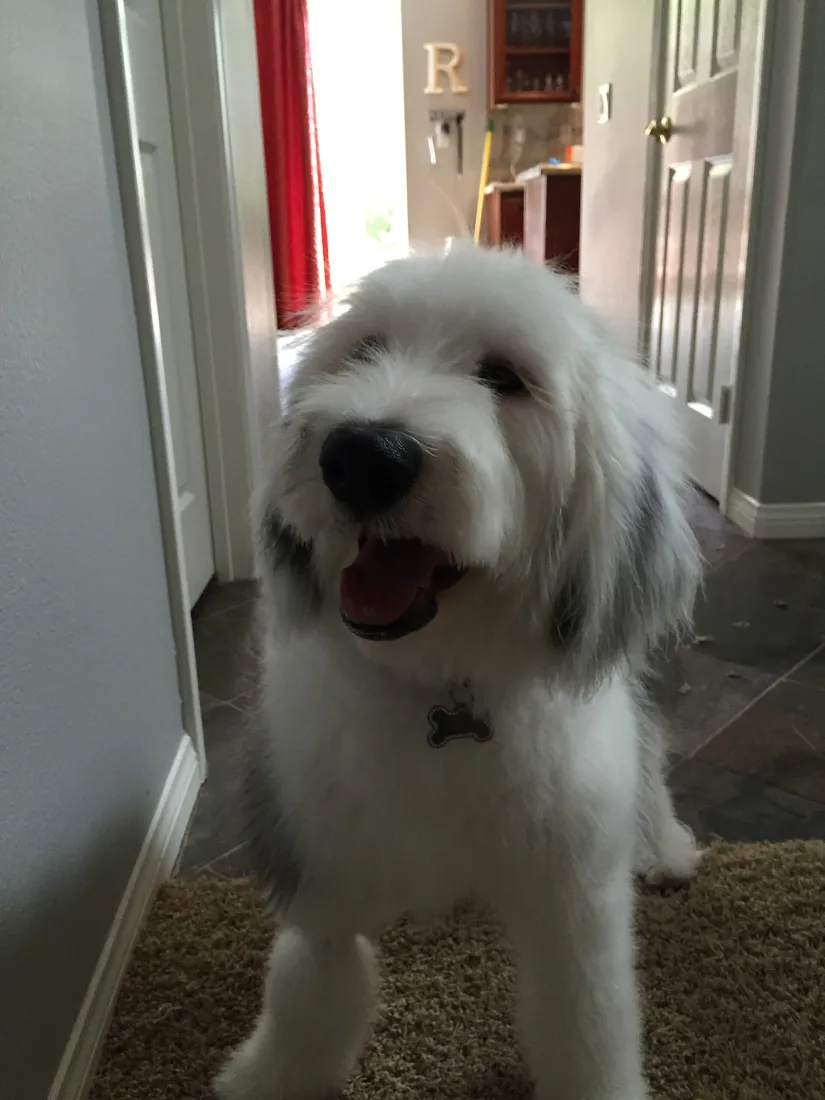


Photos show different individual dogs from licensed libraries, not one dog growing up. Stage labels are approximate, the way a careful editor would judge them.
About the Sheepadoodle
The Sheepadoodle crosses the Old English Sheepdog with the Poodle, aiming for a family dog with the best of both. Crosses vary more than purebreds: coat, size and energy can land anywhere between the parents, so choose the breeder and the parent dogs, not just the cross name.
History
This cross is a modern creation of the designer dog era rather than an old breed. It is not recognized by the major kennel clubs, and there is no single standard: the parent breeds are the best guide to any puppy.
Personality
Cheerful, clever, affectionate and adaptable is the Sheepadoodle in the record's words: a cross aiming to combine the Old English Sheepdog's clownish devotion with the Poodle's brains in a lighter shedding coat. Crosses vary more than purebreds, so individuals lean one way or the other, some full sheepdog goofball, others Poodle sharp. The centre of the cross is a big, sociable dog that wants to be in the middle of family life, herding the children gently, fetching the ball and supervising the kitchen. Puppies are boisterous bears; adults settle into funny, devoted companions with a puppyish streak that survives long into adulthood.
Temperament and traits
Energy (4/5)
Trainability (4/5)
Grooming needs (5/5)
Shedding (1/5)
Barking (3/5)
Good with children: Good with children
With other dogs: Good with dogs
With strangers: Friendly with strangers
Apartment life: With enough exercise
Coat and care
Coat: A wavy or curly coat that usually sheds lightly, inherited from the Poodle side of the family.
Colors: The standard accepts a range of colors and patterns, and individual markings vary a lot.
Feed to a visible waist tuck and weigh monthly; this breed does best on a routine of consistent meals, training in short sessions and daily exercise matched to its type. Brush several times a week right down to the skin and clip every six to eight weeks, or this coat mats fast. Coat care depends on which parent the coat takes after; most of these coats mat quickly and need brushing several times a week plus regular clipping.
Exercise and grooming
Exercise
Forty five to ninety minutes a day of active family exercise: brisk walks, play, swimming, hiking and training games. Both parent breeds are workers, the sheepdog from the hills and the Poodle from the water, so the cross carries real athleticism in a large frame and needs more than a stroll. Puppies build up gradually with protected joints while a big dog grows. The brain bill matters as much as the legs: herding and retrieving games, training and jobs prevent the clever dog boredom that redecorates houses. A Sheepadoodle whose programme is paid is the cheerful, affectionate companion the cross promises; the sofa sized version only exists after exercise.
Grooming
Brush several times a week right down to the skin and clip every six to eight weeks, or this coat mats fast, exactly as the care guidance says. The wavy to curly coat combines the Poodle's growth with the sheepdog's density, which makes mats in friction areas (ears, armpits, collar, tail base) a standing threat without comb through discipline. Professional grooms are the norm for a dog this size, so budget for them. Start table manners in puppyhood; a seventy pound dog that cooperates on the table is made, not born. Add ear checks under heavy hair, nail trims and tooth brushing, and keep the beard and eye area trimmed for comfort.
Training and daily life
Training
Sheepadoodles are bright, willing pupils from two of the most trainable breeds alive, and reward based training in varied sessions produces excellent manners quickly. The priorities are a settle that interrupts herding excitement, recall, lead manners before the size arrives, polite greetings without the bounce, and comfort with grooming, which is a lifetime appointment. Socialise widely so the friendliness matures into confidence. The cleverness cuts both ways: inconsistencies get found and exploited, so households present one rulebook. Many Sheepadoodles excel at agility, trick training and family sports, and the trained dog is the cross at its charming best.
Living with a Sheepadoodle
The Sheepadoodle suits active families with space for a large, cheerful dog and a groomer on speed dial. Cheerful, clever and affectionate, good with children, good with other dogs and friendly with visitors, the cross is socially easy; the demands are exercise, herding management in excitable moments and the serious grooming programme. Flats rate as possible in the record only with the full exercise genuinely delivered. Alone time needs training, because both parents bond hard. Expect a big, funny, shaggy shadow that joins everything. Choosing the breeder and the parent dogs matters more than the name, exactly as the overview advises for crosses.
What a Sheepadoodle costs
Food cost
About $39 per month for a typical 62 lb adult eating roughly 3.6 cups a day of a standard quality food ($1.60 per lb). Full breakdown in our food expense calculator.
Activity and exercise
Plan 45 to 90 minutes a day of walks, play and training. Under exercised dogs of most breeds invent their own projects, and they rarely pick good ones.
Insurance cost
Typical US range $40 to $73 per month for accident and illness cover. Estimate only, based on market ranges for this breed's risk profile; see the insurance estimator and the insurance guide.
On the monthly figures above, a typical adult year runs to about $462 for food and $480 to $876 for insurance, before routine vet care, grooming and gear. Year one costs more: vaccinations, spay or neuter surgery, a crate, bedding and training all land at once.
Growth: puppy to senior
How weight typically builds with age for a large breed, and when full size arrives.
| Stage | Age | Typical weight |
|---|---|---|
| Puppy | 8 weeks | about 5 to 10 lb |
| Puppy | 4 months | about 13 to 22 lb |
| Puppy | 6 months | about 22 to 38 lb |
| Young | 9 months | about 31 to 54 lb |
| Young | 12 months | about 37 to 66 lb |
| Adult | 18 months | about 43 to 76 lb |
| Adult | 24 months | about 45 to 80 lb |
| Adult | Full grown | 45 to 80 lb (standard range) |
| Senior | From about 7 years | Healthy weight stays in the adult range; watch for slow gain or loss |
Growth pattern follows the size class growth curves published by the Waltham Petcare Science Institute, applied to the adult weight range in the breed standard. Individual puppies vary; steady growth matters more than hitting any single number, and your vet's growth checks come first.
Life stages
Puppies need socialisation, grooming habituation from the first weeks and protected joints while a large frame grows. Adolescents are big, bouncy and clever, and sport plus structure carries the household through. Adults enjoy a long, cheerful prime: keep the coat worked through, weight lean and training refreshed. Twelve to fifteen years puts senior status around nine to ten: twice yearly checks with hip and eye awareness, joint friendly exercise and practical clips for comfort. Old Sheepadoodles stay affectionate, funny and family centred, trading the bounce for a distinguished shaggy serenity.
Health
A cross can inherit health conditions from either parent breed, so the right question is what both parents were tested for: hips, eyes and the DNA panels of both breeds as a minimum. A crossbreeder who cannot show certificates is one to walk away from.
Conditions to know about
- Conditions inherited from either parent: The cross's own guidance governs: a Sheepadoodle can inherit from the Old English Sheepdog or the Poodle, so both parents' tests are the question. A breeder who cannot show certificates is one to walk away from.
- Hip dysplasia: Both parent breeds are hip screened, the sheepdog substantially and the Poodle in its standard size, so hip results for both parents are a minimum requirement.
- Eye conditions: Both lines carry inherited eye risks, so eye examinations and DNA results for both parents complete the basic panel buyers should demand.
- Bloat (gastric dilatation volvulus): A deep chested, large cross carries the bloat risk of its big dog parents. Know the signs, feed calm measured meals and treat a restless, drooling dog with a tight belly as an emergency.
This is a designer cross, not a kennel club breed, so there is no official standard. Figures follow the parent breeds and reputable breeder consensus. Health notes summarize the conditions breed clubs and veterinary bodies most often flag for this breed. They are general information for choosing and caring, not a diagnosis or a substitute for your vet.
Gear for Sheepadoodle owners
Our team is hands on testing products for this guide right now. Recommendations will only appear here after real testing, and this module will always carry a plain affiliate disclosure at the top.
Sheepadoodle questions
How long do Sheepadoodles live?
A typical lifespan is 12 to 15 years. Weight control, dental care and screening for the breed's known conditions give a dog the best chance of reaching the top of that range.
How much does it cost to keep a Sheepadoodle?
Food for a typical adult runs about $39 a month at a standard quality tier, and accident and illness insurance usually falls between $40 and $73 a month in the US. Try the full cost calculator for a complete year one and yearly picture.
Are Sheepadoodles good with children?
Good with children. As with every breed, supervise dogs and children together and teach children to respect the dog's space.
How much exercise does a Sheepadoodle need?
Plan on 45 to 90 minutes a day, split between walks, play and training games. Puppies and seniors need gentler, shorter sessions.
How big will a Sheepadoodle get?
Honestly, a range: about 45 to 80 pounds on this page, set by the Poodle parent's size and the individual puppy. Crosses vary, and breeders promising exact weights are overpromising.
Do Sheepadoodles herd children?
The sheepdog parent contributes gathering instincts, so some Sheepadoodles try to round up children and other pets, especially when excited. Training a strong settle and interrupting the game early keeps it charming rather than chaotic.
Do Sheepadoodles shed?
Usually lightly, thanks to the Poodle, but lightly is not never, and the coat's real cost is grooming: brushing to the skin and clips every six to eight weeks for life.