Rottweiler
Loyal, confident, calm and protective. From Germany.
Workinglarge breedGermanyStandards checked
Standards checked: this profile's facts are checked against the breed standards of the AKC, The Kennel Club and the FCI, as described on our methodology page.
Gallery
Real photos from licensed sources only, each credited to its creator.
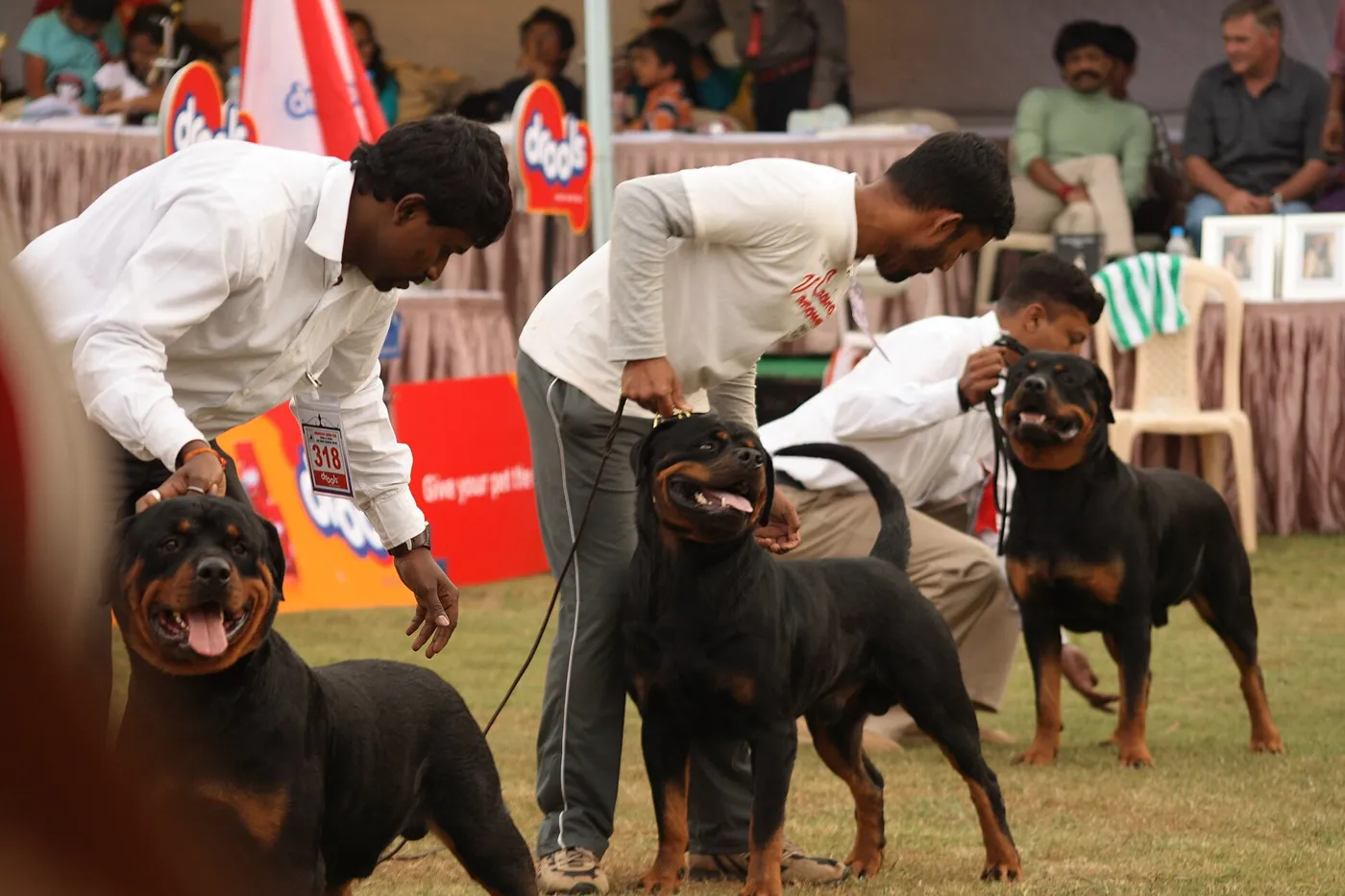



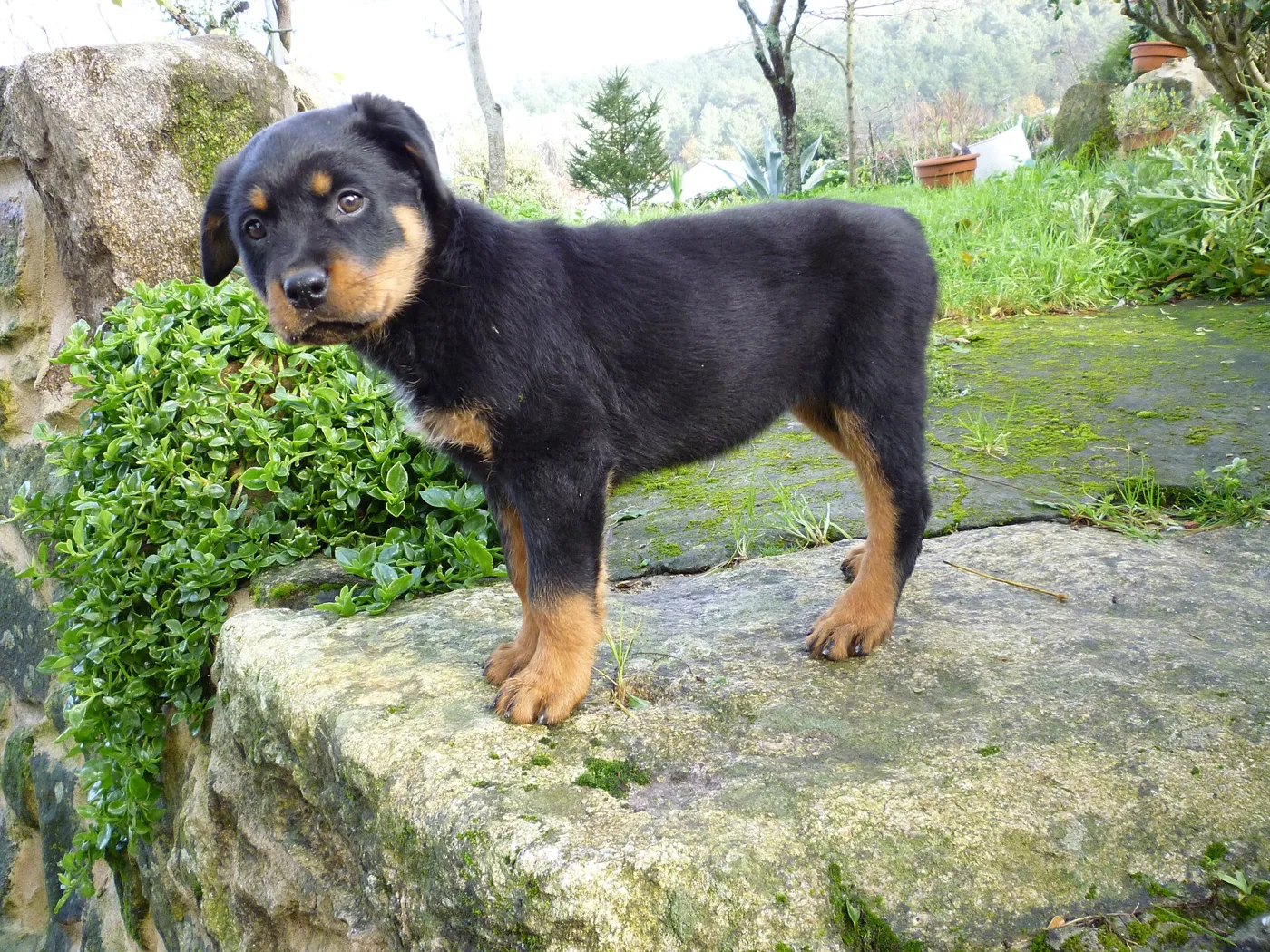

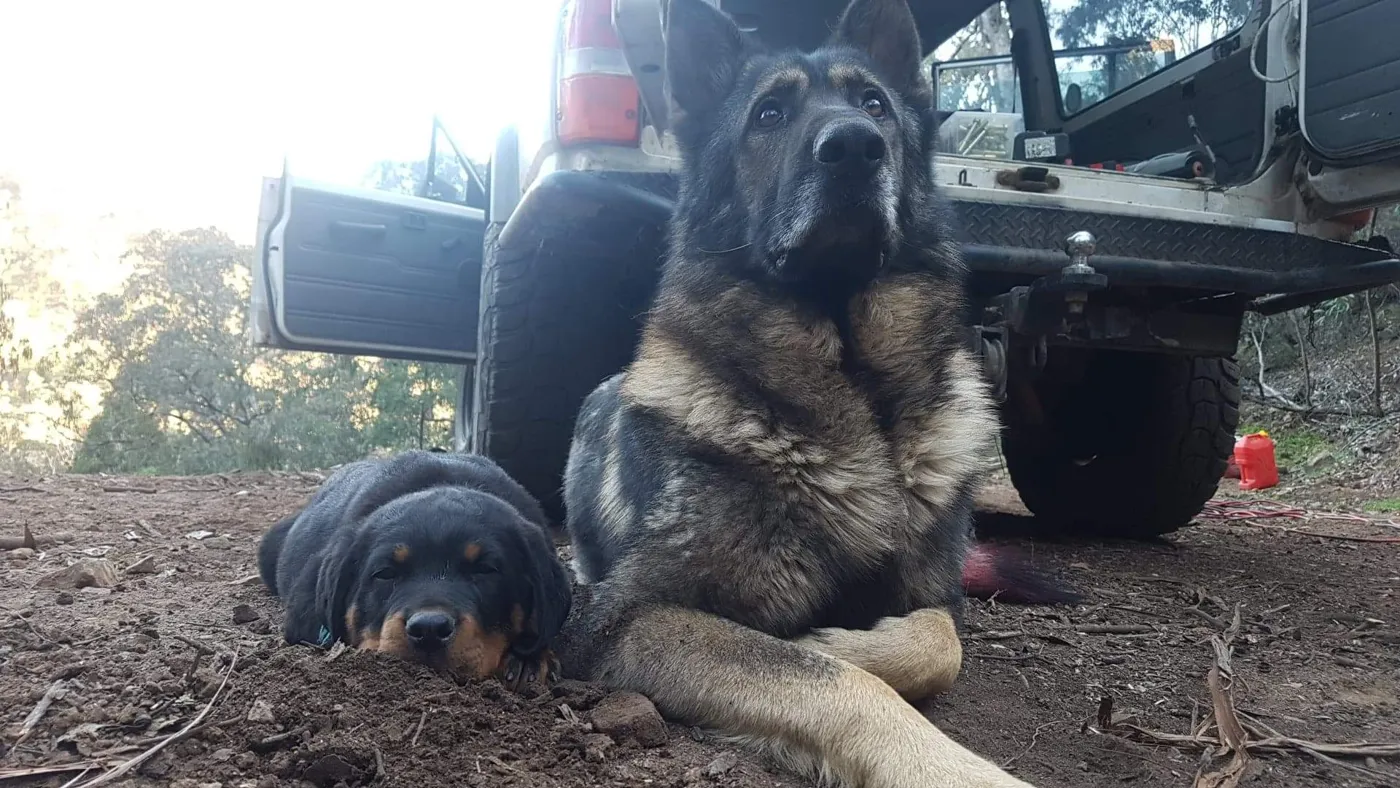

Photos show different individual dogs from licensed libraries, not one dog growing up. Stage labels are approximate, the way a careful editor would judge them.
About the Rottweiler
A well raised Rottweiler is a calm, confident and deeply loyal family guardian. The breed is strong, territorial and slow to trust strangers, so early socialization and steady training are not optional. In the right hands it is a steady, affectionate companion.
History
Rottweilers descend from drover dogs left by Roman legions in what is now southern Germany. Butchers in the town of Rottweil used them to drive cattle and pull carts, and to guard the day's takings on the trip home.
Personality
A well bred Rottweiler carries itself with a calm self assurance that owners find addictive. This is not a dog that craves the approval of strangers; its world is its family, and within that circle it is devoted, playful and often downright soppy. The guarding instinct is genuine and needs shaping, not encouraging: the good Rottweiler watches, assesses and takes its cue from its owner. Puppies are confident and mouthy; adolescents test boundaries with real strength behind the testing. The breed's intelligence is practical rather than flashy, and it learns the household's weak points quickly. Owners who provide steady leadership, socialisation and work describe a rock solid companion; owners who skip those get a large dog making its own decisions.
Temperament and traits
Energy (4/5)
Trainability (4/5)
Grooming needs (2/5)
Shedding (4/5)
Barking (3/5)
Good with children: Better with older children
With other dogs: With early socialization
With strangers: Wary of strangers
Apartment life: Not ideal
Coat and care
Coat: Short to medium double coat, straight and coarse on top.
Colors: Always black with rust to mahogany markings.
Brush weekly, more during the twice yearly shed. Keep the dog lean: extra weight worsens joint strain. Training should start the week the puppy comes home and continue through adolescence.
Exercise and grooming
Exercise
Plan on 60 to 90 minutes a day: purposeful walks, free exercise in secure areas, swimming if the dog enjoys it and training woven through the day. Rottweilers build strength easily and enjoy using it, so games with rules, tracking and carting style work all suit them. Young dogs need protection: growth plates in a breed this heavy stay open into the second year, so avoid repetitive jumping, forced running and endless stairs while the skeleton finishes. Heat deserves respect, as a heavy black coated dog working hard on a hot day is at real risk; exercise early and late in summer and keep sessions shorter.
Grooming
The short double coat is one of the breed's easier features: a weekly brush with a rubber grooming mitt or bristle brush removes loose hair and keeps the black coat glossy, stepping up to a few times a week during the spring and autumn sheds, which are heavier than the coat length suggests. Bath when muddy or smelly rather than to a schedule. Check ears weekly, keep nails short, because long nails on a 100 lb dog change how the whole skeleton stands, and brush teeth regularly. Drool happens after drinking and in anticipation of food; most owners keep a cloth handy and make peace with it.
Training and daily life
Training
Training a Rottweiler is straightforward in method and demanding in consistency. The breed is intelligent, food motivated and eager for a job, and it learns commands quickly; what it tests is whether the rules are the same today as yesterday and the same from every person in the house. The priorities are socialisation on a serious scale, so the natural wariness of strangers matures into calm judgement, lead manners installed before the strength arrives, and a settle that lets this powerful dog switch off indoors. Adolescents, especially males, push boundaries with real muscle behind the pushing, and owners who stay calm, fair and absolutely consistent come through it with the legendary adult dog. Guarding behaviour should never be encouraged as a game: the instinct is already there, and the owner's job is control and judgement, not volume.
Living with a Rottweiler
A Rottweiler suits a house with space, a secure garden and experienced owners; it is not ideal for flats or first time ownership in the usual run of things. Within the family the breed is devoted and often surprisingly gentle, and it does best with older children who can respect a powerful dog's boundaries. Visitors need managing at the door because the dog will make its own assessment otherwise. Many Rottweilers are selective with other dogs as adults. Local rules, landlords and insurers sometimes restrict the breed, which is worth checking before the puppy comes home. In the right home the breed gives back loyalty of a very special depth.
What a Rottweiler costs
Food cost
About $58 per month for a typical 108 lb adult eating roughly 5.5 cups a day of a standard quality food ($1.60 per lb). Full breakdown in our food expense calculator.
Activity and exercise
Plan 60 to 90 minutes a day of walks, play and training. Under exercised dogs of most breeds invent their own projects, and they rarely pick good ones.
Insurance cost
Typical US range $55 to $95 per month for accident and illness cover. Estimate only, based on market ranges for this breed's risk profile; see the insurance estimator and the insurance guide.
On the monthly figures above, a typical adult year runs to about $701 for food and $660 to $1,140 for insurance, before routine vet care, grooming and gear. Year one costs more: vaccinations, spay or neuter surgery, a crate, bedding and training all land at once.
Growth: puppy to senior
How weight typically builds with age for a large breed, and when full size arrives.
| Stage | Age | Typical weight |
|---|---|---|
| Puppy | 8 weeks | about 10 to 16 lb |
| Puppy | 4 months | about 22 to 38 lb |
| Puppy | 6 months | about 38 to 65 lb |
| Young | 9 months | about 54 to 92 lb |
| Young | 12 months | about 66 to 111 lb |
| Adult | 18 months | about 76 to 128 lb |
| Adult | 24 months | about 80 to 135 lb |
| Adult | Full grown | 80 to 135 lb (standard range) |
| Senior | From about 7 years | Healthy weight stays in the adult range; watch for slow gain or loss |
Growth pattern follows the size class growth curves published by the Waltham Petcare Science Institute, applied to the adult weight range in the breed standard. Individual puppies vary; steady growth matters more than hitting any single number, and your vet's growth checks come first.
Life stages
Puppyhood is dominated by two jobs: socialisation on an industrial scale, meeting people, dogs, places and handling while the window is open, and slow, lean growth, because fast weight gain damages heavy breed joints. Training started in the first week home pays off when the adolescent phase brings adult strength with a teenage brain. Adults are in their prime from two to about seven, and keeping them lean and muscled is the single best health investment. The nine to ten year lifespan means senior care starts around seven: watch for leg pain or swelling, keep up twice yearly checks, manage arthritis early and adjust exercise to shorter, more frequent outings.
Health
Hip and elbow dysplasia, osteosarcoma (bone cancer), heart defects and cruciate ligament tears are the main risks. Look for hip and elbow scores and heart screening from breeders.
Conditions to know about
- Hip dysplasia: A leading concern in the breed. Breeding dogs should be hip scored, and buyers should insist on seeing scores. Keeping puppies lean and avoiding overexercise while growing is the owner's share of prevention.
- Elbow dysplasia: Abnormal elbow development that causes front leg lameness and arthritis. Elbow scores should accompany hip scores in any breeding programme you buy from, and limping youngsters need prompt investigation.
- Osteosarcoma: An aggressive bone cancer to which large, fast growing breeds including the Rottweiler are predisposed. Persistent leg pain or swelling in a middle aged dog should always be X-rayed promptly rather than rested and watched.
- Heart disease: Subaortic stenosis, a narrowing at the heart's outlet, is the breed's known inherited defect. Breeders should have hearts examined, ideally by a cardiologist, and murmurs in puppies must be followed up.
- Cruciate ligament injury: The knee ligament tears more often in Rottweilers than in most breeds, especially in overweight dogs. Sudden hind leg lameness is the classic presentation, and surgery plus careful weight control is the usual route back.
Facts follow the Rottweiler breed standard (AKC, The Kennel Club and FCI standards agree on the essentials for this breed). Health notes summarize the conditions breed clubs and veterinary bodies most often flag for this breed. They are general information for choosing and caring, not a diagnosis or a substitute for your vet.
Gear for Rottweiler owners
Our team is hands on testing products for this guide right now. Recommendations will only appear here after real testing, and this module will always carry a plain affiliate disclosure at the top.
Rottweiler questions
How long do Rottweilers live?
A typical lifespan is 9 to 10 years. Weight control, dental care and screening for the breed's known conditions give a dog the best chance of reaching the top of that range.
How much does it cost to keep a Rottweiler?
Food for a typical adult runs about $58 a month at a standard quality tier, and accident and illness insurance usually falls between $55 and $95 a month in the US. Try the full cost calculator for a complete year one and yearly picture.
Are Rottweilers good with children?
Better with older children. As with every breed, supervise dogs and children together and teach children to respect the dog's space.
How much exercise does a Rottweiler need?
Plan on 60 to 90 minutes a day, split between walks, play and training games. Puppies and seniors need gentler, shorter sessions.
Are Rottweilers dangerous?
A well bred, well raised Rottweiler is calm, confident and deeply loyal, and the breed's poor reputation comes from irresponsible breeding and ownership. Their strength and guarding instinct mean socialisation and training are not optional extras, and they are not a breed for casual, first time ownership.
How much does a Rottweiler shed?
More than the short coat suggests. Expect year round shedding with two heavier seasonal blows. A weekly brush keeps it controlled, but this is not a breed for the house proud.
Can a Rottweiler live in a flat?
It is not ideal. Size, strength and exercise needs make a house with a secure garden the realistic home, and landlords and insurers in some areas also restrict the breed, which is worth checking before you commit.
Breeds similar to the Rottweiler Compare this breed with another