Home / Breeds / Pyrenean Mountain Dog
Pyrenean Mountain Dog
Independent, calm, watchful and deeply territorial. From France, Spain, Andorra.
Workinggiant breedFrance, Spain, AndorraStandards checked
Standards checked: this profile's facts are checked against the breed standards of the AKC, The Kennel Club and the FCI, as described on our methodology page.
Gallery
Real photos from licensed sources only, each credited to its creator.


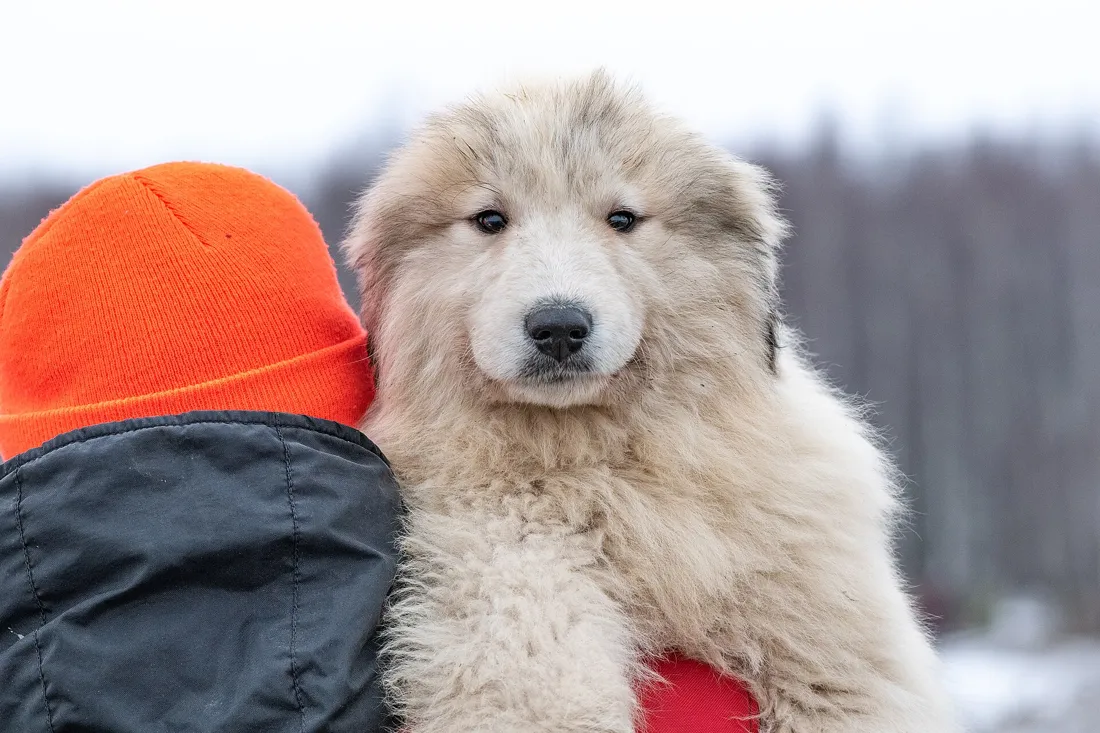

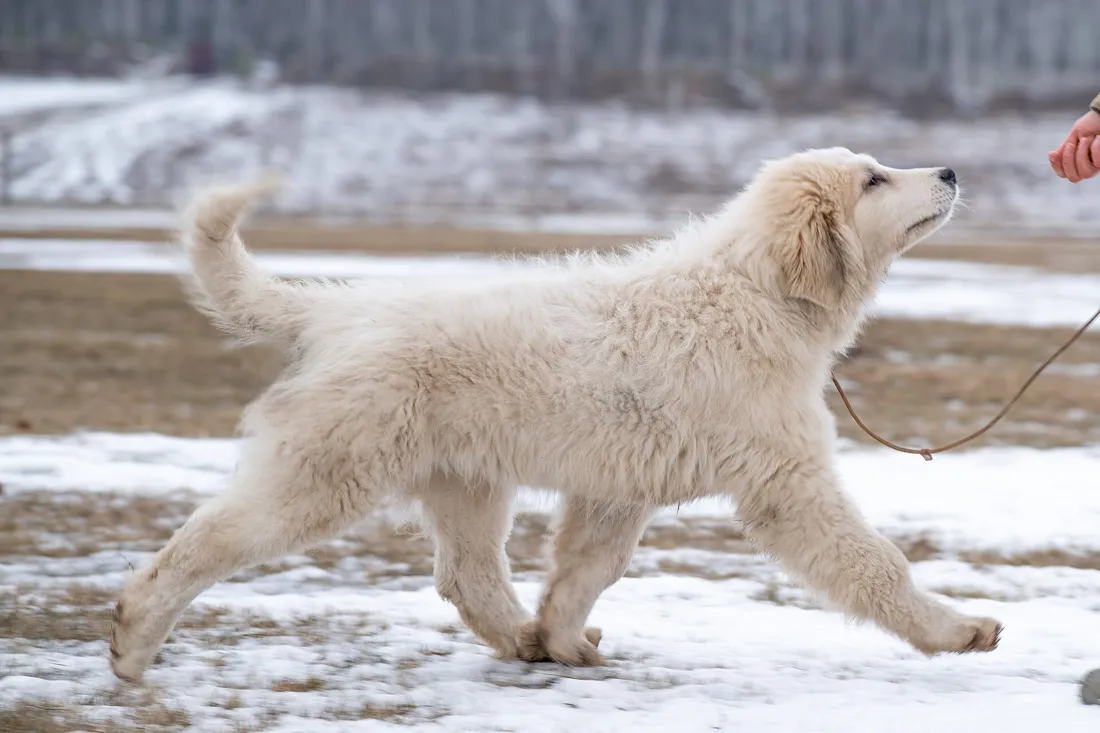

Photos show different individual dogs from licensed libraries, not one dog growing up. Stage labels are approximate, the way a careful editor would judge them.
About the Pyrenean Mountain Dog
The Pyrenean Mountain Dog is a giant livestock guardian from France, Spain, Andorra, developed to live out with sheep and cattle and see off wolves, bears and thieves by presence, bark and, if needed, force. This breed was bred to think for itself on a mountainside. Expect calm, watchful companionship rather than eagerness to please, and train with patience and consistency.
History
Bred in France, Spain, Andorra to live out with sheep and cattle and see off wolves, bears and thieves by presence, bark and, if needed, force, the Pyrenean Mountain Dog is a giant dog in the Working group. Today the breed sits in the AKC lists, and American breeders work to its published standard. A typical life runs 10 to 12 years. Its standard colours in our records are white, with or without patches of badger, wolf-grey or reddish tan on the head and up to a third of the body.
Personality
Independent, calm, watchful and deeply territorial, the Pyrenean is a dog that was bred to think for itself on a mountainside, and it has never stopped. For thousands of years these giants lived out with the flocks, deciding alone whether a shape in the dark was a wolf, a bear or a shepherd, and that judgement, patience and quiet confidence define the breed still. With family they are gentle, devoted and famously good with children and livestock, the white mountain that positions itself between its charges and the world. Puppies are enormous and endearing; adults are serene, self possessed guardians whose affection is steady rather than effusive.
Temperament and traits
Energy (2/5)
Trainability (2/5)
Grooming needs (4/5)
Shedding (3/5)
Barking (4/5)
Good with children: Good with children
With other dogs: With early socialization
With strangers: Wary of strangers
Apartment life: Not ideal
Coat and care
Coat: Long, thick double coat.
Colors: Standard colors: white, with or without patches of badger, wolf-grey or reddish tan on the head and up to a third of the body.
Feed to a visible waist tuck and weigh monthly; this breed does best on a routine of consistent meals, training in short sessions and daily exercise matched to its type. Long coats need brushing two or three times a week, and daily attention in mud and burr season. The thick coat is weatherproof and mostly self managing, with heavy seasonal shedding. Secure fencing is not optional with a dog bred to patrol territory.
Exercise and grooming
Exercise
Forty five to ninety minutes a day of calm, steady movement suits the Pyrenean: long walks at the dog's own dignified pace, garden patrols and gentle hill country. This is a livestock guardian bred to conserve energy for the moment that matters, not an athlete, and it overheats in warm weather under the long, thick coat. Puppies and adolescents need the gentlest loading: no forced running, no stairs marathons and no jumping, because a dog heading for a hundred pounds grows slowly and joints are vulnerable while it does. Secure fencing is not optional, in the care notes' blunt words, because this breed patrols territory and regards a standard fence as a suggestion. Night barking at real and imagined threats is part of the exercise picture too.
Grooming
The long, thick double coat needs brushing two or three times a week, with daily attention in mud and burr season, exactly as the care notes set out. The coat is weatherproof and mostly self managing, with heavy seasonal shedding that produces drifts of white fur, and it should never be shaved, because the coat insulates in both directions and the record insists the thick coat needs heat respect in summer. Ears take regular checks under the hair, nails need trims on a giant frame, and mud seasons mean legs and belly rinses. Start grooming cooperation as a puppy: a hundred pound dog that leans away from the brush wins every argument.
Training and daily life
Training
The train score sits near the bottom of this site, and the record's advice is the honest manual: expect calm, watchful companionship rather than eagerness to please, and train with patience and consistency. Pyreneans are intelligent and learn the household routine thoroughly; what they do not do is perform repetitive obedience for its own sake or obey a recall that conflicts with a guarding decision. Build the essentials: lead manners before the strength arrives, a settle, reliable responses at home and on fenced ground, and cooperative care. Socialisation is the most important training of all. Owners who respect the breed's judgement get a trustworthy guardian; owners who fight it get a hundred pound stalemate.
Living with a Pyrenean Mountain Dog
The Pyrenean suits rural or semi rural households with land, genuinely secure fencing and neighbours at a distance, because a guardian's night barking is a feature that suburbs experience as a problem. They are good with children, deeply gentle with their own flock of humans and animals, dog selective without early socialisation and wary of strangers by design. Flats are out of the question on size alone, matching the record's not ideal. Expect calm, watchful companionship rather than eagerness to please, in the overview's honest summary, from a dog that loves its family with a mountain's steadiness and makes its own decisions. In the right setting, there is nothing else like one.
What a Pyrenean Mountain Dog costs
Food cost
About $56 per month for a typical 102 lb adult eating roughly 5.2 cups a day of a standard quality food ($1.60 per lb). Full breakdown in our food expense calculator.
Activity and exercise
Plan 45 to 90 minutes a day of walks, play and training. Under exercised dogs of most breeds invent their own projects, and they rarely pick good ones.
Insurance cost
Typical US range $56 to $101 per month for accident and illness cover. Estimate only, based on market ranges for this breed's risk profile; see the insurance estimator and the insurance guide.
On the monthly figures above, a typical adult year runs to about $671 for food and $672 to $1,212 for insurance, before routine vet care, grooming and gear. Year one costs more: vaccinations, spay or neuter surgery, a crate, bedding and training all land at once.
Growth: puppy to senior
How weight typically builds with age for a giant breed, and when full size arrives.
| Stage | Age | Typical weight |
|---|---|---|
| Puppy | 8 weeks | about 8 to 12 lb |
| Puppy | 4 months | about 20 to 29 lb |
| Puppy | 6 months | about 36 to 50 lb |
| Young | 9 months | about 51 to 72 lb |
| Young | 12 months | about 64 to 90 lb |
| Adult | 18 months | about 75 to 106 lb |
| Adult | 24 months | about 85 to 120 lb |
| Adult | Full grown | 85 to 120 lb (standard range) |
| Senior | From about 5 to 6 years | Healthy weight stays in the adult range; watch for slow gain or loss |
Growth pattern follows the size class growth curves published by the Waltham Petcare Science Institute, applied to the adult weight range in the breed standard. Individual puppies vary; steady growth matters more than hitting any single number, and your vet's growth checks come first.
Life stages
Puppies need thorough socialisation, because a self reliant guardian's world view forms early, plus the gentlest growth management: measured food, minimal jumping and stairs, and time. Adolescents test fences and rules with adult size and teenage judgement, and secure fencing plus steady training carries the house through. Adults enjoy a calm prime: keep weight lean, coat worked through and night duties accepted. Ten to twelve years makes senior status around eight to nine: twice yearly checks with joint and lameness awareness, ramps for vehicles and continued patrols at the dog's pace. Old Pyreneans remain serene, watchful and deeply loved.
Health
Bloat, hip dysplasia and patellar luxation are the screened conditions, and bone cancer appears more often than in small breeds. The thick double coat needs heat respect in summer.
Conditions to know about
- Bloat (gastric dilatation volvulus): One of the breed's screened and watched conditions: a giant, deep chested dog is exactly the bloat profile. Know the signs, feed calm, measured meals and treat restlessness, drooling and unproductive retching as an emergency.
- Hip dysplasia: Screened in the breed, per the record. Hip scores in writing from the breeder, slow steady growth and lean weight are the protections for a guardian built at this size.
- Patellar luxation: Surprising in a giant but genuinely part of the breed's screening list, as the record states. Have any hind limb oddity in a growing dog assessed promptly.
- Bone cancer (osteosarcoma): Appears more often than in small breeds, in the record's words, as it does across the giant breeds. Persistent lameness or a leg swelling in an older Pyrenean is always a prompt vet visit.
Facts follow the Pyrenean Mountain Dog breed standard (AKC, The Kennel Club and FCI standards agree on the essentials for this breed). Health notes summarize the conditions breed clubs and veterinary bodies most often flag for this breed. They are general information for choosing and caring, not a diagnosis or a substitute for your vet.
Gear for Pyrenean Mountain Dog owners
Our team is hands on testing products for this guide right now. Recommendations will only appear here after real testing, and this module will always carry a plain affiliate disclosure at the top.
Pyrenean Mountain Dog questions
How long do Pyrenean Mountain Dogs live?
A typical lifespan is 10 to 12 years. Weight control, dental care and screening for the breed's known conditions give a dog the best chance of reaching the top of that range.
How much does it cost to keep a Pyrenean Mountain Dog?
Food for a typical adult runs about $56 a month at a standard quality tier, and accident and illness insurance usually falls between $56 and $101 a month in the US. Try the full cost calculator for a complete year one and yearly picture.
Are Pyrenean Mountain Dogs good with children?
Good with children. As with every breed, supervise dogs and children together and teach children to respect the dog's space.
How much exercise does a Pyrenean Mountain Dog need?
Plan on 45 to 90 minutes a day, split between walks, play and training games. Puppies and seniors need gentler, shorter sessions.
Is a Pyrenean the same as a Great Pyrenees?
Yes, two names for one breed: Pyrenean Mountain Dog in Britain and Europe, Great Pyrenees in North America. The dog, the job and the temperament are identical.
Why do Pyreneans bark so much at night?
Guarding peaks at night, when predators historically moved. The breed patrols and announces as a core duty, which is why honest breeders ask suburban buyers about neighbours before anything else.
Can a Pyrenean live in a town?
Some do, in houses with gardens, secure fencing and understanding neighbours, given steady exercise. The breed was built for mountains and flocks, so town life is a compromise the dog tolerates for owners it trusts.
Breeds similar to the Pyrenean Mountain Dog Compare this breed with another