Pomeranian
Lively, bold, curious and devoted. From Pomerania region, Germany and Poland.
Toytoy breedPomerania region, Germany and PolandStandards checked
Standards checked: this profile's facts are checked against the breed standards of the AKC, The Kennel Club and the FCI, as described on our methodology page.
Gallery
Real photos from licensed sources only, each credited to its creator.


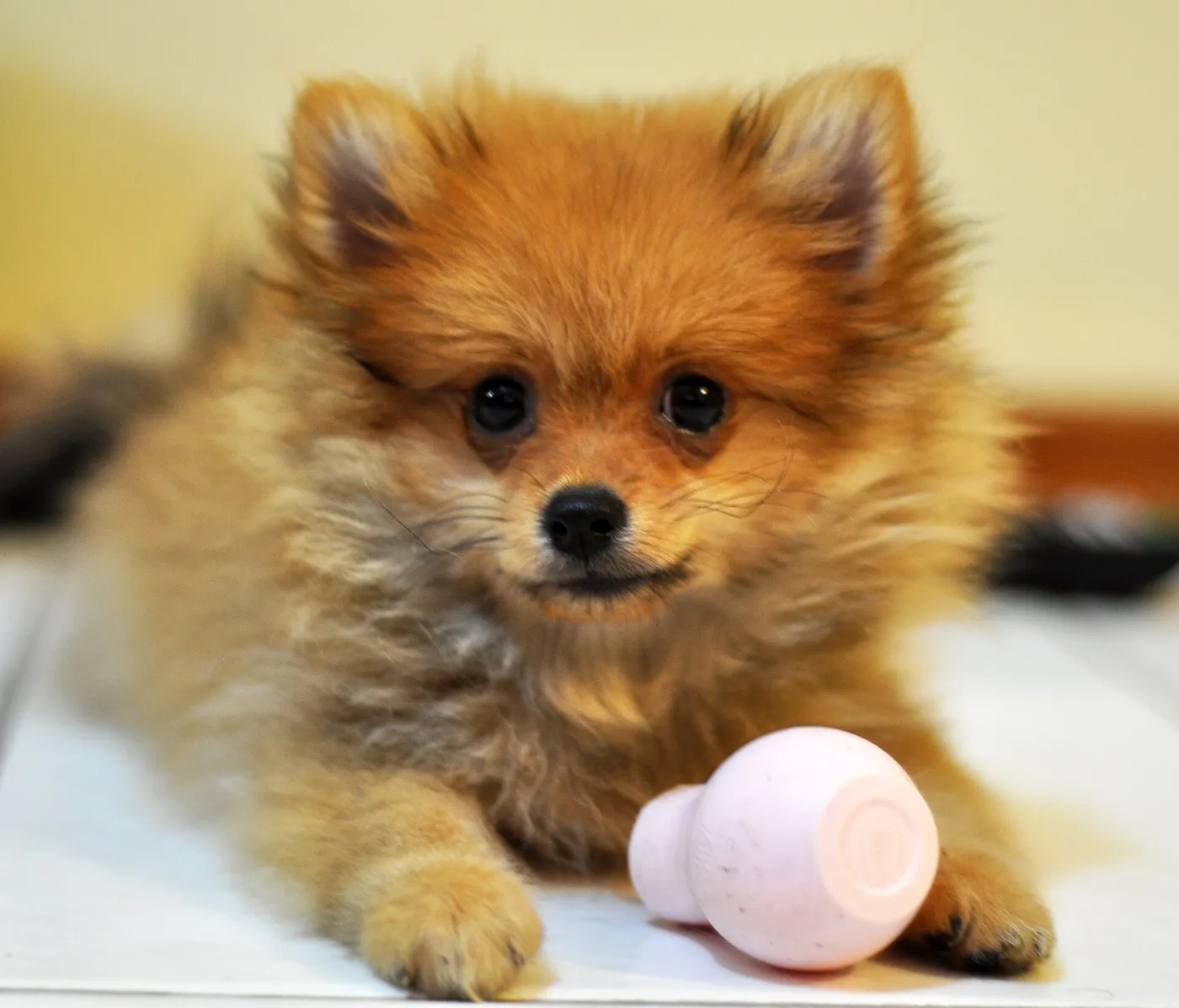


Photos show different individual dogs from licensed libraries, not one dog growing up. Stage labels are approximate, the way a careful editor would judge them.
About the Pomeranian
The Pomeranian is a tiny spitz with a fox face, a huge coat and a personality that has never noticed its size. Poms are bright, busy little watchdogs that love being the center of the household. Early training keeps the barking and bossiness charming rather than chaotic.
History
Poms descend from the big sled pulling spitz dogs of the Arctic, bred down in the Pomerania region. Queen Victoria's love of a notably small Pom in the 1880s made the toy size fashionable worldwide.
Personality
A Pomeranian has the self image of a sled dog in a five pound frame. Descended from Arctic spitz workers, Poms are bold, curious, busy and convinced that every room improves when they enter it. They are devoted to their people, often choosing one special person, and they are natural watchdogs that take announcing seriously. Intelligence and independence mix: Poms learn quickly and also decide for themselves. Handled as real dogs, walked, trained and socialised, they are confident and charming. Treated as ornaments they become shrill and snappy, which is an owner made problem, not a breed fault. The breed's liveliness lasts well into a long old age.
Temperament and traits
Energy (3/5)
Trainability (3/5)
Grooming needs (4/5)
Shedding (4/5)
Barking (5/5)
Good with children: Better with older children
With other dogs: Usually good with dogs
With strangers: Alert with strangers
Apartment life: Well suited
Coat and care
Coat: Profuse double coat with a big ruff around the neck.
Colors: Orange and red are classic; also cream, sable, black, white and parti-color.
Brush to the skin two or three times a week to stop the undercoat packing down, and book dental checks: toy breeds build tartar quickly. Keep portions tiny and measured.
Exercise and grooming
Exercise
Twenty to forty minutes a day in total: two short walks, indoor play and training games. Poms have more stamina than their size suggests and enjoy being included in outings, but their legs are short and their bones fine, so distances stay modest and jumping down from furniture should be discouraged or ramped. Mental exercise matters: trick training, food puzzles and sniffy garden time satisfy the busy brain. Use a harness rather than a collar because the breed's windpipe is fragile. In hot weather walk early and late, since the huge coat insulates the dog from heat loss as well as cold, and tiny dogs overheat quickly in direct sun.
Grooming
The profuse double coat is the breed's glory and its workload: brush and comb to the skin two or three times a week with a slicker and comb, parting the coat and working in sections, because brushing the surface alone lets the undercoat felt into mats underneath. Shedding is seasonal and heavy for the size. Never shave a Pom; the coat may not regrow properly and the skin loses protection. Bath every few weeks, trim the hair around the feet and hygiene areas, check ears weekly and keep nails short. Teeth need daily attention if possible, since toy mouths build tartar quickly and Pom owners should expect dental work across the dog's long life.
Training and daily life
Training
Poms respond beautifully to training that is fun, food based and consistent, and they are capable of real obedience and trick repertoires. The mistakes to avoid are all about size: carrying the dog everywhere, excusing barking and guarding because it looks cute, and skipping socialisation. Teach the full small dog syllabus: recall, lead manners, a quiet cue, settle on a mat and comfort with grooming and handling. Barking management starts young, rewarding silence and keeping the dog occupied. Housetraining needs the toy breed patience of frequent trips and warm praise. A well trained Pom is a delight that silences every sceptic about toy breeds.
Living with a Pomeranian
Poms are made for flats and small homes in exercise terms and make lively, portable companions that travel well and join everything. The household fit depends on tolerance for barking, because this is an alert, vocal breed that announces the world, and on having older children or adults only: Pom bones are fine and a dropped or fallen on dog can be seriously hurt. They bond hard, often to one favourite person, and dislike being left all day. With other dogs they are usually fine and entirely unaware of the size difference. Owners who train a Pom like a real dog, not a handbag accessory, are rewarded with a confident, funny, long lived friend.
What a Pomeranian costs
Food cost
About $6 per month for a typical 5 lb adult eating roughly 0.5 cups a day of a standard quality food ($1.60 per lb). Full breakdown in our food expense calculator.
Activity and exercise
Plan 20 to 40 minutes a day of walks, play and training. Under exercised dogs of most breeds invent their own projects, and they rarely pick good ones.
Insurance cost
Typical US range $25 to $48 per month for accident and illness cover. Estimate only, based on market ranges for this breed's risk profile; see the insurance estimator and the insurance guide.
On the monthly figures above, a typical adult year runs to about $70 for food and $300 to $576 for insurance, before routine vet care, grooming and gear. Year one costs more: vaccinations, spay or neuter surgery, a crate, bedding and training all land at once.
Growth: puppy to senior
How weight typically builds with age for a toy breed, and when full size arrives.
| Stage | Age | Typical weight |
|---|---|---|
| Puppy | 8 weeks | about 1 to 2 lb |
| Puppy | 4 months | about 1 to 3 lb |
| Young | 6 months | about 2 to 4 lb |
| Young | 9 months | about 2 to 6 lb |
| Adult | 12 months | about 3 to 7 lb |
| Adult | Full grown | 3 to 7 lb (standard range) |
| Senior | From about 10 years | Healthy weight stays in the adult range; watch for slow gain or loss |
Growth pattern follows the size class growth curves published by the Waltham Petcare Science Institute, applied to the adult weight range in the breed standard. Individual puppies vary; steady growth matters more than hitting any single number, and your vet's growth checks come first.
Life stages
Tiny puppies need careful handling, small frequent meals to guard against low blood sugar and early socialisation carried out safely, from arms and laps at first, then on the ground as confidence grows. Between roughly four and eight months comes the famous coat change, when puppies look ragged as the adult double coat replaces the fluff; grooming through it prevents felting. Adults are in a long prime, and the standing jobs are teeth, weight in grams and trachea friendly harness walking. Seniors from about ten need twice yearly checks with attention to heart and teeth, help with stairs and jumping, and continued gentle activity, because old Poms stay busy and bright.
Health
Collapsing trachea, patellar luxation, heart disease and a coat condition called alopecia X are the main issues. Breeders should screen patellas and hearts.
Conditions to know about
- Collapsing trachea: The windpipe's cartilage weakens and flattens, causing a goose honk cough, especially with excitement, collar pressure or weight gain. Walk on a harness, keep the dog slim and ask your vet about persistent coughing; severe cases need specialist care.
- Patellar luxation: The kneecap slips out of place, a common toy breed problem that breeders should have assessed on their breeding dogs. Mild cases are managed with weight and muscle; dogs that limp or skip persistently may need surgery.
- Heart disease: Pomeranians are among the breeds seen for heart conditions including valve disease and, in puppies from some lines, a vessel defect called patent ductus arteriosus. Breeding dogs should be heart checked, and murmurs in puppies must be followed up.
- Alopecia X: A cosmetic coat condition, sometimes called black skin disease, where the adult coat falls out symmetrically and the skin darkens. It does not make the dog ill, but it should be diagnosed by a vet to rule out hormone diseases that look similar.
Facts follow the Pomeranian breed standard (AKC, The Kennel Club and FCI standards agree on the essentials for this breed). Health notes summarize the conditions breed clubs and veterinary bodies most often flag for this breed. They are general information for choosing and caring, not a diagnosis or a substitute for your vet.
Gear for Pomeranian owners
Our team is hands on testing products for this guide right now. Recommendations will only appear here after real testing, and this module will always carry a plain affiliate disclosure at the top.
Pomeranian questions
How long do Pomeranians live?
A typical lifespan is 12 to 16 years. Weight control, dental care and screening for the breed's known conditions give a dog the best chance of reaching the top of that range.
How much does it cost to keep a Pomeranian?
Food for a typical adult runs about $6 a month at a standard quality tier, and accident and illness insurance usually falls between $25 and $48 a month in the US. Try the full cost calculator for a complete year one and yearly picture.
Are Pomeranians good with children?
Better with older children. As with every breed, supervise dogs and children together and teach children to respect the dog's space.
How much exercise does a Pomeranian need?
Plan on 20 to 40 minutes a day, split between walks, play and training games. Puppies and seniors need gentler, shorter sessions.
What is the puppy uglies stage?
Between about four and eight months, Pomeranian puppies blow their soft puppy coat and can look scruffy and moth eaten while the adult double coat grows in. It is normal, temporary and not a sign of poor breeding or ill health.
Can Pomeranians be left alone?
For short periods, with training. They are devoted, people centred dogs and long daily absences tend to produce barking and anxiety. They suit homes where someone is around most of the day.
Do Pomeranians need a lot of grooming?
Yes, more than most toy breeds: brushing to the skin two or three times a week, and daily in shedding season, because the undercoat packs down into mats and felt if it is neglected.