Home / Breeds / Olde English Bulldogge
Olde English Bulldogge
Independent, hardy, intelligent and self sufficient. From United States.
Non-Sportinglarge breedUnited StatesStandards checked
Standards checked: this profile's facts are checked against the breed standards of the AKC, The Kennel Club and the FCI, as described on our methodology page.
Gallery
Real photos from licensed sources only, each credited to its creator.


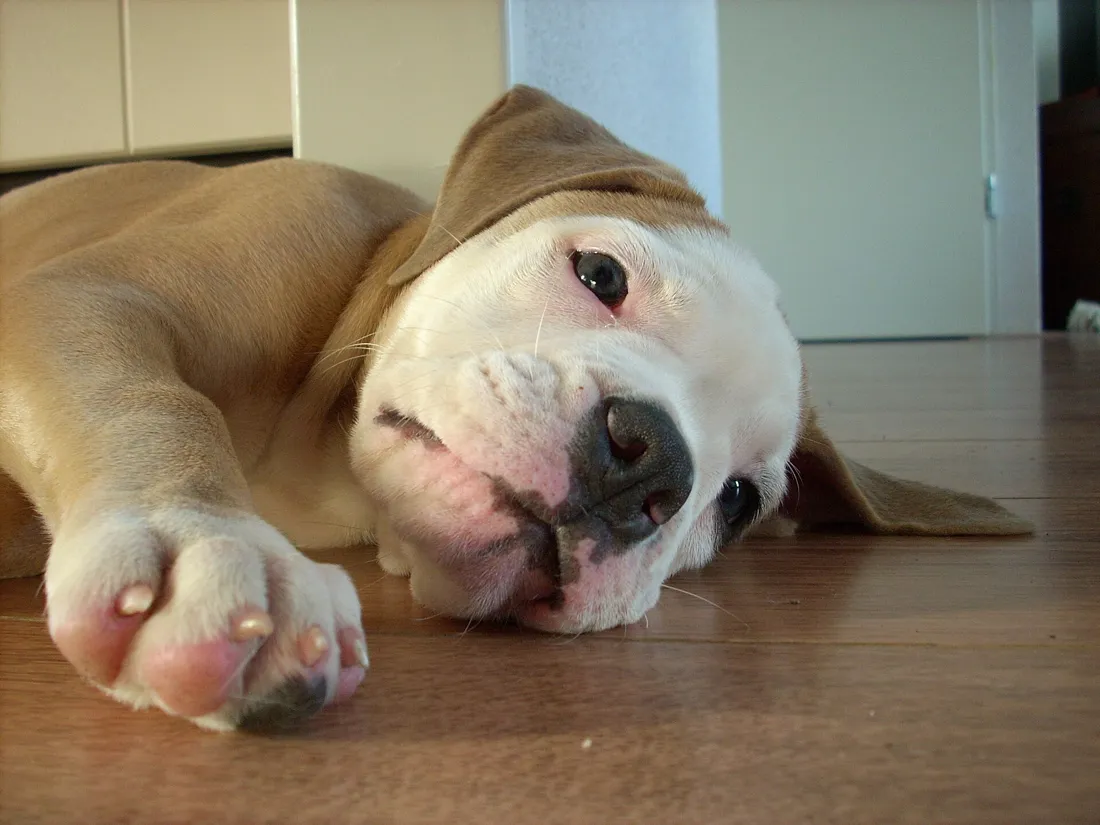

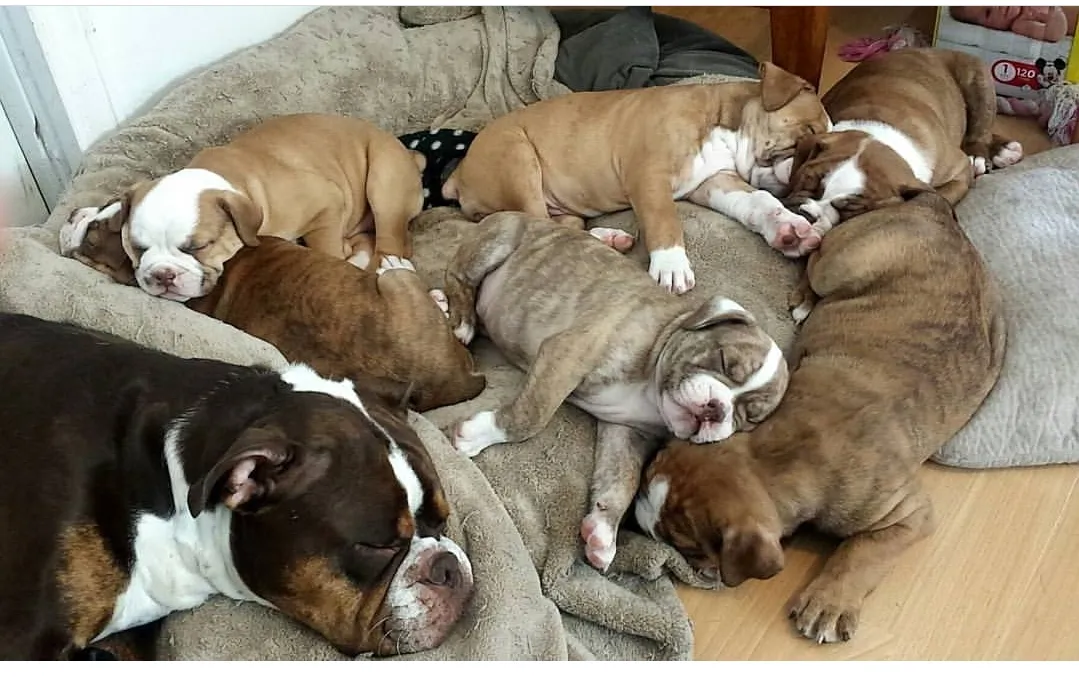

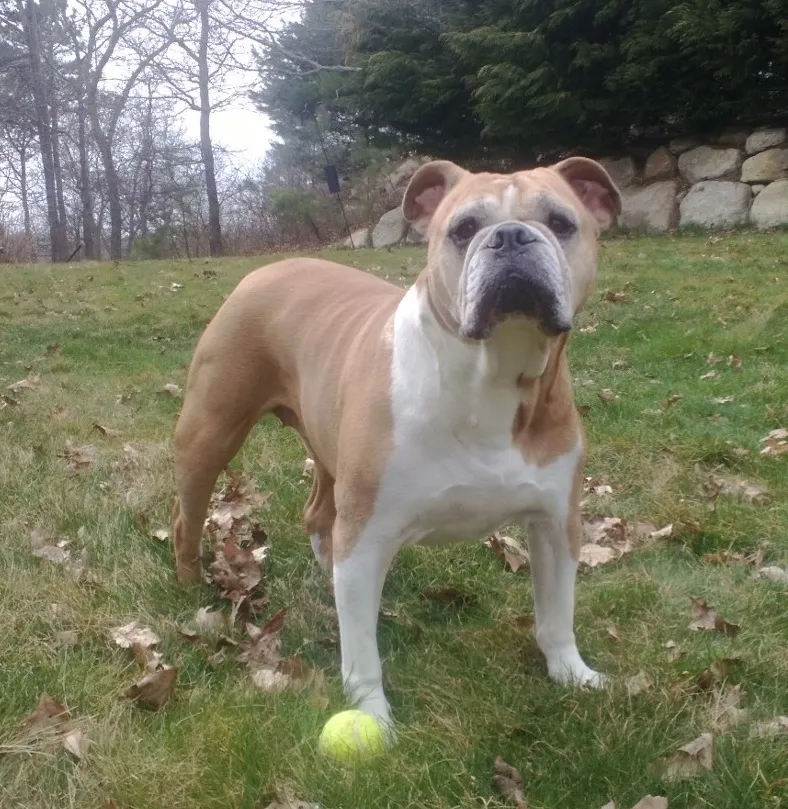

Photos show different individual dogs from licensed libraries, not one dog growing up. Stage labels are approximate, the way a careful editor would judge them.
About the Olde English Bulldogge
The Olde English Bulldogge is a large primitive landrace breed from United States, developed to survive and work alongside people as a hunter, guardian and general purpose dog, shaped by natural selection as much as by breeders. Landrace dogs think for themselves and bond selectively. They reward experienced, patient owners and puzzle people who expect a dog that lives to please.
History
The adult stands 16 to 20 in at the shoulder and weighs 50 to 80 lb. The Olde English Bulldogge was shaped in the United States as a primitive landrace breed, kept to survive and work alongside people as a hunter, guardian and general purpose dog, shaped by natural selection as much as by breeders. Its homeland kennel club keeps the register, rather than the big international bodies, which keeps numbers small and type close to the old working dogs. Short, tight and medium to short.
Personality
The Olde English Bulldogge is a recreation with a mission: in 1971 David Leavitt began breeding back to the bulldog of the early 1800s, the athletic, long legged, free breathing dog of the Regency prints, using English Bulldog crossed with Bullmastiff, American Bulldog and pit bull type foundation dogs, selecting for health, ability and stable temperament. The record's primitive landrace framing is flagged in this build's log; the real Olde is a designed athlete: confident, courageous, friendly with its family and capable of genuine work. Puppies are bright, sturdy charmers needing thorough socialisation; adults are powerful, devoted companions. Owners describe a bulldog restored: the old dog's body and heart, minus the old sports.
Temperament and traits
Energy (3/5)
Trainability (2/5)
Grooming needs (2/5)
Shedding (3/5)
Barking (3/5)
Good with children: Better with older children
With other dogs: With early socialization
With strangers: Wary of strangers
Apartment life: With enough exercise
Coat and care
Coat: Short, tight and medium to short.
Colors: Standard colors: brindle, of red, fawn, or black.
Feed to a visible waist tuck and weigh monthly; this breed does best on a routine of consistent meals, training in short sessions and daily exercise matched to its type. A weekly brush lifts loose hair and keeps the coat shining; shedding is steady but manageable. These are generally thrifty, hardy dogs; the main work is socialization and secure containment rather than grooming.
Exercise and grooming
Exercise
Sixty to ninety minutes a day of proper bulldog exercise: the record files the Olde English Bulldogge as a primitive landrace, and depth corrects the framing: this is David Leavitt's deliberate 1970s recreation of the athletic bulldog of Regency England, crossed from English Bulldog with Bullmastiff, American Bulldog and pit bull type stock precisely to restore a bulldog that can run, breathe and work. Brisk walks, play, weight pulling and training fill the programme, with the bulldog heat clause honoured even in this athletic version: exercise in the cool hours in summer. Puppies need gradual building. A fit Olde is a cheerful, powerful athlete; the breed was rebuilt to prove it.
Grooming
A weekly brush lifts loose hair and keeps the coat shining; shedding is steady but manageable, exactly as the care notes describe for the short, tight coat: minutes a week. These are generally thrifty, hardy dogs; the main work is socialisation and secure containment rather than grooming, in the notes' words, plus the bulldog clauses: keep facial folds clean and dry, feed to a visible waist tuck, and trim nails and brush teeth on schedule. Puppies need kind handling habits from the start. Owners rate grooming as the easiest line in the budget.
Training and daily life
Training
The record's low train score undersells a willing, intelligent dog: Olde English Bulldogges learn household skills, sports and weight pull readily under kind, consistent, reward based training with firm boundaries. They are strong willed in the bulldog manner, so clarity and consistency matter more than repetition. Priorities are thorough socialisation, lead manners before the strength arrives, a settle, recall kept honest outdoors, and cooperative care. Owners who offer structure and work earn a capable, devoted bulldog athlete.
Living with an Olde English Bulldogge
The Olde English Bulldogge suits experienced, active households that want the bulldog as it was: the record's landrace temperament (independent, hardy, intelligent, self sufficient) catches its substance but not its warmth; real Oldes are confident, friendly, deeply family devoted dogs, better with older children because of the power, dog selective without early socialisation and wary of strangers until introduced. It rates flats as possible with the full athletic programme delivered. Expect a cheerful, muscular companion with a working dog's engine. Owners describe Leavitt's success: a bulldog that hikes, swims and breathes, with the old breed's courage gentled for family life.
What an Olde English Bulldogge costs
Food cost
About $40 per month for a typical 65 lb adult eating roughly 3.7 cups a day of a standard quality food ($1.60 per lb). Full breakdown in our food expense calculator.
Activity and exercise
Plan 60 to 90 minutes a day of walks, play and training. Under exercised dogs of most breeds invent their own projects, and they rarely pick good ones.
Insurance cost
Typical US range $41 to $75 per month for accident and illness cover. Estimate only, based on market ranges for this breed's risk profile; see the insurance estimator and the insurance guide.
On the monthly figures above, a typical adult year runs to about $479 for food and $492 to $900 for insurance, before routine vet care, grooming and gear. Year one costs more: vaccinations, spay or neuter surgery, a crate, bedding and training all land at once.
Growth: puppy to senior
How weight typically builds with age for a large breed, and when full size arrives.
| Stage | Age | Typical weight |
|---|---|---|
| Puppy | 8 weeks | about 6 to 10 lb |
| Puppy | 4 months | about 14 to 22 lb |
| Puppy | 6 months | about 24 to 38 lb |
| Young | 9 months | about 34 to 54 lb |
| Young | 12 months | about 41 to 66 lb |
| Adult | 18 months | about 48 to 76 lb |
| Adult | 24 months | about 50 to 80 lb |
| Adult | Full grown | 50 to 80 lb (standard range) |
| Senior | From about 7 years | Healthy weight stays in the adult range; watch for slow gain or loss |
Growth pattern follows the size class growth curves published by the Waltham Petcare Science Institute, applied to the adult weight range in the breed standard. Individual puppies vary; steady growth matters more than hitting any single number, and your vet's growth checks come first.
Life stages
Puppies need wide socialisation, gradual exercise building while a powerful frame grows and training foundations laid early. Adolescents are at maximum strength and enthusiasm, and structured work carries the household through. Adults enjoy a vigorous prime: nine to twelve years, notably athletic for a bulldog breed. Keep weight at a visible tuck, folds clean and heat respected in summer. Senior status arrives around eight: twice yearly checks with hip and joint awareness, joint friendly exercise and continued gentle games. Old Oldes stay hardy, cheerful and devoted.
Health
Landrace breeds are usually notably healthy, shaped by natural selection rather than fashion. Sensible breeders still screen hips and eyes, and the bigger health task for owners is socialization, not medication.
Conditions to know about
- General hardiness and breathing: The breed was rebuilt for health: free breathing and athletic function are its founding selection goals. Buy adults you can watch run and breathe, and treat noisy breathing or heat collapse tolerance as disqualifying in a breeding dog.
- Hip dysplasia: Sensible breeders still screen hips and eyes, per the record. Hip screening matters greatly in a powerful 50 to 80 pound athlete; ask for scores in writing.
- Eye conditions: Eye checks are the record's second named screening. Ask for current results for both parents.
- Socialisation as health: The bigger health task for owners is socialisation, not medication, in the record's summary, and for a powerful bulldogge it is also the safety plan. A thoroughly socialised Olde is a confident, healthy companion.
Facts follow the Olde English Bulldogge breed standard (AKC, The Kennel Club and FCI standards agree on the essentials for this breed). Health notes summarize the conditions breed clubs and veterinary bodies most often flag for this breed. They are general information for choosing and caring, not a diagnosis or a substitute for your vet.
Gear for Olde English Bulldogge owners
Our team is hands on testing products for this guide right now. Recommendations will only appear here after real testing, and this module will always carry a plain affiliate disclosure at the top.
Olde English Bulldogge questions
How long do Olde English Bulldogges live?
A typical lifespan is 9 to 12 years. Weight control, dental care and screening for the breed's known conditions give a dog the best chance of reaching the top of that range.
How much does it cost to keep an Olde English Bulldogge?
Food for a typical adult runs about $40 a month at a standard quality tier, and accident and illness insurance usually falls between $41 and $75 a month in the US. Try the full cost calculator for a complete year one and yearly picture.
Are Olde English Bulldogges good with children?
Better with older children. As with every breed, supervise dogs and children together and teach children to respect the dog's space.
How much exercise does an Olde English Bulldogge need?
Plan on 60 to 90 minutes a day, split between walks, play and training games. Puppies and seniors need gentler, shorter sessions.
Who created the Olde English Bulldogge?
David Leavitt of Pennsylvania, who from 1971 bred back toward the athletic bull baiting era bulldog using English Bulldog, Bullmastiff, American Bulldog and pit bull type foundation stock, aiming for the old dog's health and ability with a stable temperament.
Olde English Bulldogge or English Bulldog, what is the difference?
Recreation and original: the Olde is the taller, longer muzzled, athletic dog bred to work and breathe freely. The modern English Bulldog is the compact show companion. The Olde is substantially the more athletic and demanding dog.
Are Olde English Bulldogges healthier than English Bulldogs?
That is the breed's founding claim and its breeders' standard: longer muzzle, free breathing and athletic build were the selection goals. Verify it dog by dog: buy from breeders who health test and whose adults visibly run and breathe well.
Breeds similar to the Olde English Bulldogge Compare this breed with another