Leonberger
Strong willed, brave, affectionate at home. From Germany.
Workinggiant breedGermanyStandards checked
Standards checked: this profile's facts are checked against the breed standards of the AKC, The Kennel Club and the FCI, as described on our methodology page.
Gallery
Real photos from licensed sources only, each credited to its creator.


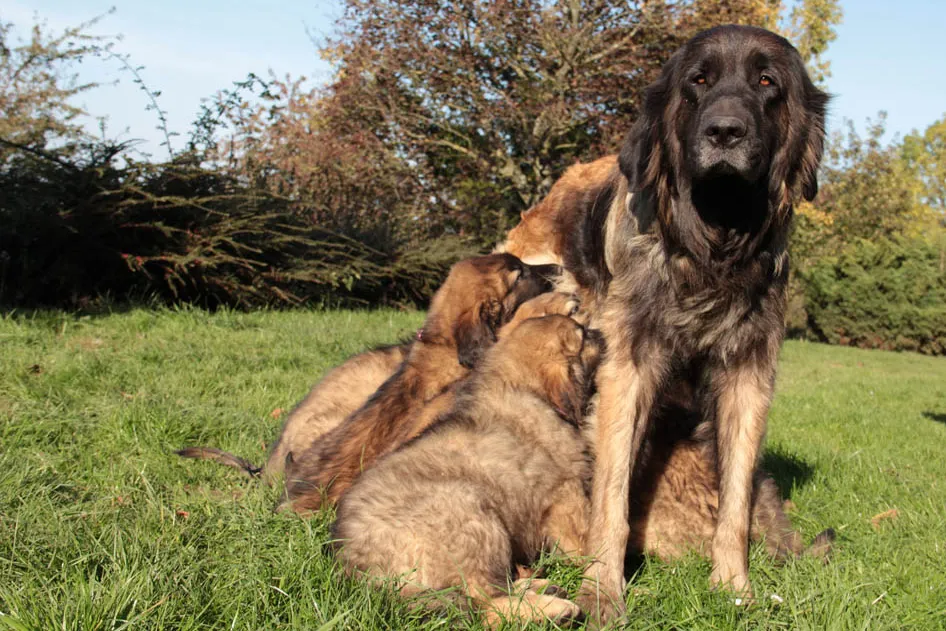

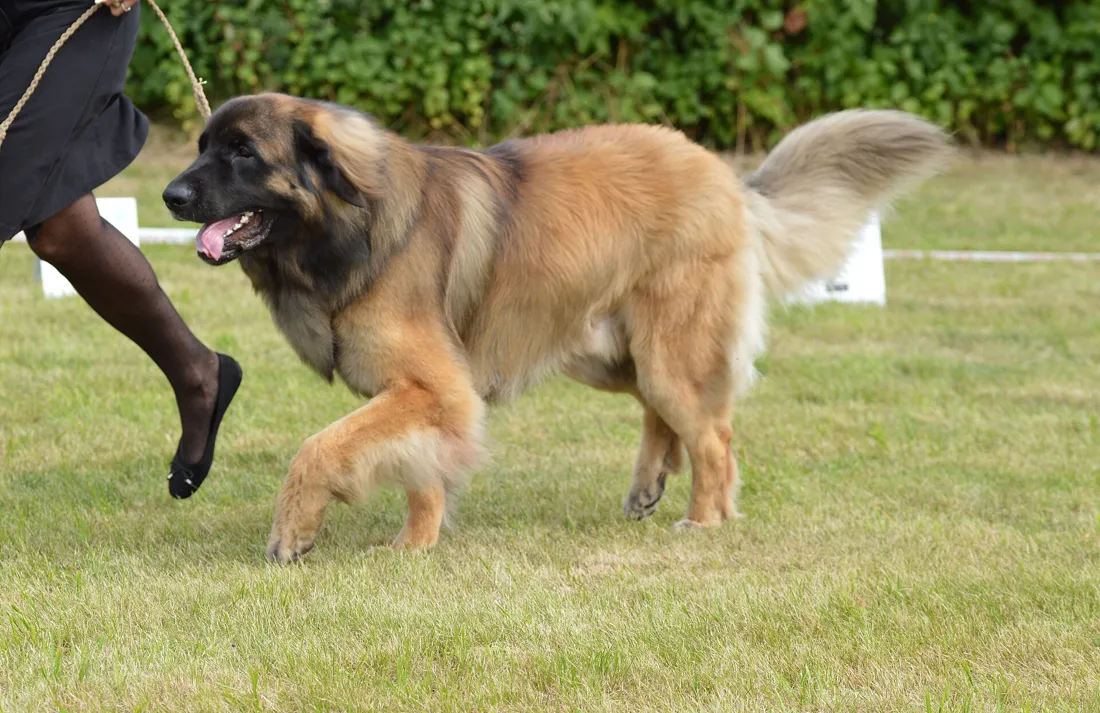

Photos show different individual dogs from licensed libraries, not one dog growing up. Stage labels are approximate, the way a careful editor would judge them.
About the Leonberger
Germany produced the Leonberger, a giant guard and working breed bred to guard people and property and stand watch over homes, farms and families. Powerful, clever and devoted: the recipe works beautifully with committed owners and badly without them.
History
What the Leonberger was for, in Germany, was work: to guard people and property and stand watch over homes, farms and families. That single purpose, kept up over generations, explains the breed better than any show result. American breeders follow the AKC standard for the breed, which the club recognizes today. Long and coarse with mane on neck and chest and feathering on extremities.
Personality
The record frames the Leonberger as a guard dog, and the truth is softer and grander: the Leo is a gentle giant in a lion's coat, created in nineteenth century Germany to resemble the lion on the town crest of Leonberg, and developed into one of the most devoted family companions of all the giant breeds. Leos are calm, patient and famously good with children, affectionate without neediness and watchful without edge. Puppies are enormous, earnest and clumsy; adults are serene, dignified presences that lean against their people and sigh. They are sensitive to household tension, wilt under harshness and thrive on inclusion, training and steady love.
Temperament and traits
Energy (5/5)
Trainability (4/5)
Grooming needs (4/5)
Shedding (3/5)
Barking (4/5)
Good with children: Good with children
With other dogs: With early socialization
With strangers: Wary of strangers
Apartment life: Not ideal
Coat and care
Coat: Long and coarse with mane on neck and chest and feathering on extremities.
Colors: Standard colors: yellow, red, reddish brown or sandy including all combinations in between, with a black mask.
Feed to a visible waist tuck and weigh monthly; this breed does best on a routine of consistent meals, training in short sessions and daily exercise matched to its type. Long coats need brushing two or three times a week, and daily attention in mud and burr season. Start training and socialization in the first weeks home and never stop; a dog this capable notices every gap in the routine.
Exercise and grooming
Exercise
Sixty to ninety minutes a day of steady, varied exercise: good walks, garden time, swimming (most Leos love water) and training. Do not be fooled by the giant frame into under exercising: the record rates energy at the top of the scale for a young Leo, and a bored Leonberger is a hundred plus pounds of interior redesign. Puppies and adolescents need the gentlest loading: measured exercise, no forced running, minimal stairs and jumping while the skeleton matures over two years. Heat needs respect under the long coat. Start training and socialisation in the first weeks home and never stop, per the care notes, because this capable dog notices every gap.
Grooming
Long coats need brushing two or three times a week, and daily attention in mud and burr season, exactly as the care notes set out. The long, coarse coat with its mane and feathering mats behind ears, in armpits and around the tail if the routine slips, so work in sections to the skin. Seasonal shedding is heavy. Baths are major events requiring space and drying time. Ears take weekly checks, nails need trims built as cooperative care from puppyhood, and teeth benefit from brushing. Grooming doubles as the weekly hands on health check across a very large dog, feeling for lumps that matter in a breed with the Leo's cancer picture.
Training and daily life
Training
Leos are intelligent and willing with calm, reward based handling, and they respond badly to force: a dog this sensitive and this large must want to cooperate. The record's rule is the whole method: start training and socialisation in the first weeks home and never stop, because a dog this capable notices every gap in the routine. Priorities are lead manners installed while the dog is still portable, a settle, polite greetings without the full body lean becoming a shove, recall, and cooperative care for grooming and vet visits. Socialisation on a giant scale turns the wary instinct into quiet confidence. Trained kindly, a Leo is close to the perfect family guardian: immense, gentle and mannerly.
Living with a Leonberger
The Leonberger suits calm, experienced households with serious space, giant scale finances and a love of gentle giants. Strong willed yet affectionate at home, good with children (the breed is famous for patience with them), dog selective without early socialisation and wary of strangers, it rates apartments as not ideal on geometry alone. Expect mud, hair, drool in moderation and a dog that believes it is lap sized. The lifespan, seven to nine years, is the hard fact. Owners choose the Leo knowingly: a shorter contract with one of the most loving, majestic companions in the dog world, a lion hearted family member in every sense.
What a Leonberger costs
Food cost
About $67 per month for a typical 130 lb adult eating roughly 6.3 cups a day of a standard quality food ($1.60 per lb). Full breakdown in our food expense calculator.
Activity and exercise
Plan 60 to 90 minutes a day of walks, play and training. Under exercised dogs of most breeds invent their own projects, and they rarely pick good ones.
Insurance cost
Typical US range $62 to $117 per month for accident and illness cover. Estimate only, based on market ranges for this breed's risk profile; see the insurance estimator and the insurance guide.
On the monthly figures above, a typical adult year runs to about $805 for food and $744 to $1,404 for insurance, before routine vet care, grooming and gear. Year one costs more: vaccinations, spay or neuter surgery, a crate, bedding and training all land at once.
Growth: puppy to senior
How weight typically builds with age for a giant breed, and when full size arrives.
| Stage | Age | Typical weight |
|---|---|---|
| Puppy | 8 weeks | about 9 to 17 lb |
| Puppy | 4 months | about 22 to 41 lb |
| Puppy | 6 months | about 38 to 71 lb |
| Young | 9 months | about 54 to 102 lb |
| Young | 12 months | about 68 to 128 lb |
| Adult | 18 months | about 79 to 150 lb |
| Adult | 24 months | about 90 to 170 lb |
| Adult | Full grown | 90 to 170 lb (standard range) |
| Senior | From about 5 to 6 years | Healthy weight stays in the adult range; watch for slow gain or loss |
Growth pattern follows the size class growth curves published by the Waltham Petcare Science Institute, applied to the adult weight range in the breed standard. Individual puppies vary; steady growth matters more than hitting any single number, and your vet's growth checks come first.
Life stages
Puppyhood is two years of careful construction: measured food, minimal jumping and stairs, gentle exercise and vet guided growth. Adolescents are giant, sensitive teenagers, and the early training and socialisation carry everyone through. Adults enjoy a calm prime from about three, with swimming and steady walks keeping the huge frame fit. Seven to nine years is the span, so senior status arrives around six: twice yearly checks with lameness and lump vigilance given the breed's cancer picture, ramps for vehicles and continued gentle duties. Old Leos remain gentle, devoted and majestic, and every year is counted precious.
Health
Cancer, especially bone cancer and hemangiosarcoma, is the breed's biggest shadow, alongside hip dysplasia and a hereditary polyneuropathy that breeders DNA test for. Bloat is the emergency to know.
Conditions to know about
- Cancer (bone cancer and hemangiosarcoma): Cancer, especially bone cancer and hemangiosarcoma, is the breed's biggest shadow, in the record's words. Ask breeders about longevity and cancer in their lines, and treat persistent lameness, leg swelling or sudden collapse as emergencies.
- Hip dysplasia: Screened in the breed alongside the cancer conversation. Hip scores in writing, slow lean growth and sensible exercise are the protections.
- Leonberger polyneuropathy (LPN): A hereditary nerve disease that breeders DNA test for, per the record. Ask for both parents' LPN results; testing is steadily reducing the condition in well bred lines.
- Bloat (gastric dilatation volvulus): The emergency to know, named in the record, in a giant deep chested breed. Learn the signs and treat restlessness, drooling and unproductive retching as a race to the vet.
Facts follow the Leonberger breed standard (AKC, The Kennel Club and FCI standards agree on the essentials for this breed). Health notes summarize the conditions breed clubs and veterinary bodies most often flag for this breed. They are general information for choosing and caring, not a diagnosis or a substitute for your vet.
Gear for Leonberger owners
Our team is hands on testing products for this guide right now. Recommendations will only appear here after real testing, and this module will always carry a plain affiliate disclosure at the top.
Leonberger questions
How long do Leonbergers live?
A typical lifespan is 7 to 9 years. Weight control, dental care and screening for the breed's known conditions give a dog the best chance of reaching the top of that range.
How much does it cost to keep a Leonberger?
Food for a typical adult runs about $67 a month at a standard quality tier, and accident and illness insurance usually falls between $62 and $117 a month in the US. Try the full cost calculator for a complete year one and yearly picture.
Are Leonbergers good with children?
Good with children. As with every breed, supervise dogs and children together and teach children to respect the dog's space.
How much exercise does a Leonberger need?
Plan on 60 to 90 minutes a day, split between walks, play and training games. Puppies and seniors need gentler, shorter sessions.
Are Leonbergers good family dogs?
Yes, famously: despite the size they are known as gentle giants, patient with children and devoted to family, provided the early training and socialisation are done properly. The record's guard framing understates how soft hearted the breed is at home.
Do Leonbergers drool?
Moderately, less than some giants, more after drinking and in warm weather. The bigger housekeeping items are the coat, the mud a Leo can carry and the sheer scale of everything.
How much space does a Leonberger need?
A house with room for a dog the size of a small bear to turn, stretch and sprawl, a garden, and a vehicle that fits one. Leos are calm indoors but the geometry is non negotiable.
Breeds similar to the Leonberger Compare this breed with another