Labradoodle
Joyful, intuitive, energetic and friendly. From Australia (Labrador Retriever x Poodle).
Designer Crosslarge breedAustralia (Labrador Retriever x Poodle)Standards checked
Standards checked: this profile's facts are checked against the breed standards of the AKC, The Kennel Club and the FCI, as described on our methodology page.
Gallery
Real photos from licensed sources only, each credited to its creator.


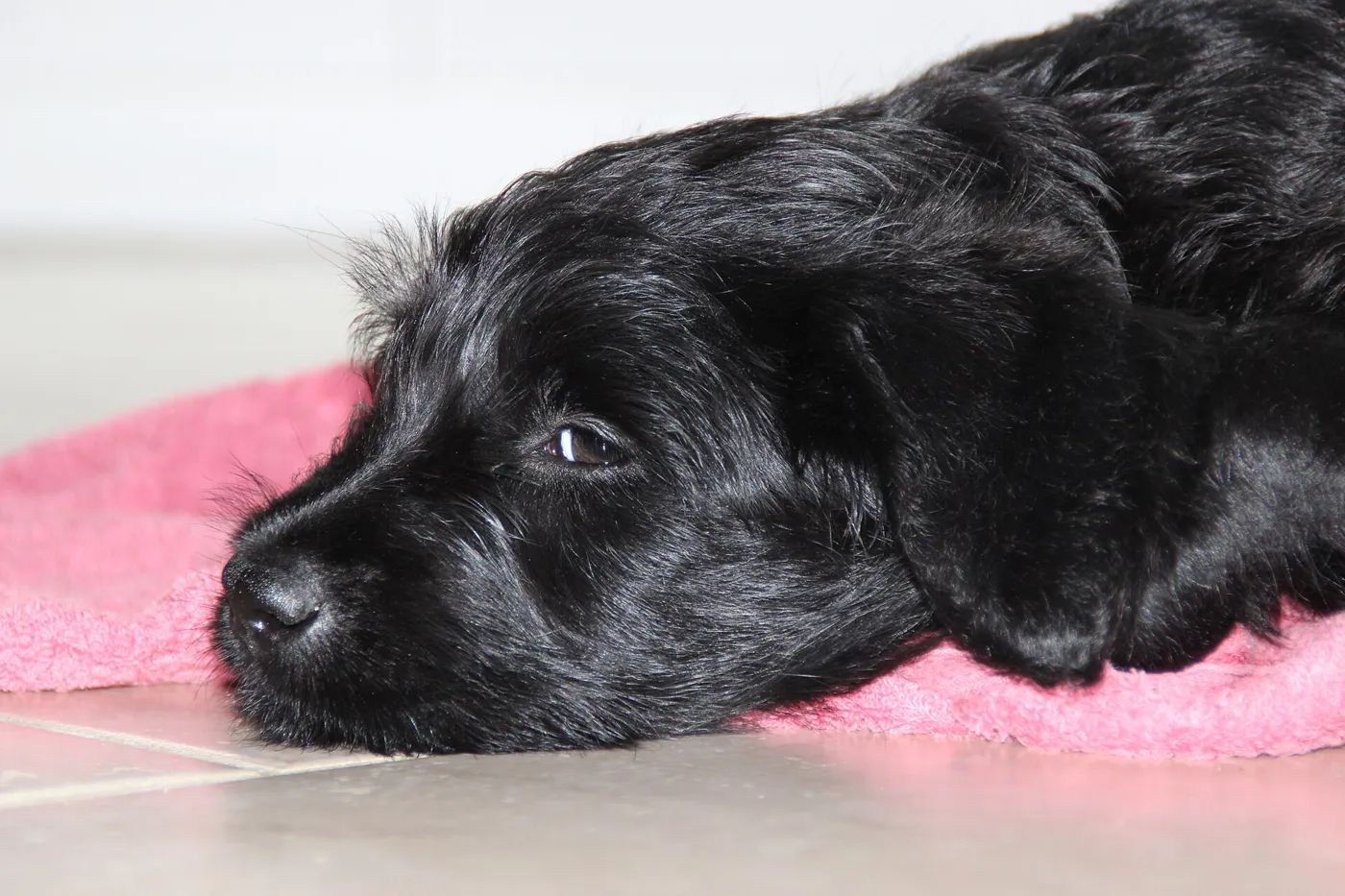

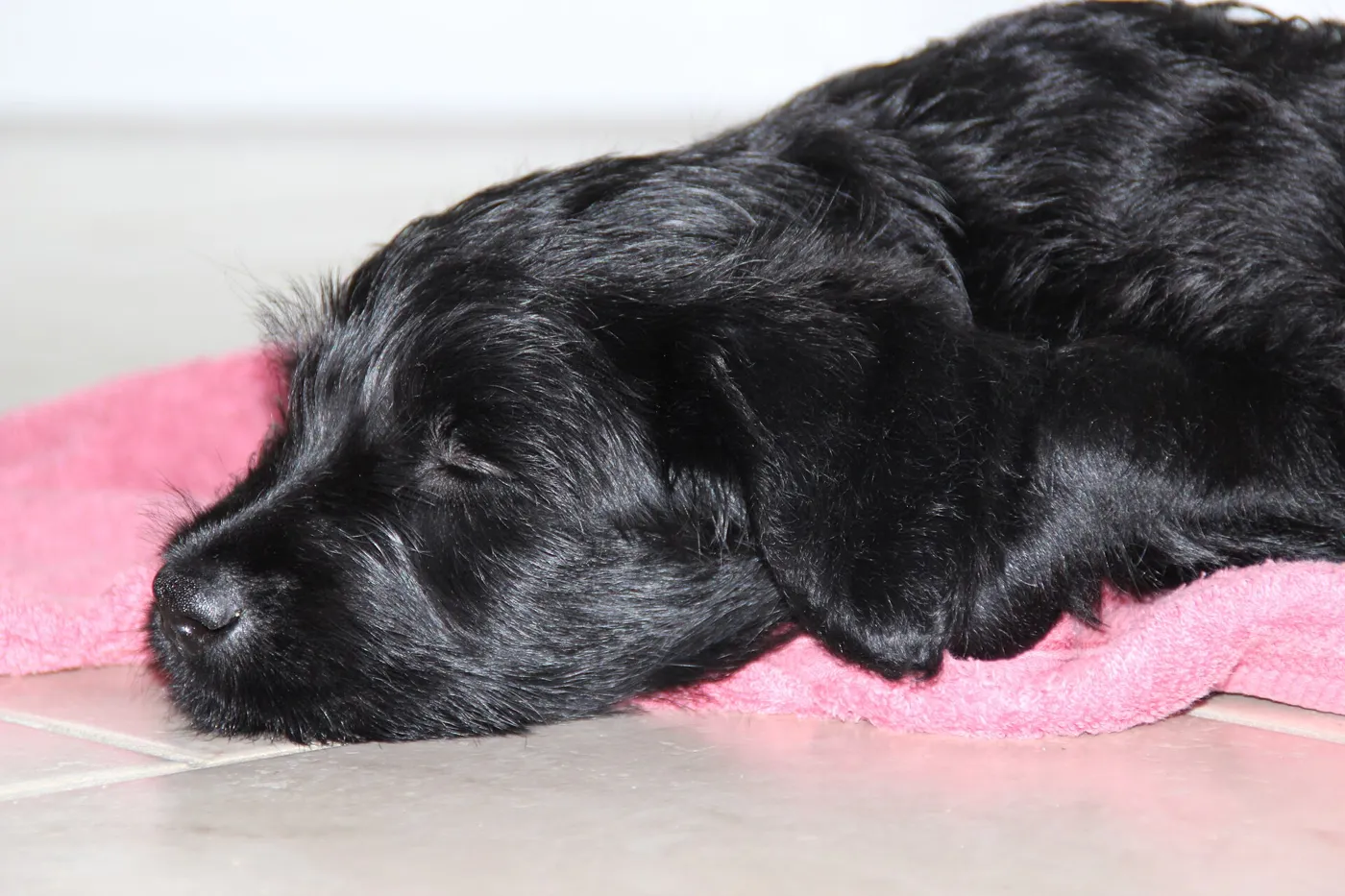

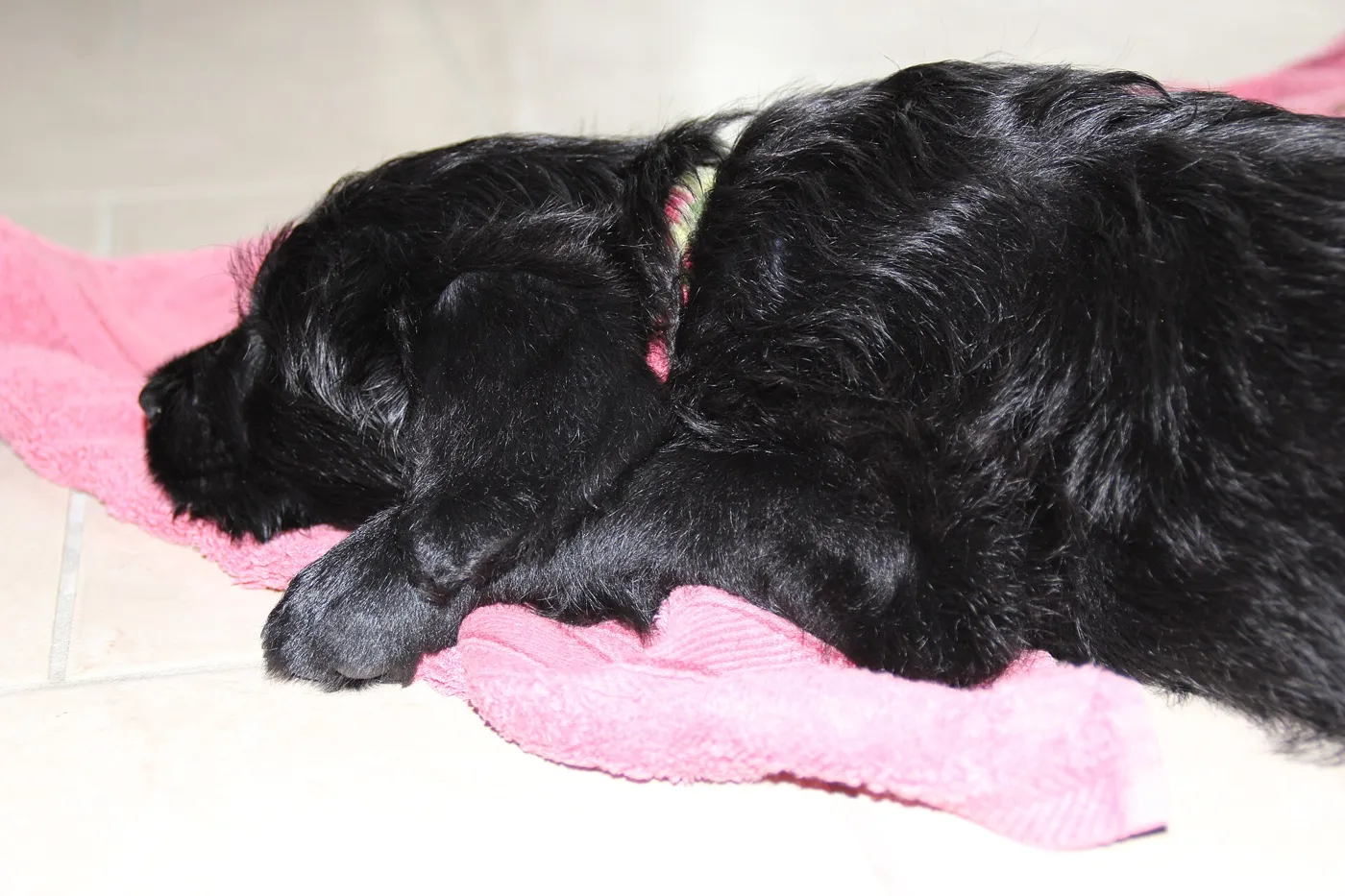

Photos show different individual dogs from licensed libraries, not one dog growing up. Stage labels are approximate, the way a careful editor would judge them.
About the Labradoodle
The Labradoodle began as an experiment in low allergy guide dogs and became one of the world's best loved family crosses. Standard Labradoodles are energetic, funny and very trainable. The multi-generation Australian Labradoodle, which includes other breeds in its history, has the most predictable coat.
History
In 1989 Australian guide dog breeder Wally Conron crossed a Labrador with a Standard Poodle for a blind client whose husband was allergic to dogs. The result started a global trend in poodle crosses.
Personality
Joyful, intuitive, energetic and friendly is the record's Labradoodle: the original poodle cross, created in 1989 in Australia when guide dog breeder Wally Conron crossed a Labrador Retriever with a Standard Poodle for a blind client whose husband was allergic to dogs. Labradoodles are merry, intelligent and deeply people attuned, with the Labrador's goodwill and the Poodle's quick mind; the multi generation Australian Labradoodle adds other breeds in its documented history for coat consistency. Puppies are bright, fleecy charmers; adults are devoted, joyful companions. Owners describe the complete family cross: a dog bred for a guide dog's intuition that became the world's family favourite.
Temperament and traits
Energy (4/5)
Trainability (5/5)
Grooming needs (5/5)
Shedding (2/5)
Barking (3/5)
Good with children: Good with children
With other dogs: Good with dogs
With strangers: Friendly with strangers
Apartment life: With enough exercise
Coat and care
Coat: Fleece or wool coat, usually low shedding; the Australian Labradoodle is bred for consistency.
Colors: Cream, apricot, red, chocolate, black, silver and parti-color.
Brush the fleece coat several times a week and clip regularly. These dogs need a proper daily run and training games; an under exercised Labradoodle will invent its own entertainment.
Exercise and grooming
Exercise
Sixty to ninety minutes a day of joyful, energetic exercise: the Labradoodle began as an experiment in low allergy guide dogs and became one of the world's best loved family crosses, per the overview. These dogs need a proper daily run and training games; an under exercised Labradoodle will invent its own entertainment, in the care notes' honest warning. Brisk walks, swimming, retrieving, training and dog sports fill the programme. Standard Labradoodles are energetic, funny and very trainable, per the overview. Puppies build up gradually on a large frame. A worked Labradoodle is the record's portrait: joyful, intuitive and friendly, calm enough to be welcome anywhere.
Grooming
Brush the fleece coat several times a week and clip regularly, exactly as the care notes direct for the fleece or wool coat: brush right down to the skin in sections, because the record's grooming score is the top of this site's scale and an unbrushed doodle coat felts fast. The Australian Labradoodle is bred for consistency, per the coat notes. Ears need regular checks after swimming (the Labrador inheritance). Nails need trims, teeth benefit from brushing. Puppies need grooming habituation from the first weeks. Owners budget groomer appointments as a fixed cost of the cross.
Training and daily life
Training
With the top train score in this index, the Labradoodle is an outstanding pupil: exceptionally quick, intuitive and eager, bred from guide dog stock and excelling at assistance work, therapy visits, obedience and dog sports. Reward based structure with variety is the method. Priorities are socialisation, lead manners before the strength arrives, a settle, recall, alone time skills, and cooperative grooming for a lifetime of coat work. Owners describe one of the most rewarding family training partnerships available.
Living with a Labradoodle
The Labradoodle suits active, joyful families with a serious grooming budget that want the original doodle: joyful, intuitive, energetic and friendly in the record's words, good with children, good with other dogs and friendly with strangers, it rates flats as possible with the full programme delivered. The multi generation Australian Labradoodle has the most predictable coat, per the overview. Owners describe the cross at its best: the Labrador's heart and the Poodle's brains in a fleece coat, bred from the start for service and family life in equal measure.
What a Labradoodle costs
Food cost
About $37 per month for a typical 58 lb adult eating roughly 3.4 cups a day of a standard quality food ($1.60 per lb). Full breakdown in our food expense calculator.
Activity and exercise
Plan 60 to 90 minutes a day of walks, play and training. Under exercised dogs of most breeds invent their own projects, and they rarely pick good ones.
Insurance cost
Typical US range $35 to $60 per month for accident and illness cover. Estimate only, based on market ranges for this breed's risk profile; see the insurance estimator and the insurance guide.
On the monthly figures above, a typical adult year runs to about $440 for food and $420 to $720 for insurance, before routine vet care, grooming and gear. Year one costs more: vaccinations, spay or neuter surgery, a crate, bedding and training all land at once.
Growth: puppy to senior
How weight typically builds with age for a large breed, and when full size arrives.
| Stage | Age | Typical weight |
|---|---|---|
| Puppy | 8 weeks | about 6 to 8 lb |
| Puppy | 4 months | about 14 to 18 lb |
| Puppy | 6 months | about 24 to 31 lb |
| Young | 9 months | about 34 to 44 lb |
| Young | 12 months | about 41 to 53 lb |
| Adult | 18 months | about 48 to 62 lb |
| Adult | 24 months | about 50 to 65 lb |
| Adult | Full grown | 50 to 65 lb (standard range) |
| Senior | From about 7 years | Healthy weight stays in the adult range; watch for slow gain or loss |
Growth pattern follows the size class growth curves published by the Waltham Petcare Science Institute, applied to the adult weight range in the breed standard. Individual puppies vary; steady growth matters more than hitting any single number, and your vet's growth checks come first.
Life stages
Puppies need socialisation, grooming habituation from the first weeks, gradual exercise building and large breed growth care. Adolescents are big, bright and inventive (an under exercised one invents its own entertainment, per the care notes), and structured training carries the household through. Adults enjoy a vigorous prime: twelve to fourteen years. Keep the coat brushed to the skin, clipping appointments kept and weight lean. Senior status arrives around nine to ten: twice yearly checks with joint and eye awareness, ramps for vehicles and continued gentle swims. Old Labradoodles stay joyful, intuitive and devoted.
Health
Look for hip and elbow scores, eye tests and DNA panels covering PRA and exercise induced collapse from the Labrador side. Addison's disease appears in some Poodle lines and is worth asking about.
Conditions to know about
- Conditions from either parent (governing rule): A Labradoodle can inherit conditions from either parent breed, the rule this site applies to every designer cross: ask for the Labrador panel and the Poodle panel both, in writing.
- Hip and elbow dysplasia: Look for hip and elbow scores, per the record. Ask to see both parents' scores in writing, and manage growth slow and lean.
- Eye conditions and PRA: Eye tests and DNA panels covering PRA are named in the record. Ask for current eye certificates and the DNA results for both parents.
- Exercise induced collapse (Labrador side) and Addison's disease (Poodle side): DNA panels covering exercise induced collapse from the Labrador side are named in the record, and Addison's disease appears in some Poodle lines and is worth asking about, in the record's own words. Ask both questions explicitly.
This is a designer cross, not a kennel club breed, so there is no official standard. Figures follow the parent breeds and reputable breeder consensus. Health notes summarize the conditions breed clubs and veterinary bodies most often flag for this breed. They are general information for choosing and caring, not a diagnosis or a substitute for your vet.
Gear for Labradoodle owners
Our team is hands on testing products for this guide right now. Recommendations will only appear here after real testing, and this module will always carry a plain affiliate disclosure at the top.
Labradoodle questions
How long do Labradoodles live?
A typical lifespan is 12 to 14 years. Weight control, dental care and screening for the breed's known conditions give a dog the best chance of reaching the top of that range.
How much does it cost to keep a Labradoodle?
Food for a typical adult runs about $37 a month at a standard quality tier, and accident and illness insurance usually falls between $35 and $60 a month in the US. Try the full cost calculator for a complete year one and yearly picture.
Are Labradoodles good with children?
Good with children. As with every breed, supervise dogs and children together and teach children to respect the dog's space.
How much exercise does a Labradoodle need?
Plan on 60 to 90 minutes a day, split between walks, play and training games. Puppies and seniors need gentler, shorter sessions.
Who invented the Labradoodle?
Wally Conron, an Australian guide dog breeder, who in 1989 crossed a Labrador with a Standard Poodle for a blind client whose husband was allergic to dogs, per the history. Conron himself later said he regretted starting the doodle craze; the cross he made for one client became a global trend.
Labradoodle or Australian Labradoodle, what is the difference?
Generations and recipe: the Labradoodle is the Labrador Poodle cross itself, in any generation. The Australian Labradoodle is the multi generation development (with Cocker Spaniel and other breeds in its documented history) bred for consistency, with the most predictable coat, per the overview.
Are Labradoodles good family dogs?
Yes, famously: joyful, intuitive and friendly in the record's words, among the world's favourite family crosses. The conditions are real running exercise, a heavy grooming commitment and a breeder who hip scores and DNA tests.
Breeds similar to the Labradoodle Compare this breed with another