Komondor
Independent, calm, watchful and deeply territorial. From Hungary.
Workinglarge breedHungaryStandards checked
Standards checked: this profile's facts are checked against the breed standards of the AKC, The Kennel Club and the FCI, as described on our methodology page.
Gallery
Real photos from licensed sources only, each credited to its creator.


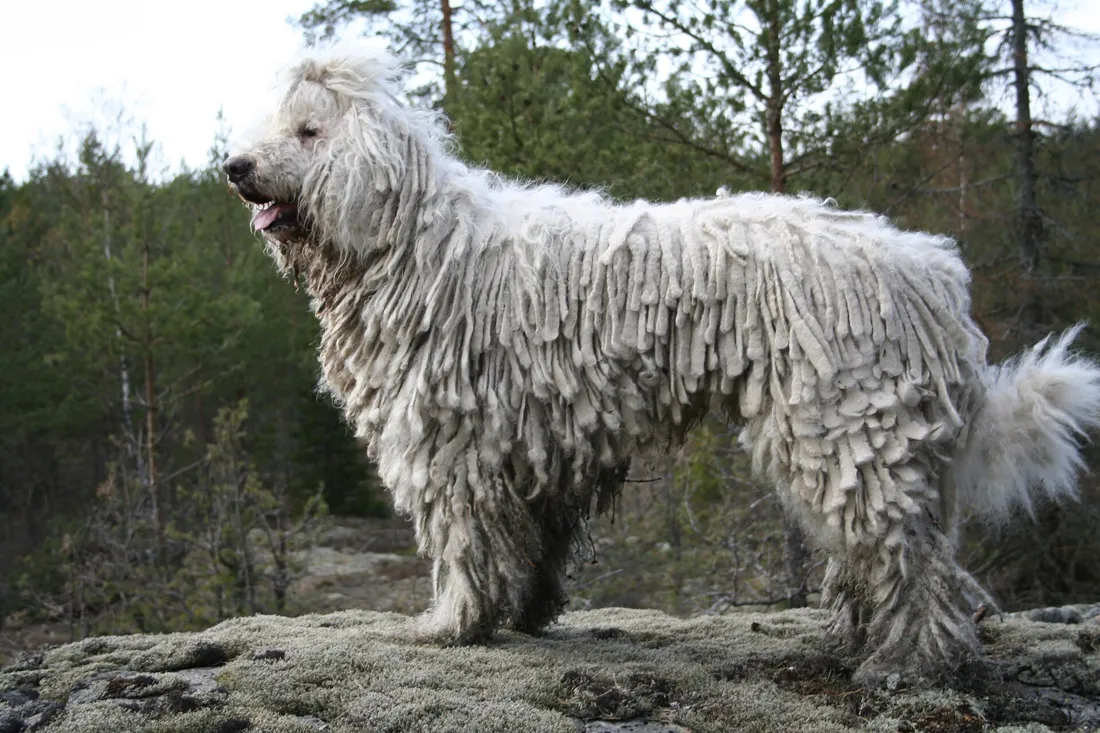

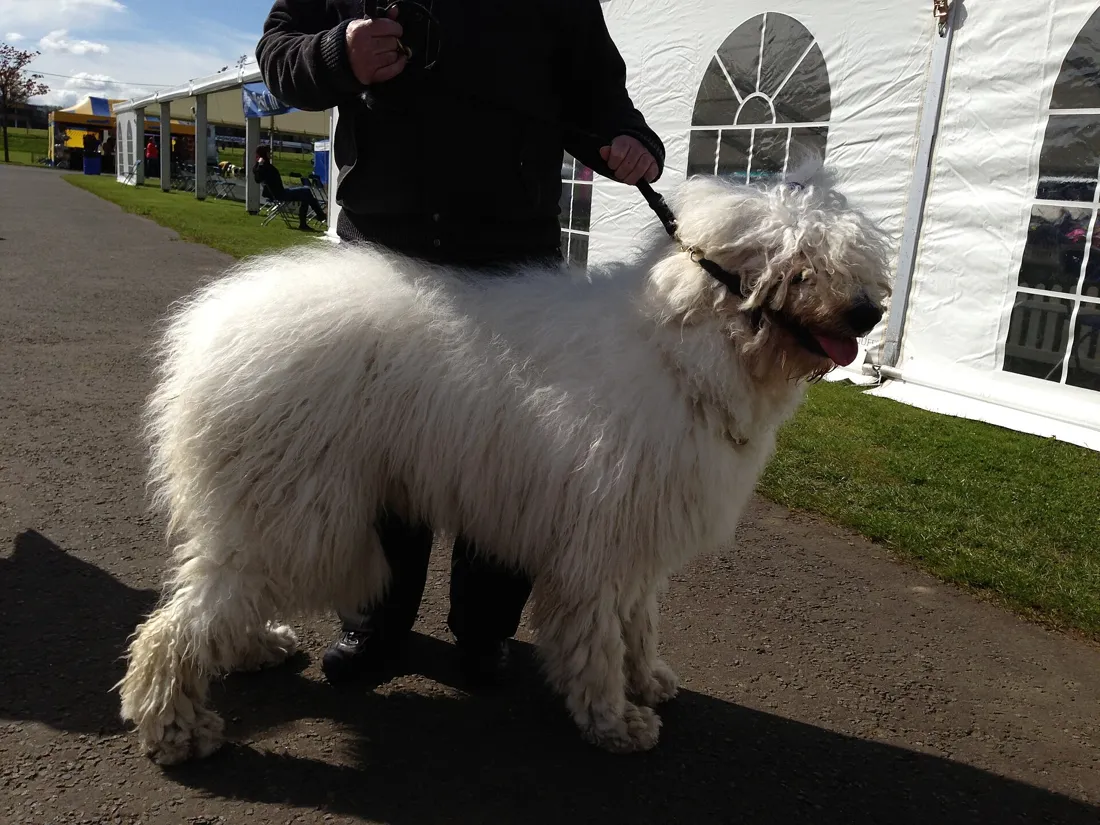

Photos show different individual dogs from licensed libraries, not one dog growing up. Stage labels are approximate, the way a careful editor would judge them.
About the Komondor
The Komondor is a large livestock guardian from Hungary, developed to live out with sheep and cattle and see off wolves, bears and thieves by presence, bark and, if needed, force. Guardians make their own decisions; that was the job. They are not obedience school stars, and they need secure fencing, socialization from puppyhood and owners who respect an independent mind.
History
Heavy double coat that forms long, felted cords: a coarse outer coat trapping a soft, woolly undercoat. That coat suits a dog shaped in Hungary to live out with sheep and cattle and see off wolves, bears and thieves by presence, bark and, if needed, force. The breed is registered at home rather than internationally, one reason numbers stay small outside its homeland. The adult stands 25 to 30 in at the shoulder and weighs 80 to 110 lb.
Personality
Independent, calm, watchful and deeply territorial is the record's Komondor, Hungary's king of the livestock guardians: a huge, corded dog bred to live with flocks and defend them against wolves, thinking for itself on the plains. Komondors are dignified, self possessed and formidably intelligent, bonding to family and flock with quiet totality and assessing strangers with professional coolness. Guardians make their own decisions; that was the job, per the overview. Puppies are big, white, fluffy bears whose coats cord in the second year; adults are immovable, watchful presences. Owners describe a dog of ancient gravity: a guardian that regards protection as a sacred, silent duty.
Temperament and traits
Energy (2/5)
Trainability (2/5)
Grooming needs (3/5)
Shedding (3/5)
Barking (4/5)
Good with children: Good with children
With other dogs: With early socialization
With strangers: Wary of strangers
Apartment life: With enough exercise
Coat and care
Coat: Heavy double coat that forms long, felted cords: a coarse outer coat trapping a soft, woolly undercoat. The cords shed almost nothing but take many hours to dry after a bath.
Colors: The standard accepts a range of colors and patterns, and individual markings vary a lot.
Feed to a visible waist tuck and weigh monthly; this breed does best on a routine of consistent meals, training in short sessions and daily exercise matched to its type. Brush weekly and check ears, teeth and nails as part of the routine. The thick coat is weatherproof and mostly self managing, with heavy seasonal shedding. Secure fencing is not optional with a dog bred to patrol territory.
Exercise and grooming
Exercise
Forty five to ninety minutes a day of calm, territorial exercise: long walks at the dog's deliberate pace and property patrols. The Komondor is a livestock guardian built to conserve energy for confrontation, famously more active at night. Secure fencing is not optional, per the care notes, with a dog bred to patrol territory. Puppies and adolescents need the gentlest loading: no forced running or jumping while a large frame matures. Guardians make their own decisions; that was the job, per the overview, and it applies to exercise negotiation too. The corded coat overheats in summer, so warm weather exercise runs early and late.
Grooming
The generic care line here says brush weekly, and an honesty note belongs on this page as it did for its Puli cousin: a corded Komondor is never brushed. The famous white cords form from the double coat and are maintained by separating them by hand; washing a fully corded dog is a major operation and drying takes many hours, because cords hold water like rope. Many pet owners keep the coat clipped short instead, with ordinary combing care. Either way: ears need checks under the coat, nails need trims on a large frame built as cooperative care from puppyhood, and teeth benefit from brushing. Choose the coat lifestyle before the puppy, not after.
Training and daily life
Training
The train score sits at the bottom of this site, and the overview explains it honestly: guardians make their own decisions, and they are not obedience school stars. Komondors are highly intelligent and learn the household's rules and boundaries thoroughly; what they will not do is perform repetitive obedience or defer a guarding judgement to a recall. Build the essentials: lead manners before the strength arrives, a settle, reliable responses at home and on fenced ground, and cooperative care for the coat. Socialisation from puppyhood is the most important training of all, exactly as the overview directs. This breed rewards expertise.
Living with a Komondor
The Komondor suits experienced guardian households with land, genuinely secure fencing and neighbours at a distance. Independent, calm, watchful and deeply territorial in the record's words, good with its own children, dog selective without early socialisation and wary of strangers by design, it rates flats as possible in the record only in the most theoretical sense. They are not obedience school stars, per the overview, and they need secure fencing, socialisation from puppyhood and owners who respect an independent mind. Expect one of the most devoted and protective dogs alive, wearing the most famous coat in the world. In expert hands, magnificent; in others, a serious mistake.
What a Komondor costs
Food cost
About $53 per month for a typical 95 lb adult eating roughly 5.0 cups a day of a standard quality food ($1.60 per lb). Full breakdown in our food expense calculator.
Activity and exercise
Plan 45 to 90 minutes a day of walks, play and training. Under exercised dogs of most breeds invent their own projects, and they rarely pick good ones.
Insurance cost
Typical US range $41 to $75 per month for accident and illness cover. Estimate only, based on market ranges for this breed's risk profile; see the insurance estimator and the insurance guide.
On the monthly figures above, a typical adult year runs to about $637 for food and $492 to $900 for insurance, before routine vet care, grooming and gear. Year one costs more: vaccinations, spay or neuter surgery, a crate, bedding and training all land at once.
Growth: puppy to senior
How weight typically builds with age for a large breed, and when full size arrives.
| Stage | Age | Typical weight |
|---|---|---|
| Puppy | 8 weeks | about 10 to 13 lb |
| Puppy | 4 months | about 22 to 31 lb |
| Puppy | 6 months | about 38 to 53 lb |
| Young | 9 months | about 54 to 75 lb |
| Young | 12 months | about 66 to 90 lb |
| Adult | 18 months | about 76 to 104 lb |
| Adult | 24 months | about 80 to 110 lb |
| Adult | Full grown | 80 to 110 lb (standard range) |
| Senior | From about 7 years | Healthy weight stays in the adult range; watch for slow gain or loss |
Growth pattern follows the size class growth curves published by the Waltham Petcare Science Institute, applied to the adult weight range in the breed standard. Individual puppies vary; steady growth matters more than hitting any single number, and your vet's growth checks come first.
Life stages
Puppies need thorough socialisation, because a guardian's world view forms early, plus the gentlest growth management and a coat decision made with the breeder. Adolescents test fences and rules at near adult size, and secure fencing plus steady handling carries the property through. Adults enjoy a calm prime: keep weight lean, cords separated or the clip maintained, and night duties accepted. Ten to twelve years makes senior status around eight: twice yearly checks, joint friendly exercise and ramps for vehicles. Old Komondors remain serene, watchful and devoted, guarding their people gently to the end.
Health
Bloat (gastric dilatation volvulus) is the emergency every owner of a big, deep chested dog should know the signs of. Hip screening is the other essential check at this size, and keeping the dog lean protects every joint it owns.
Conditions to know about
- Bloat (gastric dilatation volvulus): Bloat is the emergency every owner of a big, deep chested dog should know the signs of, in the record's words. Know the signs, feed calm measured meals and treat a swollen, restless abdomen as a race to the vet.
- Hip dysplasia: Hip screening is the other essential check at this size, per the record. Ask for scores in writing, and manage growth slow and lean in any large puppy.
- Weight management: Keeping the dog lean protects every joint it owns, per the record. Feed to a visible waist tuck and weigh monthly, exactly as the care notes direct.
Facts follow the Komondor breed standard (AKC, The Kennel Club and FCI standards agree on the essentials for this breed). Health notes summarize the conditions breed clubs and veterinary bodies most often flag for this breed. They are general information for choosing and caring, not a diagnosis or a substitute for your vet.
Gear for Komondor owners
Our team is hands on testing products for this guide right now. Recommendations will only appear here after real testing, and this module will always carry a plain affiliate disclosure at the top.
Komondor questions
How long do Komondors live?
A typical lifespan is 10 to 12 years. Weight control, dental care and screening for the breed's known conditions give a dog the best chance of reaching the top of that range.
How much does it cost to keep a Komondor?
Food for a typical adult runs about $53 a month at a standard quality tier, and accident and illness insurance usually falls between $41 and $75 a month in the US. Try the full cost calculator for a complete year one and yearly picture.
Are Komondors good with children?
Good with children. As with every breed, supervise dogs and children together and teach children to respect the dog's space.
How much exercise does a Komondor need?
Plan on 45 to 90 minutes a day, split between walks, play and training games. Puppies and seniors need gentler, shorter sessions.
Why is the Komondor corded?
The cords are functional armour: they protect against wolf bites and weather, and let the dog blend with the flock it guards. A corded Komondor in a sheep flock is nearly invisible until it stands up.
Komondor or Puli, what is the difference?
Hungarian corded cousins of opposite jobs: the Komondor is the giant, calm livestock guardian; the Puli is the small, lively herding dog. Same cords, different centuries of work.
Are Komondors good family dogs?
For experienced guardian households on suitable property, they are devoted and protective with their own. For ordinary pet homes the independence, size, coat and guarding intensity are a profound mismatch.
Breeds similar to the Komondor Compare this breed with another