Gordon Setter
Kind, lively, sensitive and devoted. From Scotland.
Sportinglarge breedScotlandStandards checked
Standards checked: this profile's facts are checked against the breed standards of the AKC, The Kennel Club and the FCI, as described on our methodology page.
Gallery
Real photos from licensed sources only, each credited to its creator.


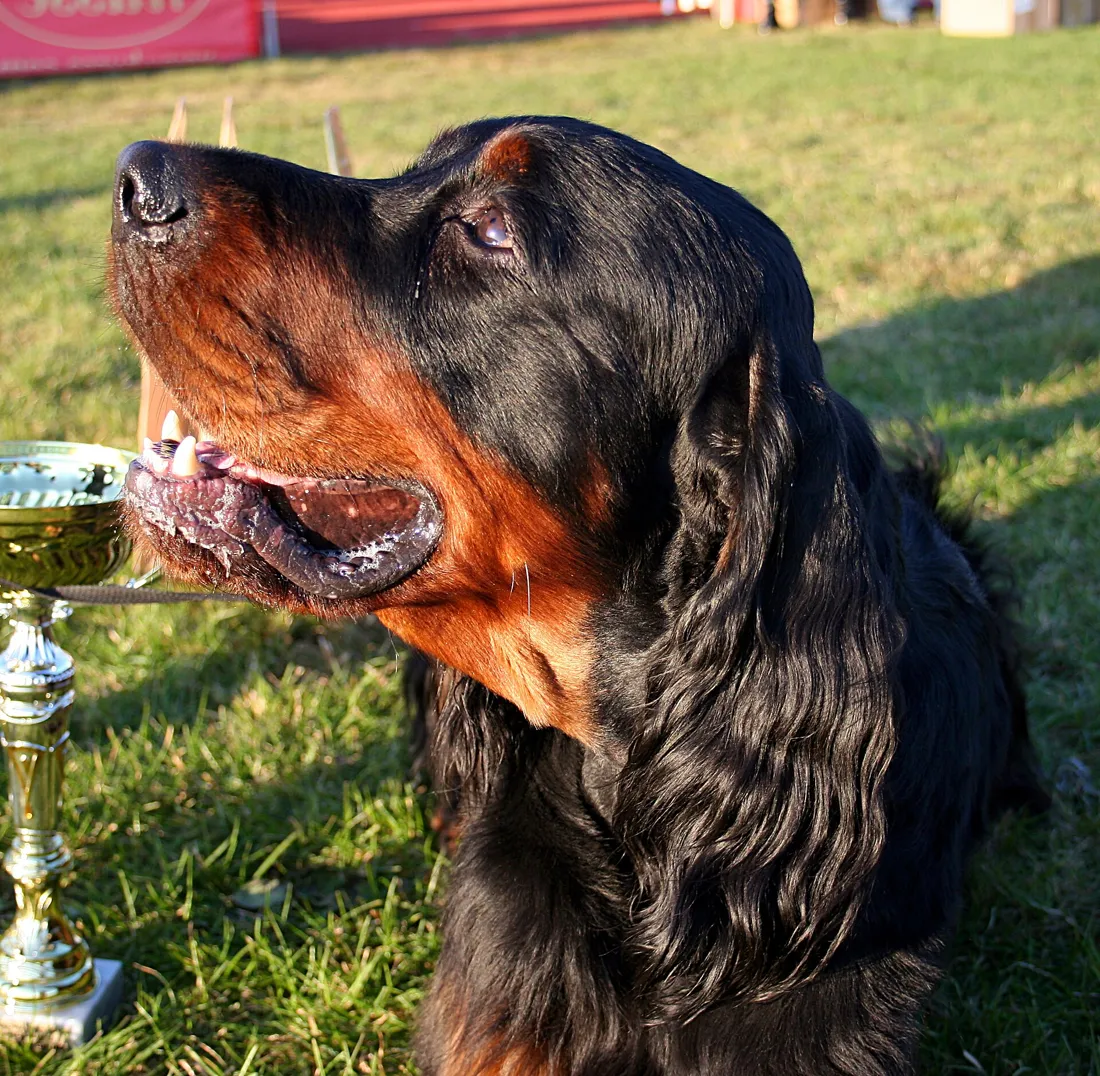

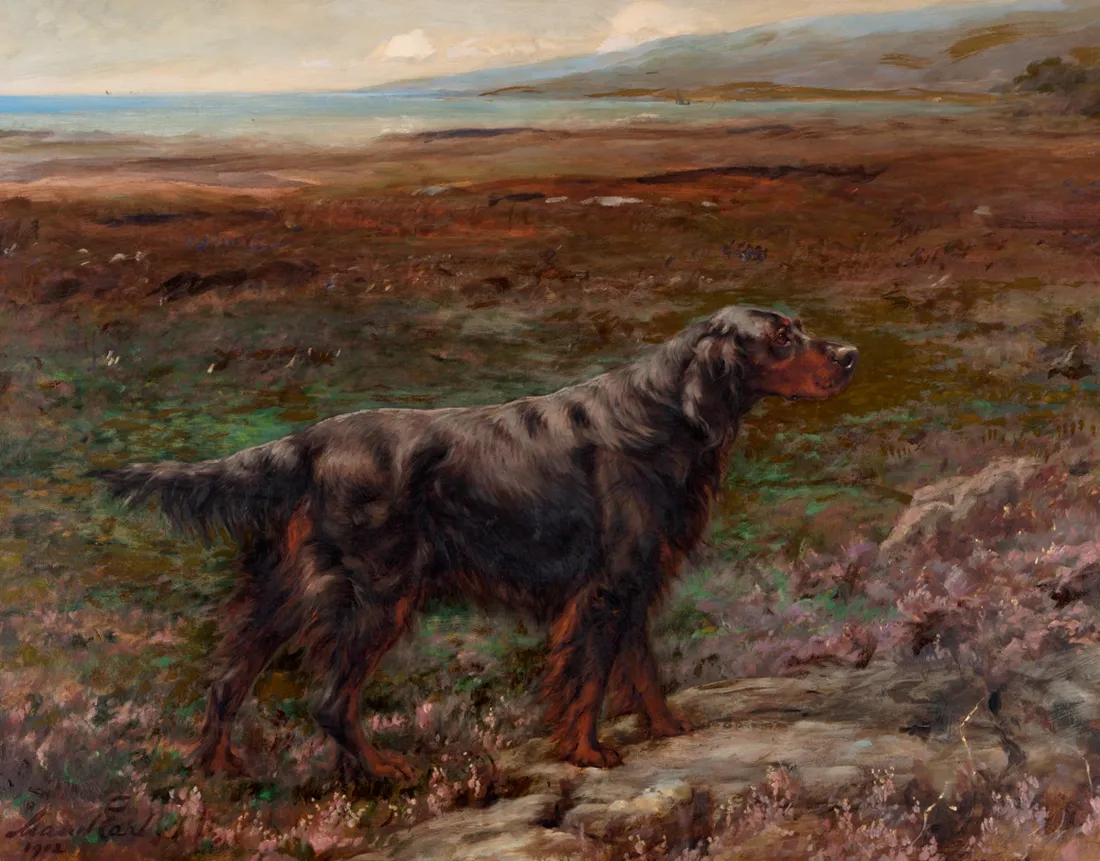

Photos show different individual dogs from licensed libraries, not one dog growing up. Stage labels are approximate, the way a careful editor would judge them.
About the Gordon Setter
From Scotland, the Gordon Setter is a large setter whose traditional work was to range wide over open ground, scenting game birds and setting them for the guns. Energy outdoors, elegance indoors: that is the setter bargain, and it only works if the outdoor half is honoured daily.
History
Setters descend from the old setting spaniels, refined in the era of net and then gun hunting into specialists that point game with the whole body. The AKC recognizes the breed today, and its standard is the reference most US breeders work to.
Personality
Kind, lively, sensitive and devoted is the record's Gordon, the black and tan setter of Scotland: the biggest, strongest and most thoughtful of the setter family. Gordons were refined at Gordon Castle for work on the grouse moors, and they keep a hunter's stamina, a connoisseur's nose and a notably loyal, one family heart. They are sensitive dogs that bond deeply, mature slowly and take life a touch more seriously than their Irish cousins. Puppies are busy, charming and strong willed; adults, given the moorland mileage, become elegant, gentle housemates with a grave sweetness. Energy outdoors, elegance indoors is the bargain, and Gordon people would not trade it.
Temperament and traits
Energy (5/5)
Trainability (4/5)
Grooming needs (3/5)
Shedding (3/5)
Barking (3/5)
Good with children: Good with children
With other dogs: Good with dogs
With strangers: Friendly with strangers
Apartment life: Not ideal
Coat and care
Coat: Silky coat, flat or slightly wavy, with long feathering on the ears, chest, belly, legs and tail. It sheds moderately and needs regular brushing to keep the feathering untangled.
Colors: Standard colors: black, Brown, Fawn.
Feed to a visible waist tuck and weigh monthly; this breed does best on a routine of consistent meals, training in short sessions and daily exercise matched to its type. Brush weekly and check ears, teeth and nails as part of the routine. The silky feathering picks up burrs and mud; a comb through after country walks keeps mats from forming behind the ears and legs.
Exercise and grooming
Exercise
An hour is a floor and the record's range runs to two: Gordons are the heaviest and most powerful of the setters, built to range the Scottish moors all day. Free running in secure areas, long hill walks, swimming and gundog work fill the programme, with recall built in stages against birds and scent. Energy outdoors, elegance indoors is the setter bargain, per the overview, and it only works if the outdoor half is honoured daily. Puppies build gradually with protected joints. The silky feathering picks up burrs and moorland debris, so post walk comb outs join the exercise routine. Pay in full and the Gordon is a kind, devoted fireside dog of great dignity.
Grooming
Brush weekly and check ears, teeth and nails as part of the routine, and learn the setter point from the care notes: the silky feathering picks up burrs and mud, so a comb through after country walks keeps mats from forming behind the ears and legs. Work the black and tan feathering in sections: chest, belly, legs and tail. The coat gleams on a fit, well fed dog. Ears deserve weekly checks and a clean after wet work, as with all long eared gundogs. Puppies need grooming habituation early. The effort is moderate and buys one of the most handsome coats in the sporting group.
Training and daily life
Training
Gordons are bright, sensitive pupils that learn beautifully under reward based, varied training, with more will than an English Setter and more sensitivity than they are usually credited with. Build recall in stages against scent and space, instal steadiness kindly, lead manners and a settle early, and weave hunting games into the lessons. Harsh handling flattens this breed; patience and partnership produce the polished article. Socialise widely to keep the devotion confident with the world. Handlers who respect the Gordon's thoughtful pace describe a gundog of unusual depth: slower to dazzle, quicker to trust, and steady for life.
Living with a Gordon Setter
The Gordon suits active, experienced countryside households that want the most substantial of the setters. Kind, lively, sensitive and devoted, good with children, good with other dogs and friendly with strangers, it rates apartments as not ideal in the record because the running, size and presence push outward. Expect dignity, mud, black and tan hairs of distinction and a dog that takes its family and its work seriously in equal measure. Gordon owners are a devoted minority who consider their breed the connoisseur's setter: the sweetest temperament in the family, wrapped in the most dog. Choose breeders who test and discuss their lines openly.
What a Gordon Setter costs
Food cost
About $39 per month for a typical 62 lb adult eating roughly 3.6 cups a day of a standard quality food ($1.60 per lb). Full breakdown in our food expense calculator.
Activity and exercise
Plan 60 to 120 minutes a day of walks, play and training. Under exercised dogs of most breeds invent their own projects, and they rarely pick good ones.
Insurance cost
Typical US range $40 to $73 per month for accident and illness cover. Estimate only, based on market ranges for this breed's risk profile; see the insurance estimator and the insurance guide.
On the monthly figures above, a typical adult year runs to about $462 for food and $480 to $876 for insurance, before routine vet care, grooming and gear. Year one costs more: vaccinations, spay or neuter surgery, a crate, bedding and training all land at once.
Growth: puppy to senior
How weight typically builds with age for a large breed, and when full size arrives.
| Stage | Age | Typical weight |
|---|---|---|
| Puppy | 8 weeks | about 5 to 10 lb |
| Puppy | 4 months | about 13 to 22 lb |
| Puppy | 6 months | about 22 to 38 lb |
| Young | 9 months | about 31 to 54 lb |
| Young | 12 months | about 37 to 66 lb |
| Adult | 18 months | about 43 to 76 lb |
| Adult | 24 months | about 45 to 80 lb |
| Adult | Full grown | 45 to 80 lb (standard range) |
| Senior | From about 7 years | Healthy weight stays in the adult range; watch for slow gain or loss |
Growth pattern follows the size class growth curves published by the Waltham Petcare Science Institute, applied to the adult weight range in the breed standard. Individual puppies vary; steady growth matters more than hitting any single number, and your vet's growth checks come first.
Life stages
Puppies need socialisation, gradual exercise building and early recall work taught as games. Adolescents are strong, keen and occasionally opinionated, and structured gundog work carries the household through a long teenage phase. Adults enjoy a vigorous prime: keep ears checked, feathering combed and weight lean. Twelve to thirteen years puts senior status around nine to ten: twice yearly checks, joint friendly running and continued inclusion in country life. Old Gordons grey handsomely at the muzzle and stay kind, devoted and dignified to the end.
Health
Progressive retinal atrophy (DNA tested), hip screening and cerebellar abiotrophy reported in some lines are the flags. Ask to see health test results for both parents before you commit to a puppy; a good breeder will offer them before you ask.
Conditions to know about
- Progressive retinal atrophy: PRA is DNA tested in the breed, per the record, one of the setter health success stories. Ask for both parents' DNA results.
- Hip dysplasia: Hip screening runs alongside the DNA work in the Gordon's flags. Ask for scores in writing and keep this powerful athlete lean through growth.
- Cerebellar abiotrophy: Reported in some lines, per the record: a hereditary condition affecting coordination that appears in young dogs. Ask breeders directly whether it has appeared in their lines and what they do about it.
Facts follow the Gordon Setter breed standard (AKC, The Kennel Club and FCI standards agree on the essentials for this breed). Health notes summarize the conditions breed clubs and veterinary bodies most often flag for this breed. They are general information for choosing and caring, not a diagnosis or a substitute for your vet.
Gear for Gordon Setter owners
Our team is hands on testing products for this guide right now. Recommendations will only appear here after real testing, and this module will always carry a plain affiliate disclosure at the top.
Gordon Setter questions
How long do Gordon Setters live?
A typical lifespan is 12 to 13 years. Weight control, dental care and screening for the breed's known conditions give a dog the best chance of reaching the top of that range.
How much does it cost to keep a Gordon Setter?
Food for a typical adult runs about $39 a month at a standard quality tier, and accident and illness insurance usually falls between $40 and $73 a month in the US. Try the full cost calculator for a complete year one and yearly picture.
Are Gordon Setters good with children?
Good with children. As with every breed, supervise dogs and children together and teach children to respect the dog's space.
How much exercise does a Gordon Setter need?
Plan on 60 to 120 minutes a day, split between walks, play and training games. Puppies and seniors need gentler, shorter sessions.
Is the Gordon the rarest setter?
It is the least common of the three British setters in most countries, and the heaviest and most powerful. Gordon people consider that a well kept secret rather than a problem.
Why is it called the Gordon Setter?
For the Dukes of Gordon, whose kennels at Gordon Castle in Scotland developed the black and tan setter in the eighteenth and nineteenth centuries.
Gordon or English Setter for a first gundog?
The English is generally the softer, more biddable introduction. The Gordon is bigger, stronger willed and more dog for experienced hands, with the same setter sweetness underneath.