Home / Breeds / German Wirehaired Pointer
German Wirehaired Pointer
Athletic, even tempered, alert and hardworking. From Germany.
Sportingmedium breedGermanyStandards checked
Standards checked: this profile's facts are checked against the breed standards of the AKC, The Kennel Club and the FCI, as described on our methodology page.
Gallery
Real photos from licensed sources only, each credited to its creator.


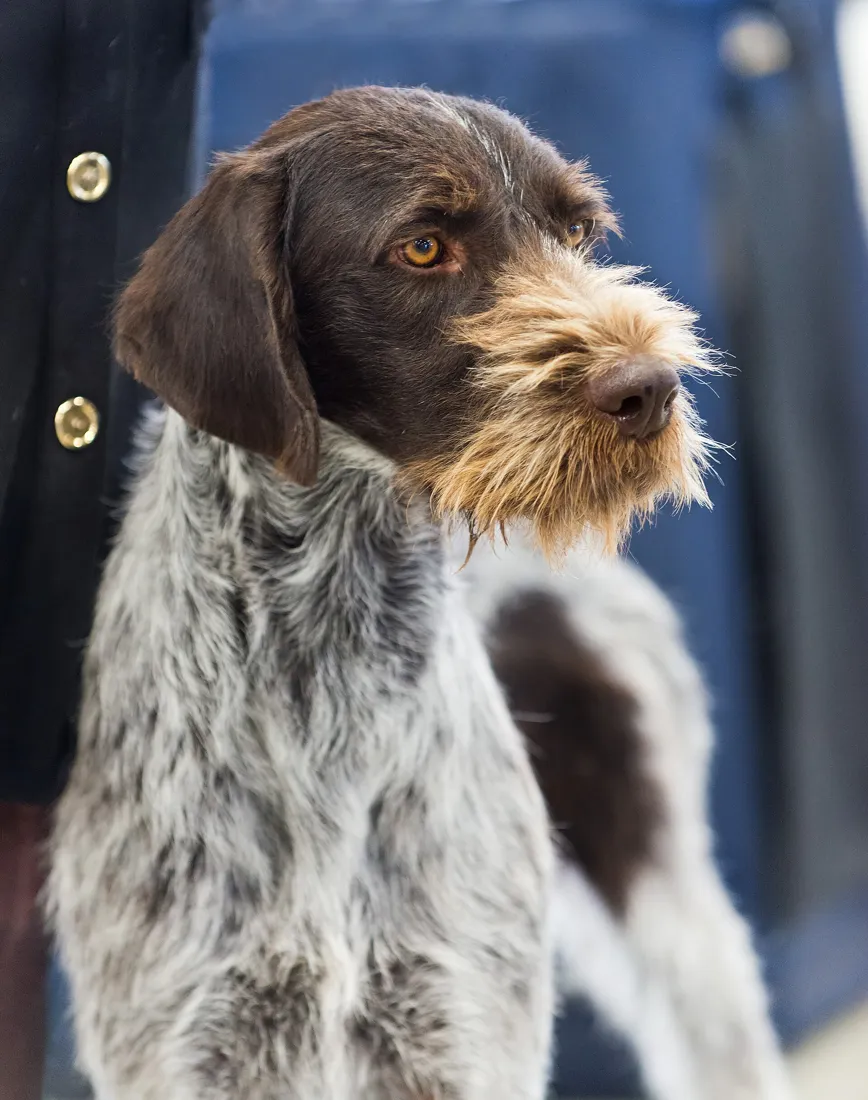

Photos show different individual dogs from licensed libraries, not one dog growing up. Stage labels are approximate, the way a careful editor would judge them.
About the German Wirehaired Pointer
The German Wirehaired Pointer is a medium sized pointing gundog from Germany, developed to quarter open ground at speed, find game birds by scent and point them rock steady. Give a pointer miles and a job and it is a gentleman; give it neither and it will invent employment.
History
Pointing breeds were developed across Europe wherever sportsmen hunted birds over open ground, and each region kept its own stamp of the type. The AKC recognizes the breed today, and its standard is the reference most US breeders work to.
Personality
Athletic, even tempered, alert and hardworking: the German Wirehaired Pointer is the rough shooting man's all rounder, built to hunt any game in any weather on land and water, then guard the house at night. Wirehairs are notably devoted, often one person dogs in intensity, with more guard in them than the shorthaired cousin and a beard full of character. They are thinkers that assess situations before committing. Puppies are tireless; adults are serious athletes with a clownish streak reserved for family. The breed forms fierce bonds, dislikes being left out of expeditions and brings a terrier's grit to a pointer's elegance.
Temperament and traits
Energy (5/5)
Trainability (4/5)
Grooming needs (3/5)
Shedding (3/5)
Barking (3/5)
Good with children: Good with children
With other dogs: Usually good with dogs
With strangers: Friendly with strangers
Apartment life: Not ideal
Coat and care
Coat: Harsh, wiry double coat: a weather resistant wire outer coat over a dense undercoat, finished with a beard, bushy eyebrows and whiskers. It sheds lightly and is hand stripped or clipped to keep its texture.
Colors: The standard accepts a range of colors and patterns, and individual markings vary a lot.
Measure meals rather than free feeding; this breed does best on a routine of consistent meals, training in short sessions and daily exercise matched to its type. Brush weekly and check ears, teeth and nails as part of the routine. The short coat is nearly wash and wear; the work is in the exercise column, not the grooming one. Check feet and pads after hard country days.
Exercise and grooming
Exercise
An hour is the floor and two is the honest expectation for many individuals: the record's range runs 60 to 120 minutes, and this breed was built to hunt hard country all day. Free running, swimming, retrieving and field work in proper doses, with gundog training as the mental half of the bargain. Give a pointer miles and a job and it is a gentleman, in the overview's words; give it neither and it invents employment. Puppies build up gradually and skip repetitive jumping. Check feet and pads after hard country days, as the care notes direct. This is among the most athletic dogs on the site and it should be chosen by people who live that way.
Grooming
The wiry coat needs a weekly brush through, attention to the beard and furnishings, and occasional hand stripping of dead coat to keep the harsh, weatherproof texture; clipping softens it. The care guidance calls the short coated pointers nearly wash and wear, and the wirehair adds only this modest extra work. Ears need checks after water work, feet and pads get inspected after hard country days, per the care notes, and burrs work into beards and legs in season, so a comb out after rough ground is routine. Nails and teeth take standard weekly care. The payoff is a coat that shrugs off weather and bramble that would stop sleeker breeds.
Training and daily life
Training
Wirehairs are excellent pupils for owners who work them properly: bright, driven and deeply bonded, they learn handling, steadiness and retrieving to professional standards when the teaching is structured and fair. The priorities are recall, proofed against game in stages; steadiness around birds and dummies; lead manners before the athleticism fully arrives; and a settle at home. Socialise widely so the breed's reserved edge with strangers matures into quiet confidence. Wirehairs sulk under unfair handling and thrive on partnership, and many excel in field trials, tracking and search work. Owners who put a system behind this dog get one of the finest working companions in the gundog group.
Living with a German Wirehaired Pointer
The German Wirehaired Pointer suits dedicated sporting households with land, secure fencing and lives built around the outdoors. They are good with children, usually good with other dogs, friendly with strangers and utterly unsuited to flats in the record's rating, because an athlete of this drive needs range and work. Indoors, a worked Wirehair is a gentleman: bearded, affectionate and settled. Unworked, the breed hunts the household's patience instead. Owners get one of the world's great versatile gundogs: hard, funny, intensely loyal and happiest wet, muddy and pointing at something. It is a specialist's dog that repays specialists completely.
What a German Wirehaired Pointer costs
Food cost
About $38 per month for a typical 60 lb adult eating roughly 3.5 cups a day of a standard quality food ($1.60 per lb). Full breakdown in our food expense calculator.
Activity and exercise
Plan 60 to 120 minutes a day of walks, play and training. Under exercised dogs of most breeds invent their own projects, and they rarely pick good ones.
Insurance cost
Typical US range $35 to $63 per month for accident and illness cover. Estimate only, based on market ranges for this breed's risk profile; see the insurance estimator and the insurance guide.
On the monthly figures above, a typical adult year runs to about $451 for food and $420 to $756 for insurance, before routine vet care, grooming and gear. Year one costs more: vaccinations, spay or neuter surgery, a crate, bedding and training all land at once.
Growth: puppy to senior
How weight typically builds with age for a medium breed, and when full size arrives.
| Stage | Age | Typical weight |
|---|---|---|
| Puppy | 8 weeks | about 7 to 10 lb |
| Puppy | 4 months | about 16 to 22 lb |
| Young | 6 months | about 26 to 36 lb |
| Young | 9 months | about 37 to 52 lb |
| Adult | 12 months | about 44 to 62 lb |
| Adult | 18 months | about 50 to 70 lb |
| Adult | Full grown | 50 to 70 lb (standard range) |
| Senior | From about 8 years | Healthy weight stays in the adult range; watch for slow gain or loss |
Growth pattern follows the size class growth curves published by the Waltham Petcare Science Institute, applied to the adult weight range in the breed standard. Individual puppies vary; steady growth matters more than hitting any single number, and your vet's growth checks come first.
Life stages
Puppies need wide socialisation, protected joints while the skeleton matures and early field manners taught as games. Adolescents are at maximum athleticism with unfinished judgement, and structured work carries the household through. Adults enjoy a long prime of hard work, with feet, ears and weight watched across the seasons. Twelve to fourteen years makes senior status around nine to ten: twice yearly checks, joint friendly exercise that keeps the dog in the field in kinder form and weight kept lean. Old Wirehairs stay keen, devoted and bearded long after the pace slows.
Health
Hip screening, eye checks, thyroid and von Willebrand testing are the standard panel for the breed. Ask to see health test results for both parents before you commit to a puppy; a good breeder will offer them before you ask.
Conditions to know about
- Hip dysplasia: Hip screening leads the breed's standard panel, as the record sets out. Ask for both parents' results in writing before committing to a puppy.
- Eye conditions: Eye checks are part of the standard panel for the breed. Current certificates for both parents, and prompt reporting of any vision change in your dog.
- Hypothyroidism: Thyroid testing is included in the breed panel because underactive thyroid occurs in working pointers. Signs include weight gain, lethargy and coat thinning; it is confirmed by blood test and managed with daily medication.
- Von Willebrand disease: The bleeding disorder completes the four part panel, tested before breeding. Mention the breed's test status to any vet planning surgery on your dog, and ask breeders for results up front.
Facts follow the German Wirehaired Pointer breed standard (AKC, The Kennel Club and FCI standards agree on the essentials for this breed). Health notes summarize the conditions breed clubs and veterinary bodies most often flag for this breed. They are general information for choosing and caring, not a diagnosis or a substitute for your vet.
Gear for German Wirehaired Pointer owners
Our team is hands on testing products for this guide right now. Recommendations will only appear here after real testing, and this module will always carry a plain affiliate disclosure at the top.
German Wirehaired Pointer questions
How long do German Wirehaired Pointers live?
A typical lifespan is 12 to 14 years. Weight control, dental care and screening for the breed's known conditions give a dog the best chance of reaching the top of that range.
How much does it cost to keep a German Wirehaired Pointer?
Food for a typical adult runs about $38 a month at a standard quality tier, and accident and illness insurance usually falls between $35 and $63 a month in the US. Try the full cost calculator for a complete year one and yearly picture.
Are German Wirehaired Pointers good with children?
Good with children. As with every breed, supervise dogs and children together and teach children to respect the dog's space.
How much exercise does a German Wirehaired Pointer need?
Plan on 60 to 120 minutes a day, split between walks, play and training games. Puppies and seniors need gentler, shorter sessions.
Wirehaired or Shorthaired Pointer, what is the difference?
The Wirehair is the rugged all weather version: tougher coat, heavier beard, more protective temperament and a reputation for intensity in the field. The Shorthair is sleeker, faster and usually a touch more frantic. Both need enormous exercise.
Do German Wirehaired Pointers shed?
Moderately. The wiry coat sheds less dramatically than a Labrador's but drops hair steadily, and dead coat benefits from hand tidying. They are not a low shedding breed.
Are Wirehairs good with cats?
Raised with cats, many live peaceably. The hunting drive is strong, though, and strange small animals outdoors are game. Introductions and supervision stay careful for life.