Home / Breeds / Drentse Patrijshond
Drentse Patrijshond
Active, friendly, willing and people focused. From Netherlands.
Sportinglarge breedNetherlandsStandards checked
Standards checked: this profile's facts are checked against the breed standards of the AKC, The Kennel Club and the FCI, as described on our methodology page.
Gallery
Real photos from licensed sources only, each credited to its creator.


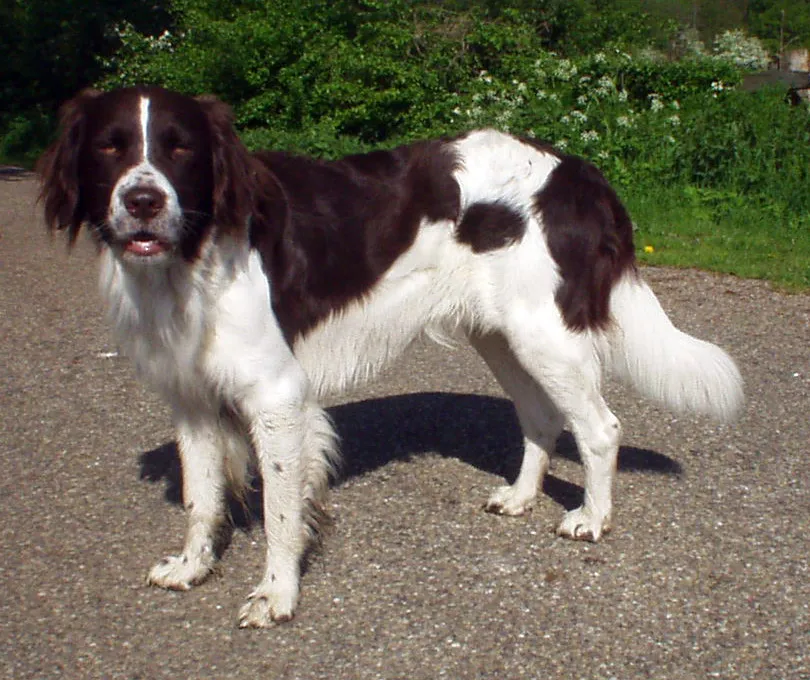

Photos show different individual dogs from licensed libraries, not one dog growing up. Stage labels are approximate, the way a careful editor would judge them.
About the Drentse Patrijshond
The Drentse Patrijshond is a large gundog breed from Netherlands, developed to work with hunters in the field, finding, flushing and retrieving game. Bred to work all day beside people, this breed is miserable without exercise and company, and delightful with both.
History
Bred in the Netherlands to work with hunters in the field, finding, flushing and retrieving game, the Drentse Patrijshond is a large dog in the Sporting group. The breed holds AKC recognition, so its standard is set in the United States as well as in its homeland. A typical life runs 9 to 12 years. Its standard colours in our records are white with brown markings.
Personality
Active, friendly, willing and people focused is the record's Drentse Patrijshond, the Drent: the brown and white gundog of the Dutch province of Drenthe, kept for centuries by small farmers as a pointing, retrieving, cart pulling and farm dog in one, and one of the gentlest of all gundogs. Drents are intelligent, sensitive and deeply devoted, working close to the gun with a methodical style and living as true family members. Puppies are bright, merry charmers; adults are devoted, versatile companions. Owners describe the complete Dutch farm gundog: every job on the farm done by one kind, capable, brown and white dog.
Temperament and traits
Energy (5/5)
Trainability (4/5)
Grooming needs (4/5)
Shedding (3/5)
Barking (3/5)
Good with children: Good with children
With other dogs: Good with dogs
With strangers: Friendly with strangers
Apartment life: Not ideal
Coat and care
Coat: The coat is dense, but not really long.
Colors: Standard colors: white with brown markings.
Feed to a visible waist tuck and weigh monthly; this breed does best on a routine of consistent meals, training in short sessions and daily exercise matched to its type. Long coats need brushing two or three times a week, and daily attention in mud and burr season. Ears, feet and coat all take a beating in the field season; build post walk checks into the routine.
Exercise and grooming
Exercise
An hour is a floor and the record's energy is top of scale: the Drentse Patrijshond, the Drent, is the province of Drenthe's all round gundog, the Dutch farmer's pointing, retrieving and farm dog, worked for centuries in the north eastern Netherlands. It needs the gundog athlete's programme: long walks, free running, swimming, training and scent work. Bred to work all day beside people, this breed is miserable without exercise and company, and delightful with both, per the overview. Puppies build up gradually. A worked Drent is a gentle, devoted house dog, famously calm at home for so capable a field dog.
Grooming
Long coats need brushing two or three times a week, and daily attention in mud and burr season, exactly as the care notes direct for the dense brown and white coat (dense, but not really long, in the record's own coat note): work through the feathering so it stays free. Ears, feet and coat all take a beating in the field season; build post walk checks into the routine, per the notes. Feed to a visible waist tuck and weigh monthly. Puppies need ear care habituation from the start. Owners budget real field season time for the checks.
Training and daily life
Training
With a strong train score and top energy, the Drent is an excellent, willing pupil: intelligent, cooperative and people focused, learning field work, household skills and dog sports readily under kind, consistent, reward based training. Short, joyful sessions suit a sensitive, biddable dog. Priorities are socialisation, recall, steadiness, delivery to hand, and cooperative ear care. Owners describe one of the most rewarding training partnerships in the gundog group.
Living with a Drentse Patrijshond
The Drentse Patrijshond suits very active, devoted households, ideally with fields and water, that want Drenthe's gentle all rounder: active, friendly, willing and people focused in the record's summary, good with children, good with other dogs and friendly with strangers. It rates apartments as not ideal because exercise and company push outward: this breed is miserable without exercise and company, per the overview, and delightful with both. Owners describe a dog of unusual gentleness and quality: the partridge dog of the Dutch heath, a field athlete that becomes a fireside philosopher at home.
What a Drentse Patrijshond costs
Food cost
About $39 per month for a typical 64 lb adult eating roughly 3.7 cups a day of a standard quality food ($1.60 per lb). Full breakdown in our food expense calculator.
Activity and exercise
Plan 60 to 90 minutes a day of walks, play and training. Under exercised dogs of most breeds invent their own projects, and they rarely pick good ones.
Insurance cost
Typical US range $40 to $72 per month for accident and illness cover. Estimate only, based on market ranges for this breed's risk profile; see the insurance estimator and the insurance guide.
On the monthly figures above, a typical adult year runs to about $473 for food and $480 to $864 for insurance, before routine vet care, grooming and gear. Year one costs more: vaccinations, spay or neuter surgery, a crate, bedding and training all land at once.
Growth: puppy to senior
How weight typically builds with age for a large breed, and when full size arrives.
| Stage | Age | Typical weight |
|---|---|---|
| Puppy | 8 weeks | about 7 to 9 lb |
| Puppy | 4 months | about 15 to 20 lb |
| Puppy | 6 months | about 26 to 35 lb |
| Young | 9 months | about 37 to 50 lb |
| Young | 12 months | about 45 to 60 lb |
| Adult | 18 months | about 52 to 69 lb |
| Adult | 24 months | about 55 to 73 lb |
| Adult | Full grown | 55 to 73 lb (standard range) |
| Senior | From about 7 years | Healthy weight stays in the adult range; watch for slow gain or loss |
Growth pattern follows the size class growth curves published by the Waltham Petcare Science Institute, applied to the adult weight range in the breed standard. Individual puppies vary; steady growth matters more than hitting any single number, and your vet's growth checks come first.
Life stages
Puppies need socialisation, ear care habituation, gradual exercise building and gundog foundations in short games. Adolescents are bright, busy and people hungry, and structured training carries the household through. Adults enjoy a hardy prime on the shorter span: nine to twelve years. Keep ears checked after wet work, weight at a worker's tuck and the field days real. Senior status arrives around eight: twice yearly checks with hip, elbow and eye awareness, joint friendly exercise and continued gentle swims. Old Drents stay active, friendly and devoted.
Health
Hip and elbow scoring and annual eye checks are the backbone of gundog health testing, and most gundog breeds also have DNA tests for the conditions found in their lines. Ask the breeder for the full panel, not just a vet checked claim.
Conditions to know about
- Hip dysplasia: Hip scoring is the backbone of gundog health testing, per the record. Ask the breeder for the full panel, not just a vet checked claim, in the record's own standard.
- Elbow dysplasia: Elbow scoring stands beside hips in the gundog backbone named in the record. Ask for both parents' grades in writing.
- Eye conditions: Annual eye checks are the third named pillar in the record. Ask for current certificates for both parents.
- DNA tested conditions: Most gundog breeds also have DNA tests for the conditions found in their lines, per the record. Ask which DNA tests apply to the line and see the results.
Facts follow the Drentse Patrijshond breed standard (AKC, The Kennel Club and FCI standards agree on the essentials for this breed). Health notes summarize the conditions breed clubs and veterinary bodies most often flag for this breed. They are general information for choosing and caring, not a diagnosis or a substitute for your vet.
Gear for Drentse Patrijshond owners
Our team is hands on testing products for this guide right now. Recommendations will only appear here after real testing, and this module will always carry a plain affiliate disclosure at the top.
Drentse Patrijshond questions
How long do Drentse Patrijshonds live?
A typical lifespan is 9 to 12 years. Weight control, dental care and screening for the breed's known conditions give a dog the best chance of reaching the top of that range.
How much does it cost to keep a Drentse Patrijshond?
Food for a typical adult runs about $39 a month at a standard quality tier, and accident and illness insurance usually falls between $40 and $72 a month in the US. Try the full cost calculator for a complete year one and yearly picture.
Are Drentse Patrijshonds good with children?
Good with children. As with every breed, supervise dogs and children together and teach children to respect the dog's space.
How much exercise does a Drentse Patrijshond need?
Plan on 60 to 90 minutes a day, split between walks, play and training games. Puppies and seniors need gentler, shorter sessions.
What does Patrijshond mean?
Partridge dog, in Dutch: the Drentse Patrijshond is the partridge dog of Drenthe province, the all round gundog of the Dutch smallholder, pointing and retrieving partridges and other game over the heath and fields.
Drentse Patrijshond or Stabyhoun, what is the difference?
Dutch gundog cousins: the Drent is the bigger, brown and white dog of Drenthe in the north east. The Stabyhoun is the black and white Frisian dog. Both are gentle, versatile, rare Dutch farm gundogs.
Are Drents good family dogs?
Yes, famously in the Netherlands: active, friendly and people focused in the record's words, gentle with children. Real gundog exercise and company are the conditions.
Breeds similar to the Drentse Patrijshond Compare this breed with another