Home / Breeds / Burgos Pointer
Burgos Pointer
Driven, intelligent, steady and companionable. From Castile and León (Spain).
Sportinglarge breedCastile and León (Spain)Standards checked
Standards checked: this profile's facts are checked against the breed standards of the AKC, The Kennel Club and the FCI, as described on our methodology page.
Gallery
Real photos from licensed sources only, each credited to its creator.
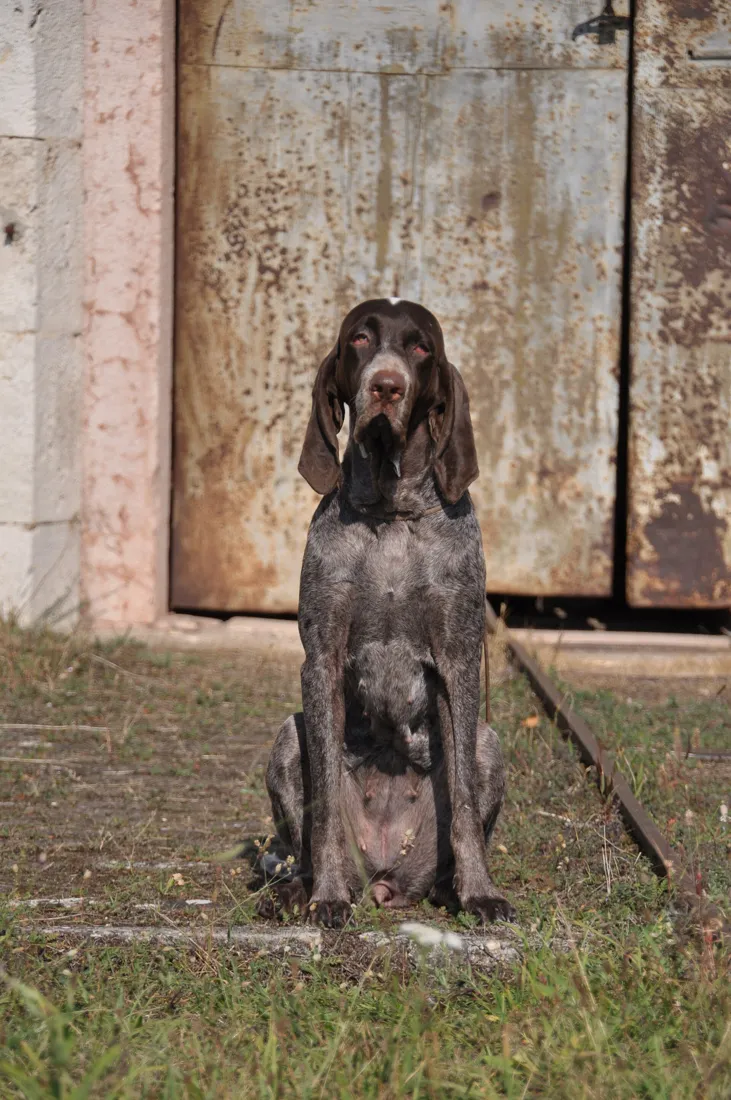

Photos show different individual dogs from licensed libraries, not one dog growing up. Stage labels are approximate, the way a careful editor would judge them.
About the Burgos Pointer
Castile and León (Spain) produced the Burgos Pointer, a large pointing gundog bred to quarter open ground at speed, find game birds by scent and point them rock steady. This breed's engine is built for all day work. Owners who run, hike or train in field sports get a calm and loyal dog at home.
History
Burgos Pointer comes from Castile and León (Spain), where dogs of this type were kept to quarter open ground at speed, find game birds by scent and point them rock steady. The FCI recognizes the breed, and its standard is the reference used across most of the world. The adult stands 23 to 26 in at the shoulder and weighs 55 to 85 lb. Short, Bushy and Smooth.
Personality
Driven, intelligent, steady and companionable is the record's Burgos Pointer, Spain's venerable Perdiguero: a large, noble pointing dog of ancient lineage, heavier and calmer than most pointers, famous for a superb nose, a methodical quartering style and an exceptionally good nature. Burgos Pointers are gentle, willing and deeply devoted, foot hunting dogs bred to work close and steady rather than flashy and far. Puppies are sturdy, speckled charmers; adults are handsome, loyal partners. Owners describe the complete Spanish gundog: all the pointing craft, at a civilised tempo, with a heart of unusual sweetness.
Temperament and traits
Energy (5/5)
Trainability (4/5)
Grooming needs (2/5)
Shedding (3/5)
Barking (3/5)
Good with children: Good with children
With other dogs: Usually good with dogs
With strangers: Friendly with strangers
Apartment life: Not ideal
Coat and care
Coat: Short, Bushy and Smooth.
Colors: Standard colors: brown/combined with brown/spottled.
Feed to a visible waist tuck and weigh monthly; this breed does best on a routine of consistent meals, training in short sessions and daily exercise matched to its type. The easiest coat in dogs: a weekly brush with a rubber mitt and the occasional bath. The short coat is nearly wash and wear; the work is in the exercise column, not the grooming one. Check feet and pads after hard country days.
Exercise and grooming
Exercise
An hour is a floor and the record's range runs to two: the Burgos Pointer, the Perdiguero de Burgos, is Spain's ancient, heavy boned pointer, one of the oldest pointing breeds in Europe and an ancestor of many others, bred for foot hunting feather and fur in Castile. This breed's engine is built for all day work, per the overview: owners who run, hike or train in field sports get a calm and loyal dog at home. The Burgos works more methodically than the racing pointers, at a foot hunter's pace with a superb nose. Puppies build up gradually. Check feet and pads after hard country days, per the care notes.
Grooming
The easiest coat in dogs: a weekly brush with a rubber mitt and the occasional bath, in the care notes' own words. The short coat is nearly wash and wear; the work is in the exercise column, not the grooming one, per the notes. Check feet and pads after hard country days. Feed to a visible waist tuck and weigh monthly for a big, food loving pointer. Ears take weekly checks, nails need trims and teeth benefit from brushing. Puppies need kind foot handling habits. Owners rate the Burgos' grooming as the lowest of the large gundogs.
Training and daily life
Training
Burgos Pointers are capable, willing pupils with a train score near the site's top, learning the pointing discipline beautifully under reward based, structured training, with a notably cooperative, soft temperament. Teach clearly, proof patiently against birds, and keep sessions encouraging. Priorities are recall proofed against game, a reliable delivery, a settle, lead manners, and socialisation that keeps the steadiness confident. Many Burgos work as genuine foot hunting dogs across Spain. Owners describe one of the easiest partnerships in the pointing world: a talented dog that wants to work with you, not merely for you.
Living with a Burgos Pointer
The Burgos Pointer suits active rural households that want a piece of pointing history: a big, calm, methodical Spanish gundog of great antiquity. Driven and intelligent afield, steady and companionable at home in the record's words, good with children, usually good with other dogs and friendly with strangers, it rates apartments as not ideal because the ranging engine needs country. Expect a dog that hunts like a scholar and rests like a gentleman. Owners describe the professor of the pointers: unhurried, thorough and utterly devoted.
What a Burgos Pointer costs
Food cost
About $42 per month for a typical 70 lb adult eating roughly 3.9 cups a day of a standard quality food ($1.60 per lb). Full breakdown in our food expense calculator.
Activity and exercise
Plan 60 to 120 minutes a day of walks, play and training. Under exercised dogs of most breeds invent their own projects, and they rarely pick good ones.
Insurance cost
Typical US range $41 to $74 per month for accident and illness cover. Estimate only, based on market ranges for this breed's risk profile; see the insurance estimator and the insurance guide.
On the monthly figures above, a typical adult year runs to about $506 for food and $492 to $888 for insurance, before routine vet care, grooming and gear. Year one costs more: vaccinations, spay or neuter surgery, a crate, bedding and training all land at once.
Growth: puppy to senior
How weight typically builds with age for a large breed, and when full size arrives.
| Stage | Age | Typical weight |
|---|---|---|
| Puppy | 8 weeks | about 7 to 10 lb |
| Puppy | 4 months | about 15 to 24 lb |
| Puppy | 6 months | about 26 to 41 lb |
| Young | 9 months | about 37 to 58 lb |
| Young | 12 months | about 45 to 70 lb |
| Adult | 18 months | about 52 to 81 lb |
| Adult | 24 months | about 55 to 85 lb |
| Adult | Full grown | 55 to 85 lb (standard range) |
| Senior | From about 7 years | Healthy weight stays in the adult range; watch for slow gain or loss |
Growth pattern follows the size class growth curves published by the Waltham Petcare Science Institute, applied to the adult weight range in the breed standard. Individual puppies vary; steady growth matters more than hitting any single number, and your vet's growth checks come first.
Life stages
Puppies need socialisation, foot care habituation, protected joints while a large frame grows and early bird game foundations built as manners. Adolescents are at maximum ranging energy, and field training plus structure carries the household through. Adults enjoy a long, vigorous prime: keep feet checked after hard days, weight at a visible waist tuck and the work coming. Twelve to fourteen years puts senior status around ten: twice yearly checks with hip and eye awareness, joint friendly exercise and continued gentle quartering. Old Burgos Pointers stay steady, devoted and companionable.
Health
Hip and elbow scoring and annual eye checks are the backbone of gundog health testing, and most gundog breeds also have DNA tests for the conditions found in their lines. Ask the breeder for the full panel, not just a vet checked claim.
Conditions to know about
- Hip and elbow dysplasia: Hip and elbow scoring is the backbone of gundog health testing, per the record. Ask the breeder for the full panel, not just a vet checked claim, in the record's direct advice.
- Eye conditions: Annual eye checks complete the backbone named in the record. Ask for current certificates for both parents.
- DNA screened conditions: Most gundog breeds also have DNA tests for the conditions found in their lines, per the record. Ask which panels the breeder runs and see the results.
Facts follow the Burgos Pointer breed standard (AKC, The Kennel Club and FCI standards agree on the essentials for this breed). Health notes summarize the conditions breed clubs and veterinary bodies most often flag for this breed. They are general information for choosing and caring, not a diagnosis or a substitute for your vet.
Gear for Burgos Pointer owners
Our team is hands on testing products for this guide right now. Recommendations will only appear here after real testing, and this module will always carry a plain affiliate disclosure at the top.
Burgos Pointer questions
How long do Burgos Pointers live?
A typical lifespan is 12 to 14 years. Weight control, dental care and screening for the breed's known conditions give a dog the best chance of reaching the top of that range.
How much does it cost to keep a Burgos Pointer?
Food for a typical adult runs about $42 a month at a standard quality tier, and accident and illness insurance usually falls between $41 and $74 a month in the US. Try the full cost calculator for a complete year one and yearly picture.
Are Burgos Pointers good with children?
Good with children. As with every breed, supervise dogs and children together and teach children to respect the dog's space.
How much exercise does a Burgos Pointer need?
Plan on 60 to 120 minutes a day, split between walks, play and training games. Puppies and seniors need gentler, shorter sessions.
Is the Burgos Pointer really one of the oldest pointing breeds?
Yes: the Perdiguero de Burgos is documented in Spain for centuries and is considered an ancestor stock for several European pointing breeds. It is Spain's great contribution to the pointing dog world.
Burgos Pointer or German Shorthaired, what is the difference?
The Burgos is the older, heavier, calmer Spanish original, working methodically at foot pace. The Shorthair is the racier German development. Both are elite versatile gundogs; the Burgos is the more deliberate.
Are Burgos Pointers good family dogs?
Yes, for active families: driven afield, steady and companionable at home in the record's words, famously good natured. The exercise is genuine gundog level.
Breeds similar to the Burgos Pointer Compare this breed with another