Bulldog
Calm, courageous, dignified and sweet. From England, United Kingdom.
Non-Sportingmedium breedEngland, United KingdomStandards checked
Standards checked: this profile's facts are checked against the breed standards of the AKC, The Kennel Club and the FCI, as described on our methodology page.
Gallery
Real photos from licensed sources only, each credited to its creator.


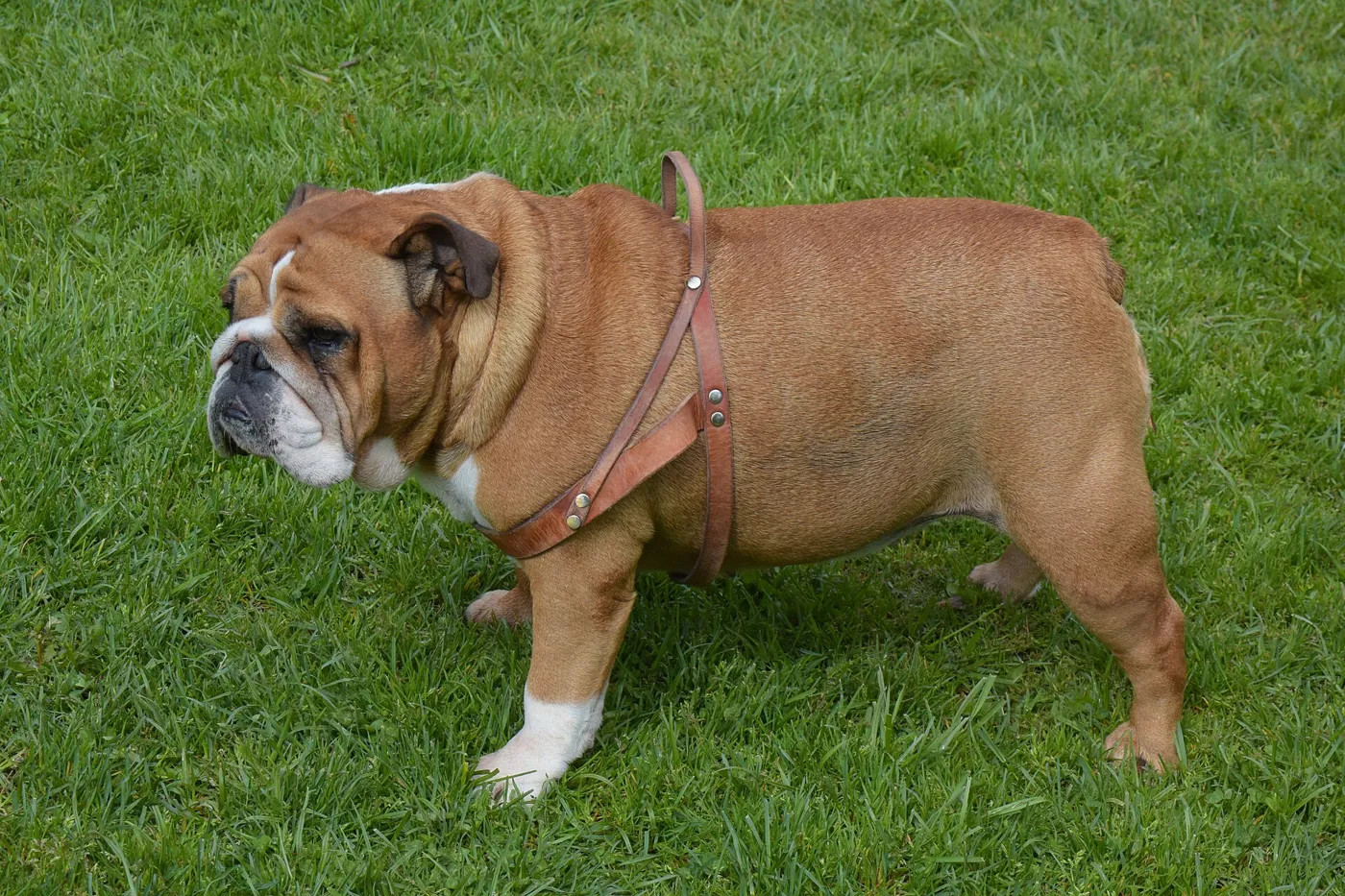

Photos show different individual dogs from licensed libraries, not one dog growing up. Stage labels are approximate, the way a careful editor would judge them.
About the Bulldog
The modern Bulldog is a gentle, dignified companion, worlds away from its fighting ancestors. Bulldogs are calm, funny and devoted, happiest pottering beside their people. Their heavy build and flat faces mean heat, exercise and weight all need careful management.
History
Bulldogs were used in the English sport of bull baiting until it was banned in 1835. Fanciers then bred out the ferocity while keeping the distinctive build, creating the mellow companion of today.
Personality
The Bulldog's personality is a study in contrasts: a dog bred from fighters that has become one of the gentlest companions alive. Bulldogs are calm, dignified and quietly funny, with a stubborn streak that runs through everything and a deep devotion to their people. They are homebodies who consider a short potter around the block a full programme and the sofa the centre of the universe. Courage remains in the character, shown more as steadiness than fire: little frightens them and less excites them. They bond hard, follow their favourite person from room to room at a stately waddle and are patient and forgiving with children. Life with a Bulldog runs at Bulldog pace, and owners usually decide it is the right pace.
Temperament and traits
Energy (2/5)
Trainability (3/5)
Grooming needs (3/5)
Shedding (3/5)
Barking (2/5)
Good with children: Good with children
With other dogs: Usually good with dogs
With strangers: Friendly with strangers
Apartment life: Well suited
Coat and care
Coat: Short, smooth, fine coat over loose, wrinkled skin.
Colors: Brindle, white, red, fawn and piebald combinations.
Clean and dry the skin folds daily, keep nails short, and never let the dog overheat: walk in the cool parts of the day. Food must be measured strictly, since Bulldogs gain weight on air, almost.
Exercise and grooming
Exercise
Twenty to forty minutes a day, in short, gentle outings, is the right scale for this breed, and the weather decides the schedule. Walk in the cool of the morning and evening, stop often, and treat heavy panting as a full stop. Bulldogs cannot regulate heat like other dogs, and overheating can kill: shade, water and rest are not optional extras. Indoor play, pottering garden time and short sniff walks make up the rest of the day. Avoid stairs marathons, jumping and deep water; Bulldogs are notoriously poor swimmers and can sink without warning, so pools need fences and canals need leads. The goal is a dog that stays slim and gently fit, never an athlete.
Grooming
The short coat brushes out in five minutes a week, but the skin is the real job. Wrinkle folds on the face and around the tail collect moisture and debris: clean them daily with a soft, damp cloth or vet approved wipe and dry them completely, because damp folds are where infections start. Check between the toes and under the tail pocket too. Bath in a gentle dog shampoo every few weeks or when the folds smell sour. Nails need trimming every couple of weeks since the breed walks too gently to wear them down, and eyes should be checked daily for redness or discharge, which this breed produces regularly.
Training and daily life
Training
Bulldogs have a reputation for stubbornness that is really a talent for negotiation. They learn perfectly well but see no reason to repeat a behaviour for free, so training runs on food rewards, short sessions and ending while things are going well. Force achieves nothing with this breed; patience and consistency do. Housetraining takes longer than average and improves with a rigid routine and warm praise. The essentials are lead manners, a reliable recall for garden scale distances, settling on a mat and tolerating handling of folds, paws and eyes, which grooming and vet care will demand for life. Socialise puppies thoroughly so the adult solidity stays friendly rather than turning guardy.
Living with a Bulldog
For flat living the Bulldog is close to perfect on paper: low exercise needs, modest size, little barking and a calm indoor manner, and they are famously good with children and tolerant of household chaos. The realities to budget for are heat management in summer, including air conditioning during heatwaves, loud snoring beside the sofa, drool after drinking and more vet visits than most breeds see. They are social and people focused, disliking long hours alone. Strangers are greeted politely, other dogs usually without drama. Anyone choosing this breed should do it with clear eyes about the health bills and the short lifespan, and choose the most responsibly bred puppy available.
What a Bulldog costs
Food cost
About $30 per month for a typical 45 lb adult eating roughly 2.8 cups a day of a standard quality food ($1.60 per lb). Full breakdown in our food expense calculator.
Activity and exercise
Plan 20 to 40 minutes a day of walks, play and training. Under exercised dogs of most breeds invent their own projects, and they rarely pick good ones.
Insurance cost
Typical US range $65 to $110 per month for accident and illness cover. Estimate only, based on market ranges for this breed's risk profile; see the insurance estimator and the insurance guide.
On the monthly figures above, a typical adult year runs to about $363 for food and $780 to $1,320 for insurance, before routine vet care, grooming and gear. Year one costs more: vaccinations, spay or neuter surgery, a crate, bedding and training all land at once.
Growth: puppy to senior
How weight typically builds with age for a medium breed, and when full size arrives.
| Stage | Age | Typical weight |
|---|---|---|
| Puppy | 8 weeks | about 6 to 7 lb |
| Puppy | 4 months | about 13 to 16 lb |
| Young | 6 months | about 21 to 26 lb |
| Young | 9 months | about 30 to 37 lb |
| Adult | 12 months | about 35 to 44 lb |
| Adult | 18 months | about 40 to 50 lb |
| Adult | Full grown | 40 to 50 lb (standard range) |
| Senior | From about 8 years | Healthy weight stays in the adult range; watch for slow gain or loss |
Growth pattern follows the size class growth curves published by the Waltham Petcare Science Institute, applied to the adult weight range in the breed standard. Individual puppies vary; steady growth matters more than hitting any single number, and your vet's growth checks come first.
Life stages
Puppies are more active than adults and need careful heat management, early socialisation and measured feeding from the start, because fat puppies become fat, joint strained adults. Slow, steady growth matters more than size. Adults settle early into the low gear lifestyle, and the middle years are about weight control, skin care and keeping up the gentle daily walking that protects joints and heart. The eight to ten year lifespan is short, and seniors arrive around seven: watch breathing changes, keep folds scrupulously clean as skin ages, manage arthritis early and make vet checks twice yearly. Old Bulldogs remain sweet, funny company to the end.
Health
This is a high maintenance breed medically: breathing problems, skin infections, eye problems, hip dysplasia and heart issues are all common, and insurance costs reflect it. Choose breeders who test breathing, hips, elbows and heart, and be ready for vet bills.
Conditions to know about
- Brachycephalic airway syndrome: The flat face crowds the airway, so Bulldogs breathe noisily, snore heavily and can struggle dangerously in heat or excitement. Breeders should grade breathing, and the worst affected dogs benefit from airway surgery. Never fly a Bulldog in a cargo hold.
- Skin fold infections: Moisture and friction inside the wrinkles grow bacteria and yeast, causing red, smelly, sore skin. Daily fold cleaning prevents most cases, and persistent infections need veterinary treatment rather than stronger home remedies.
- Eye problems: Cherry eye, dry eye and eyelids that roll in or out are all common in the breed. Eyes that are red, cloudy or producing discharge should be seen promptly, as several of these conditions damage sight if left.
- Hip dysplasia: Surprising to many in a stocky breed, but Bulldogs record some of the poorest hip scores of any breed in screening programmes. It contributes to the breed's stiff, rolling gait worsening with age, and weight control is essential protection.
- Heart conditions: Pulmonic stenosis, a narrowing of the heart's outlet valve, is the breed's known inherited heart risk. Breeders should have hearts assessed, and puppies with murmurs need specialist follow up.
Facts follow the Bulldog breed standard (AKC, The Kennel Club and FCI standards agree on the essentials for this breed). Health notes summarize the conditions breed clubs and veterinary bodies most often flag for this breed. They are general information for choosing and caring, not a diagnosis or a substitute for your vet.
Gear for Bulldog owners
Our team is hands on testing products for this guide right now. Recommendations will only appear here after real testing, and this module will always carry a plain affiliate disclosure at the top.
Bulldog questions
How long do Bulldogs live?
A typical lifespan is 8 to 10 years. Weight control, dental care and screening for the breed's known conditions give a dog the best chance of reaching the top of that range.
How much does it cost to keep a Bulldog?
Food for a typical adult runs about $30 a month at a standard quality tier, and accident and illness insurance usually falls between $65 and $110 a month in the US. Try the full cost calculator for a complete year one and yearly picture.
Are Bulldogs good with children?
Good with children. As with every breed, supervise dogs and children together and teach children to respect the dog's space.
How much exercise does a Bulldog need?
Plan on 20 to 40 minutes a day, split between walks, play and training games. Puppies and seniors need gentler, shorter sessions.
Can Bulldogs swim?
No, not safely. The heavy front, big head and short legs make Bulldogs some of the poorest swimmers in the dog world, and they can sink quickly. Fence pools, use a life jacket on boats and keep them on a lead near deep water.
Why does my Bulldog snore so loudly?
The same shortened airway that makes breathing noisy during the day carries on at night. Snoring is normal for the breed, but pauses in breathing, gasping awake or daytime sleepiness are worth discussing with your vet, as they suggest the airway is struggling.
Are Bulldogs expensive to keep?
Yes, by dog standards. Vet bills and insurance are the big items, and this breed sees the vet more than most. Anyone choosing a Bulldog should budget honestly for a medically high maintenance dog before falling for the face.