Boxer
Fun loving, bright, loyal and patient. From Germany.
Workinglarge breedGermanyStandards checked
Standards checked: this profile's facts are checked against the breed standards of the AKC, The Kennel Club and the FCI, as described on our methodology page.
Gallery
Real photos from licensed sources only, each credited to its creator.


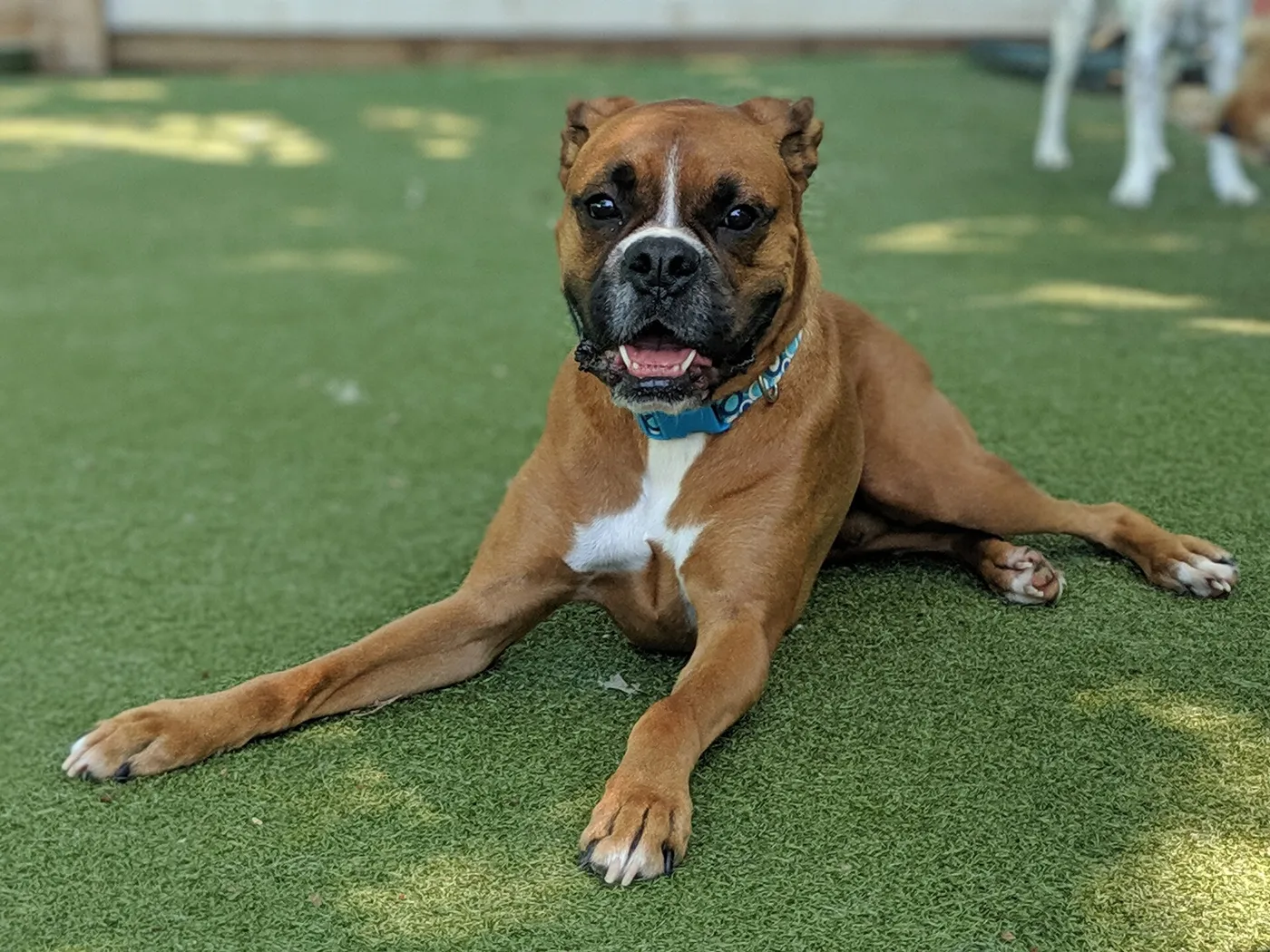

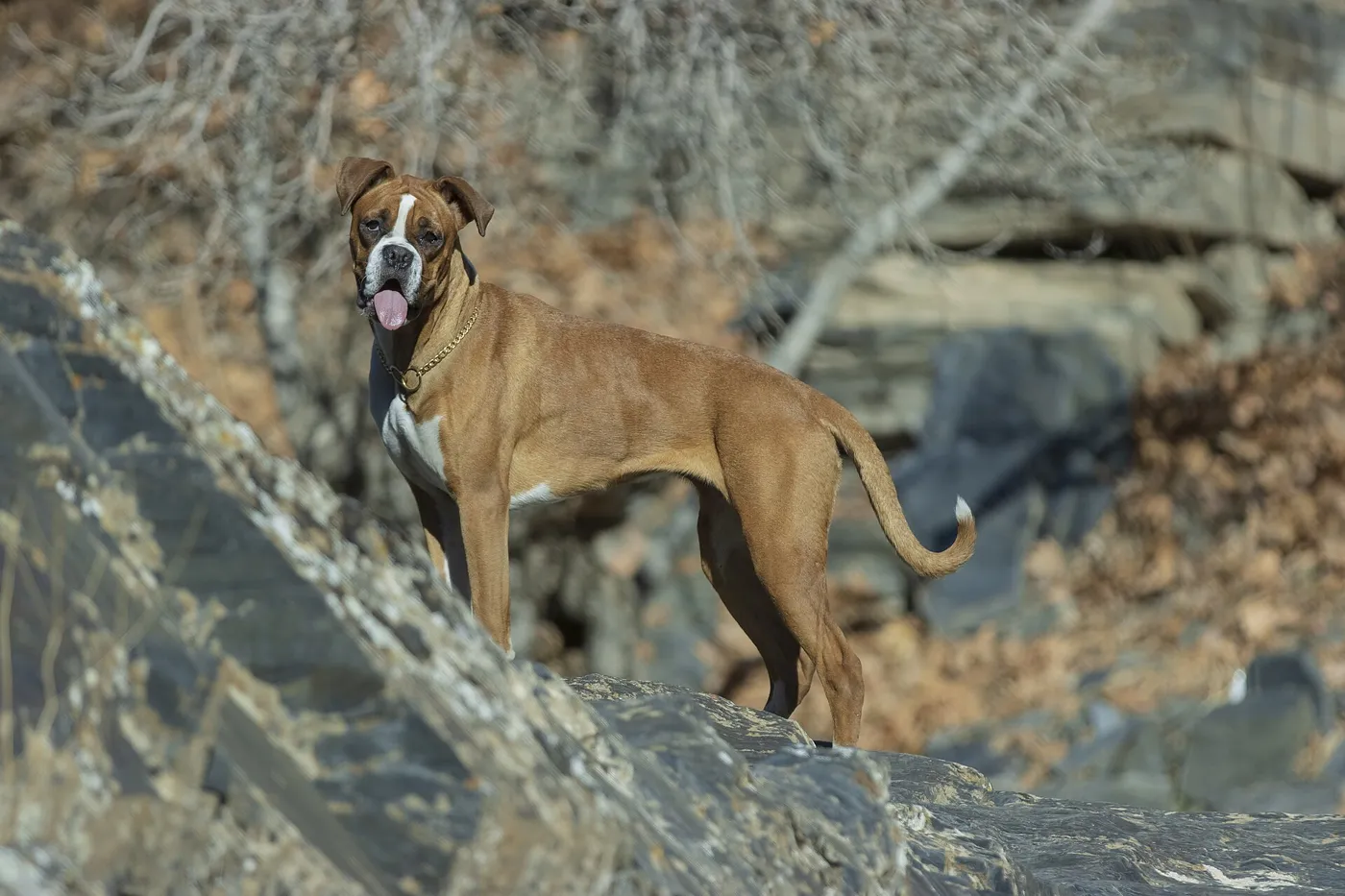

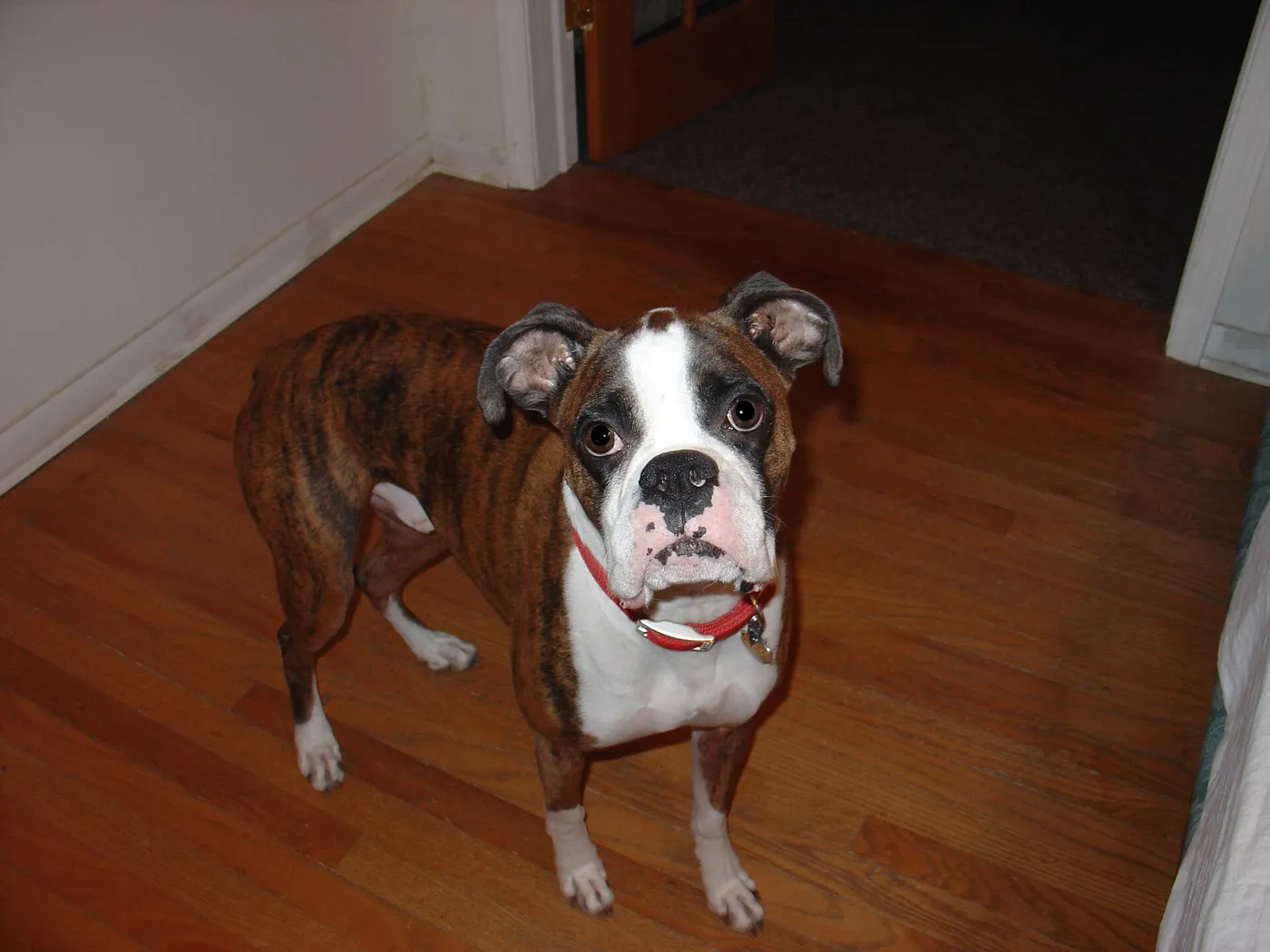

Photos show different individual dogs from licensed libraries, not one dog growing up. Stage labels are approximate, the way a careful editor would judge them.
About the Boxer
Boxers are exuberant, muscular clowns that stay playful well into middle age. They are devoted family guardians, patient with children and famously expressive. Young Boxers need plenty of exercise and firm, kind training to channel their bounce.
History
The Boxer was developed in Germany in the late 1800s from the Bullenbeisser, a hunting dog used on large game, crossed with bulldog type dogs. It worked as a messenger and pack dog in the First World War.
Personality
The Boxer never entirely grows up, and that is the point of the breed. Playfulness, curiosity and physical humour run through its whole life: Boxers kidney bean in circles when delighted, talk in woofs and sighs and use their paws like hands. Underneath the clown is a devoted, watchful guardian that takes family security seriously and reads its people's moods shrewdly. Young Boxers are a force of nature, all bounce and muscle, and need kind, firm channeling. Adults keep the humour and add steadiness. Few breeds combine protection, patience with children and sheer joy as completely, which is why Boxer owners rarely switch breeds.
Temperament and traits
Energy (5/5)
Trainability (4/5)
Grooming needs (2/5)
Shedding (3/5)
Barking (3/5)
Good with children: Good with children
With other dogs: Usually good with dogs
With strangers: Friendly but watchful
Apartment life: With enough exercise
Coat and care
Coat: Short, smooth coat that lies close and shines with health.
Colors: Fawn and brindle, with or without white markings and a black mask.
The short coat is easy: a weekly rubdown with a grooming mitt. Protect the breed from heat, since the short muzzle makes cooling harder, and feed measured meals to keep the athletic outline.
Exercise and grooming
Exercise
Sixty to ninety minutes a day, mixing walks, free running and play, keeps a young Boxer civilised. The breed is an athlete with a comedian's energy management: intense outbursts followed by total collapse. Respect the short muzzle in heat: Boxers cool themselves poorly compared with long nosed breeds, so summer exercise belongs to the cool hours, with water and shade, and flat out exercise on hot days is genuinely dangerous. Puppies need the heavy breed rules: no forced running, minimal repetitive jumping and measured growth. Many Boxers love swimming, though the short face means supervision and a life jacket in deep water are wise.
Grooming
The short, close coat is one of the easiest in the dog world: a weekly rubdown with a grooming mitt removes loose hair, brings up the shine and doubles as a health check for lumps, which matter in this breed. Shedding is moderate and year round. Baths are occasional. Keep nails trimmed, teeth brushed and ears checked in the weekly session, and clean the skin creases on the face if your dog has deeper wrinkles. Drool after drinking is normal; keep a hand towel in Boxer territory. The grooming simplicity is a genuine counterweight to the breed's exercise and training demands.
Training and daily life
Training
Boxers are bright and learn quickly, but they bore under drilling and clown when they think they can get a laugh instead of a reward. Keep sessions short, varied and genuinely rewarding, and train in many short bursts through the day. The core projects are jumping up (this breed greets with its whole body), lead manners before the muscle arrives, recall around other dogs and settling indoors. Boxers are sensitive to tone and unfairness; harsh methods produce a shut down or defiant dog, while clear, consistent, good humoured handling produces the famous companion. Adolescence is long, so plan training as a two to three year project, not a six week course.
Living with a Boxer
A Boxer fills a house: with noise in youth, with hair less than most, and with physical comedy at all ages. They are famously patient with children and make devoted family guardians, friendly but watchful with visitors once the doorbell frenzy is managed. Flats can work if the exercise is truly delivered, because indoors a tired Boxer is a settled one, but stairs and hot weather need thought. They bond intensely and dislike long hours alone. Other dogs are usually enjoyed, especially with early socialisation. Owners should accept the long puppyhood, the strength on the lead and the vet vigilance the breed's health profile asks for, in exchange for one of the most entertaining family dogs alive.
What a Boxer costs
Food cost
About $40 per month for a typical 65 lb adult eating roughly 3.7 cups a day of a standard quality food ($1.60 per lb). Full breakdown in our food expense calculator.
Activity and exercise
Plan 60 to 90 minutes a day of walks, play and training. Under exercised dogs of most breeds invent their own projects, and they rarely pick good ones.
Insurance cost
Typical US range $48 to $85 per month for accident and illness cover. Estimate only, based on market ranges for this breed's risk profile; see the insurance estimator and the insurance guide.
On the monthly figures above, a typical adult year runs to about $479 for food and $576 to $1,020 for insurance, before routine vet care, grooming and gear. Year one costs more: vaccinations, spay or neuter surgery, a crate, bedding and training all land at once.
Growth: puppy to senior
How weight typically builds with age for a large breed, and when full size arrives.
| Stage | Age | Typical weight |
|---|---|---|
| Puppy | 8 weeks | about 6 to 10 lb |
| Puppy | 4 months | about 14 to 22 lb |
| Puppy | 6 months | about 24 to 38 lb |
| Young | 9 months | about 34 to 54 lb |
| Young | 12 months | about 41 to 66 lb |
| Adult | 18 months | about 48 to 76 lb |
| Adult | 24 months | about 50 to 80 lb |
| Adult | Full grown | 50 to 80 lb (standard range) |
| Senior | From about 7 years | Healthy weight stays in the adult range; watch for slow gain or loss |
Growth pattern follows the size class growth curves published by the Waltham Petcare Science Institute, applied to the adult weight range in the breed standard. Individual puppies vary; steady growth matters more than hitting any single number, and your vet's growth checks come first.
Life stages
Boxer puppies are bold, mouthy and accident prone; socialise widely, teach bite inhibition and start lead manners before the strength arrives. Growth continues into the second year, so feed for a lean athlete and protect joints from repetitive jumping. Adults reach their prime around three, once the long adolescence ends, and the middle years are for enjoying the dog while keeping up monthly lump checks and an annual heart conversation with your vet. From about seven, treat the dog as senior: shorter, more frequent exercise, weight vigilance, arthritis care and twice yearly checks. Boxers often stay playful to the last year, which makes the goodbyes especially hard.
Health
Cancer, heart conditions (aortic stenosis and Boxer cardiomyopathy), hip dysplasia and hypothyroidism lead the list. Choose breeders who heart test with Holter monitoring and screen hips.
Conditions to know about
- Cancer: Boxers are one of the more cancer prone breeds, with skin tumours, lymphoma and brain tumours all featuring. Many skin lumps are harmless, but in a Boxer every new lump deserves a prompt vet check and testing rather than watching.
- Aortic stenosis: A narrowing at the heart's outlet present from birth. Breeders should have hearts examined and graded, ideally with specialist assessment, and puppies with murmurs need follow up through growth.
- Boxer cardiomyopathy: An electrical disease of the heart muscle, formally called arrhythmogenic right ventricular cardiomyopathy, that can cause fainting and sudden death. Annual 24 hour Holter monitoring is the screening standard for breeding dogs.
- Hip dysplasia: Boxers are hip scored in responsible programmes. Keeping the dog at an athletic weight and building exercise gradually in youth protects the joints for the active life the breed wants.
- Hypothyroidism: An underactive thyroid is relatively common in middle aged Boxers, showing as weight gain, lethargy and coat thinning. Blood tests confirm it and daily medication controls it well.
Facts follow the Boxer breed standard (AKC, The Kennel Club and FCI standards agree on the essentials for this breed). Health notes summarize the conditions breed clubs and veterinary bodies most often flag for this breed. They are general information for choosing and caring, not a diagnosis or a substitute for your vet.
Gear for Boxer owners
Our team is hands on testing products for this guide right now. Recommendations will only appear here after real testing, and this module will always carry a plain affiliate disclosure at the top.
Boxer questions
How long do Boxers live?
A typical lifespan is 10 to 12 years. Weight control, dental care and screening for the breed's known conditions give a dog the best chance of reaching the top of that range.
How much does it cost to keep a Boxer?
Food for a typical adult runs about $40 a month at a standard quality tier, and accident and illness insurance usually falls between $48 and $85 a month in the US. Try the full cost calculator for a complete year one and yearly picture.
Are Boxers good with children?
Good with children. As with every breed, supervise dogs and children together and teach children to respect the dog's space.
How much exercise does a Boxer need?
Plan on 60 to 90 minutes a day, split between walks, play and training games. Puppies and seniors need gentler, shorter sessions.
Why are Boxers called Boxers?
The favourite explanation is the breed's habit of standing on its hind legs and batting with its front paws when playing or sparring, like a boxer with gloves. The gesture is part of the breed's physical, playful style.
Do Boxers drool much?
Some do, especially after drinking and when food is anticipated. It is moderate rather than Saint Bernard level, but expect slobber on trousers at dinner parties unless manners are trained.
When do Boxers calm down?
Later than most breeds. Many Boxers keep a puppyish intensity until around three years old. Daily exercise, training and maturity eventually produce the steady family dog, but owners should sign up for the long adolescence knowingly.