Home / Breeds / Border Terrier
Border Terrier
Confident, funny, determined and loyal. From United Kingdom.
Terriersmall breedUnited KingdomStandards checked
Standards checked: this profile's facts are checked against the breed standards of the AKC, The Kennel Club and the FCI, as described on our methodology page.
Gallery
Real photos from licensed sources only, each credited to its creator.


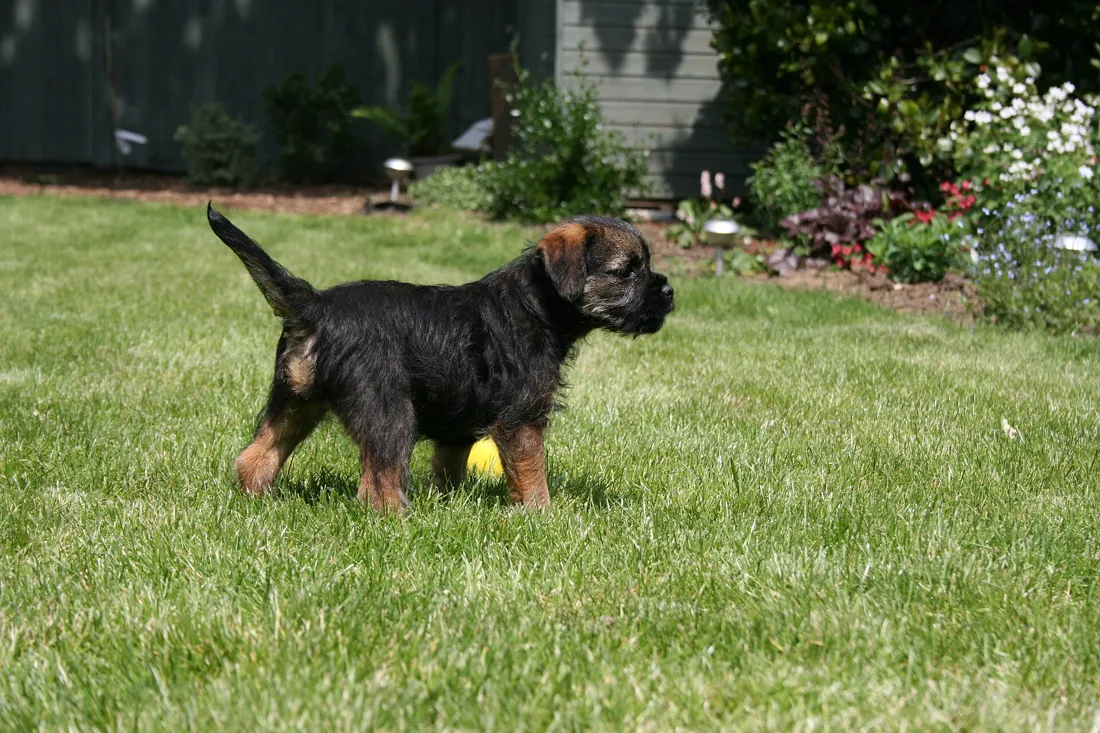

Photos show different individual dogs from licensed libraries, not one dog growing up. Stage labels are approximate, the way a careful editor would judge them.
About the Border Terrier
United Kingdom produced the Border Terrier, a small terrier bred to hunt vermin above and below ground, from rats in the barn to foxes and badgers in the earth. A terrier's day is a series of projects. Provide the projects (digging pit, tug, scent games) or the garden provides them.
History
The adult stands 10 to 11 in at the shoulder and weighs 12 to 16 lb. The Border Terrier was shaped in the United Kingdom as a terrier, kept to hunt vermin above and below ground, from rats in the barn to foxes and badgers in the earth. Today the breed sits in the AKC lists, and American breeders work to its published standard. Harsh and dense; with close undercoat.
Personality
Confident, funny, determined and loyal, with a steadier, more sociable streak than most of the terrier family: the Border was bred in the Cheviot Hills to run with the hounds and bolt foxes, which made a terrier that works with other dogs, covers country like a small horse and still has the go to ground courage. Borders are affectionate without being needy, busy without being frantic and famously good company. Puppies are sturdy little otters; adults are cheerful, sensible workers with a dry humour. Owners describe the least terrierish terrier, right up until a fox shaped opportunity appears and the heritage reports for duty.
Temperament and traits
Energy (4/5)
Trainability (3/5)
Grooming needs (3/5)
Shedding (4/5)
Barking (4/5)
Good with children: Better with older children
With other dogs: With early socialization
With strangers: Friendly with strangers
Apartment life: With enough exercise
Coat and care
Coat: Harsh and dense; with close undercoat.
Colors: Standard colors: red, wheaten, grizzle and tan, or blue and tan.
Measure meals rather than free feeding; this breed does best on a routine of consistent meals, training in short sessions and daily exercise matched to its type. Weekly brushing keeps the coat healthy, with extra work when the undercoat sheds in spring and autumn. The typical terrier coat needs stripping or clipping depending on type, and the teeth of small terriers need real dental attention.
Exercise and grooming
Exercise
Forty five to ninety minutes a day of proper terrier exercise: brisk walks, free running in secure areas, games and projects. The Border was bred to run with foxhounds all day and then go to ground, which produced a small dog with unusual stamina and legs long enough to keep up with horses. Recall needs the terrier honest management around wildlife. Puppies play in bursts. Projects are the breed's contract: provide digging, tug and scent games or the garden provides them. A worked Border is one of the most sensible, cheerful small dogs in the house; an idle one is a busy landscaper with a commentary habit.
Grooming
Weekly brushing keeps the harsh, dense coat healthy, with extra work when the undercoat sheds in spring and autumn, per the care notes. The classic Border jacket is hand stripped twice a year to keep the weatherproof, wiry texture; clipping softens it and loses the otter like harshness that shrugs off weather and dirt. The close undercoat combs out in season. Add the small terrier dental rule from the care notes, since terrier teeth need real dental attention, plus nail trims and ear checks. Overall the Border is one of the most wash and wear terriers, a working jacket for a working dog.
Training and daily life
Training
Borders are bright, willing terriers that train well with the family method: ask clearly once, reward well, keep sessions short and varied. Their pack history makes them more biddable than most terriers, and many excel at agility, flyball and earthdog. The priorities are recall, managed honestly around game; lead manners; a settle; polite dog behaviour, which comes naturally with early socialisation; and cooperative care. Harsh methods produce the classic terrier shutdown. Owners who work with the breed's good nature get a sharp, versatile little partner that converts many terrier sceptics.
Living with a Border Terrier
The Border suits active households wanting a hardy, sociable terrier with real stamina and a sensible streak. Confident and funny, friendly with strangers, better with older children in the record's rating, and dog social with early work (Borders historically ran with hound packs), it rates flats as possible in the record with the full exercise delivered. Expect digging interests, wildlife opinions and devoted companionship. The Border Terrier is the terrier for people who actually want to do things with a terrier: running, hiking, working and then sharing the sofa with a dog that has earned its rest as honestly as you have.
What a Border Terrier costs
Food cost
About $13 per month for a typical 14 lb adult eating roughly 1.2 cups a day of a standard quality food ($1.60 per lb). Full breakdown in our food expense calculator.
Activity and exercise
Plan 45 to 90 minutes a day of walks, play and training. Under exercised dogs of most breeds invent their own projects, and they rarely pick good ones.
Insurance cost
Typical US range $29 to $54 per month for accident and illness cover. Estimate only, based on market ranges for this breed's risk profile; see the insurance estimator and the insurance guide.
On the monthly figures above, a typical adult year runs to about $151 for food and $348 to $648 for insurance, before routine vet care, grooming and gear. Year one costs more: vaccinations, spay or neuter surgery, a crate, bedding and training all land at once.
Growth: puppy to senior
How weight typically builds with age for a small breed, and when full size arrives.
| Stage | Age | Typical weight |
|---|---|---|
| Puppy | 8 weeks | about 2 to 3 lb |
| Puppy | 4 months | about 5 to 6 lb |
| Young | 6 months | about 7 to 9 lb |
| Young | 9 months | about 9 to 12 lb |
| Adult | 12 months | about 11 to 15 lb |
| Adult | Full grown | 12 to 16 lb (standard range) |
| Senior | From about 10 years | Healthy weight stays in the adult range; watch for slow gain or loss |
Growth pattern follows the size class growth curves published by the Waltham Petcare Science Institute, applied to the adult weight range in the breed standard. Individual puppies vary; steady growth matters more than hitting any single number, and your vet's growth checks come first.
Life stages
Puppies need socialisation, handling for teeth and grooming, digging outlets and housetraining routine. Adolescents are athletic and keen, and sport plus consistency carries the household through. Adults enjoy a long, vigorous prime: keep weight lean, coat stripped on schedule and teeth maintained. Twelve to fourteen years puts senior status around ten: twice yearly checks with hip and eye awareness, continued rambles at a kinder pace and warm beds. Old Borders stay cheerful, sensible and involved, usually keeping the otter head tilt and the commentary to the end.
Health
Canine epileptoid cramping syndrome (Spike's disease) is the breed's modern flag, alongside hip screening and eye checks. Generally one of the healthiest terriers. Ask to see health test results for both parents before you commit to a puppy; a good breeder will offer them before you ask.
Conditions to know about
- Canine epileptoid cramping syndrome (Spike's disease): The breed's modern flag, named directly in the record: episodes of cramping and trembling in a conscious dog, often linked with gut sensitivity. Episodes should be videoed and discussed with a vet, and breeders track it in their lines.
- Hip dysplasia: Hip screening runs alongside the CECS awareness in responsible breeding. Ask for scores in writing even in a small dog; sound hips power a leggy, hard running terrier.
- Eye conditions: Eye checks complete the named panel in the record. Ask for current results for both parents and raise any vision change promptly.
- One of the healthiest terriers: The record's verdict: generally one of the healthiest terriers. Working selection and moderate type keep the breed sound, which is a credit to breeders who still run the checks.
Facts follow the Border Terrier breed standard (AKC, The Kennel Club and FCI standards agree on the essentials for this breed). Health notes summarize the conditions breed clubs and veterinary bodies most often flag for this breed. They are general information for choosing and caring, not a diagnosis or a substitute for your vet.
Gear for Border Terrier owners
Our team is hands on testing products for this guide right now. Recommendations will only appear here after real testing, and this module will always carry a plain affiliate disclosure at the top.
Border Terrier questions
How long do Border Terriers live?
A typical lifespan is 12 to 14 years. Weight control, dental care and screening for the breed's known conditions give a dog the best chance of reaching the top of that range.
How much does it cost to keep a Border Terrier?
Food for a typical adult runs about $13 a month at a standard quality tier, and accident and illness insurance usually falls between $29 and $54 a month in the US. Try the full cost calculator for a complete year one and yearly picture.
Are Border Terriers good with children?
Better with older children. As with every breed, supervise dogs and children together and teach children to respect the dog's space.
How much exercise does a Border Terrier need?
Plan on 45 to 90 minutes a day, split between walks, play and training games. Puppies and seniors need gentler, shorter sessions.
Are Border Terriers calmer than other terriers?
They have that reputation honestly earned: bred to run with hounds and work with other dogs, Borders are generally more sociable and steadier than many terriers, while keeping the full terrier sparkle and stubbornness in reserve.
Do Border Terriers shed?
Yes, seasonally and steadily, though the harsh coat holds much of it until brushed or stripped out. Hand stripping twice a year keeps the weatherproof jacket and minimises house hair.
Can a Border Terrier live with cats?
Raised with cats, many do. The hunting instinct is real, though, so introductions are supervised and strange cats outdoors remain game in the Border's view.
Breeds similar to the Border Terrier Compare this breed with another