Bernedoodle
Gentle, goofy, loyal and calm indoors. From United States (Bernese Mountain Dog x Poodle).
Designer Crosslarge breedUnited States (Bernese Mountain Dog x Poodle)Standards checked
Standards checked: this profile's facts are checked against the breed standards of the AKC, The Kennel Club and the FCI, as described on our methodology page.
Gallery
Real photos from licensed sources only, each credited to its creator.


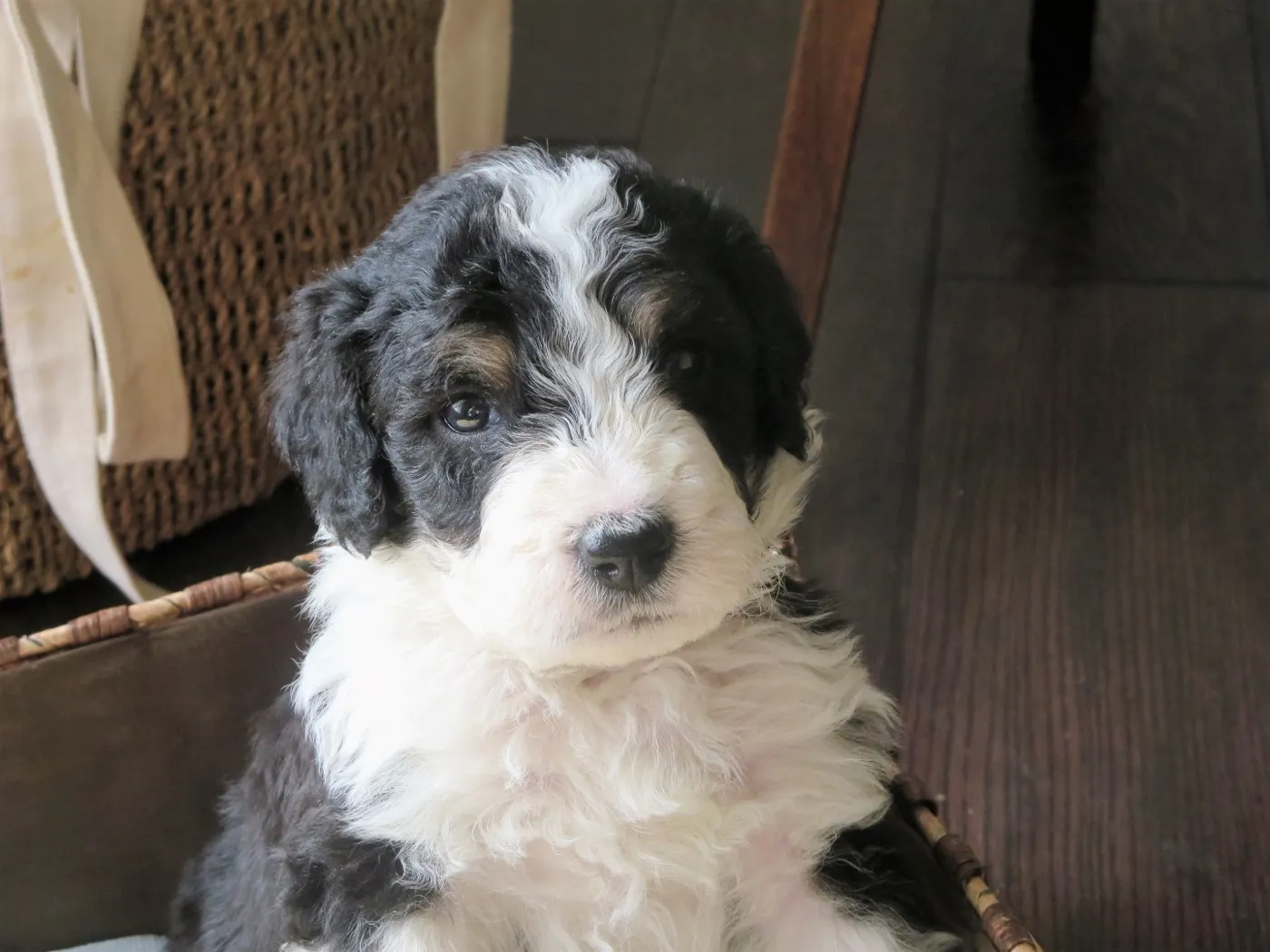


Photos show different individual dogs from licensed libraries, not one dog growing up. Stage labels are approximate, the way a careful editor would judge them.
About the Bernedoodle
The Bernedoodle aims to keep the Bernese Mountain Dog's gentle, family first nature in a longer lived, lighter shedding package. Standard Bernedoodles are big, clownish and affectionate; miniatures are common too. How much a puppy takes after each parent varies, especially coat and lifespan.
History
The cross was first bred deliberately in 2003 in Canada, making it one of the newer doodles. Breeders hoped the Poodle side would extend the Bernese's sadly short life.
Personality
Gentle, goofy, loyal and calm indoors is the record's Bernedoodle: the cross of Bernese Mountain Dog and Standard Poodle, first bred deliberately in 2003 in Canada, aiming to keep the Bernese's gentle, family first nature in a longer lived, lighter shedding package. Bernedoodles are affectionate, clownish and deeply devoted, calmer than most doodles thanks to the Bernese temperament, with the Poodle's intelligence underneath. Puppies are big, bright charmers in the prized tricolour; adults are devoted, gentle giants. Owners describe the cross's appeal exactly: a Bernese personality with a Poodle overcoat, bred for families who want both.
Temperament and traits
Energy (3/5)
Trainability (4/5)
Grooming needs (5/5)
Shedding (2/5)
Barking (3/5)
Good with children: Good with children
With other dogs: Good with dogs
With strangers: Friendly with strangers
Apartment life: With enough exercise
Coat and care
Coat: Wavy or curly coat, usually low shedding; straighter coats shed more.
Colors: Most prized in Bernese style tricolor: black, white and rust. Also bicolor and sable.
Brush several times a week and clip every couple of months. Feed a large breed puppy food and keep growth slow and steady to protect joints.
Exercise and grooming
Exercise
Forty five to seventy five minutes a day of gentle big dog exercise: the Bernedoodle crosses the Bernese Mountain Dog with the Standard Poodle to keep the Bernese's gentle, family first nature in a longer lived, lighter shedding package, per the overview. Brisk walks, play, swimming and training fill the programme, at the Bernese's calm tempo rather than the Poodle's athletic one. Feed a large breed puppy food and keep growth slow and steady to protect joints, per the care notes. Standard Bernedoodles are big, clownish and affectionate, per the overview. Puppies build up gradually on a large frame. A worked Bernedoodle is the record's portrait: gentle, goofy, loyal and calm indoors.
Grooming
Brush several times a week and clip every couple of months, exactly as the care notes direct for the wavy or curly coat: brush right down to the skin in sections, because the record's grooming score is the top of this site's scale and an unbrushed doodle coat felts fast. Straighter coats shed more, per the coat notes, so ask the breeder which coat a puppy is likely to grow. Ears take regular checks, nails need trims and teeth benefit from brushing. Puppies need grooming habituation from the first weeks; an 80 pound dog that fights the brush is a household project. Owners budget groomer appointments as a fixed cost of the breed.
Training and daily life
Training
With a strong train score, the Bernedoodle is an excellent, willing pupil: intelligent from the Poodle side, eager to please from the Bernese, learning household skills, tricks and therapy style work readily under kind, consistent, reward based training. Priorities are socialisation, lead manners before the strength arrives, a settle, recall, and cooperative grooming for a coat that needs lifelong handling. Short, cheerful sessions suit a gentle dog. Owners describe one of the most rewarding family training partnerships among the doodles.
Living with a Bernedoodle
The Bernedoodle suits devoted families with space and a grooming budget that want a gentle giant with a doodle coat: gentle, goofy, loyal and calm indoors in the record's words, good with children, good with other dogs and friendly with strangers, it rates flats as possible with the full programme delivered at standard size only for committed city dwellers (miniatures are common too, per the overview). How much a puppy takes after each parent varies, per the overview, especially coat and lifespan. Owners describe the cross at its best: the Bernese heart and humour in a coat that sheds less and, with luck and testing, a longer lease of life.
What a Bernedoodle costs
Food cost
About $47 per month for a typical 80 lb adult eating roughly 4.4 cups a day of a standard quality food ($1.60 per lb). Full breakdown in our food expense calculator.
Activity and exercise
Plan 45 to 75 minutes a day of walks, play and training. Under exercised dogs of most breeds invent their own projects, and they rarely pick good ones.
Insurance cost
Typical US range $40 to $70 per month for accident and illness cover. Estimate only, based on market ranges for this breed's risk profile; see the insurance estimator and the insurance guide.
On the monthly figures above, a typical adult year runs to about $560 for food and $480 to $840 for insurance, before routine vet care, grooming and gear. Year one costs more: vaccinations, spay or neuter surgery, a crate, bedding and training all land at once.
Growth: puppy to senior
How weight typically builds with age for a large breed, and when full size arrives.
| Stage | Age | Typical weight |
|---|---|---|
| Puppy | 8 weeks | about 8 to 11 lb |
| Puppy | 4 months | about 20 to 25 lb |
| Puppy | 6 months | about 34 to 43 lb |
| Young | 9 months | about 48 to 61 lb |
| Young | 12 months | about 57 to 74 lb |
| Adult | 18 months | about 66 to 86 lb |
| Adult | 24 months | about 70 to 90 lb |
| Adult | Full grown | 70 to 90 lb (standard range) |
| Senior | From about 7 years | Healthy weight stays in the adult range; watch for slow gain or loss |
Growth pattern follows the size class growth curves published by the Waltham Petcare Science Institute, applied to the adult weight range in the breed standard. Individual puppies vary; steady growth matters more than hitting any single number, and your vet's growth checks come first.
Life stages
Puppies need socialisation, grooming habituation from the first weeks, and the large breed growth protocol: large breed puppy food, slow steady growth to protect joints, per the care notes, and gradual exercise building. Adolescents are big, goofy and strong, and structured training carries the household through. Adults enjoy a prime the cross hopes runs twelve to fifteen years: keep weight lean, coat brushed to the skin and clipping appointments kept. Senior status arrives around nine to ten: twice yearly checks with joint awareness, ramps for vehicles and continued gentle walks. Old Bernedoodles stay gentle, goofy and devoted.
Health
Ask for hip, elbow, eye and von Willebrand testing, plus DNA panels. The Bernese side brings cancer risk, and no cross can guarantee a longer life, only improve the odds.
Conditions to know about
- Conditions from either parent (governing rule): A Bernedoodle can inherit conditions from either parent breed, the rule this site applies to every designer cross: ask for the Bernese panel and the Poodle panel both, in writing, not a general vet checked claim.
- Hip and elbow dysplasia: Ask for hip and elbow testing, per the record: both parent breeds are screened for joints, and at 70 to 90 pounds the results matter. Ask to see both parents' scores.
- Cancer risk (Bernese side): The Bernese side brings cancer risk, in the record's honest words. Ask about the Bernese parent's family history and ages; longevity in the pedigree is real information.
- von Willebrand disease and eye conditions (Poodle side): Ask for von Willebrand testing plus eye checks and DNA panels, per the record. A good cross breeder tests both parents for their own breeds' panels.
This is a designer cross, not a kennel club breed, so there is no official standard. Figures follow the parent breeds and reputable breeder consensus. Health notes summarize the conditions breed clubs and veterinary bodies most often flag for this breed. They are general information for choosing and caring, not a diagnosis or a substitute for your vet.
Gear for Bernedoodle owners
Our team is hands on testing products for this guide right now. Recommendations will only appear here after real testing, and this module will always carry a plain affiliate disclosure at the top.
Bernedoodle questions
How long do Bernedoodles live?
A typical lifespan is 12 to 15 years. Weight control, dental care and screening for the breed's known conditions give a dog the best chance of reaching the top of that range.
How much does it cost to keep a Bernedoodle?
Food for a typical adult runs about $47 a month at a standard quality tier, and accident and illness insurance usually falls between $40 and $70 a month in the US. Try the full cost calculator for a complete year one and yearly picture.
Are Bernedoodles good with children?
Good with children. As with every breed, supervise dogs and children together and teach children to respect the dog's space.
How much exercise does a Bernedoodle need?
Plan on 45 to 75 minutes a day, split between walks, play and training games. Puppies and seniors need gentler, shorter sessions.
Bernedoodle or Goldendoodle, what is the difference?
The two big doodles: the Bernedoodle takes the Bernese's calm, devoted, slower tempo and (ideally) its tricolour. The Goldendoodle takes the Golden Retriever's sunnier, busier sociability. Both need the same serious coat and health test diligence.
Do Bernedoodles really live longer than Bernese Mountain Dogs?
That is the cross's founding hope (first bred deliberately in 2003 in Canada, per the history): the Poodle side was expected to extend the Bernese's short life. This record lists twelve to fifteen years, but the health notes are honest: no cross can guarantee a longer life, only improve the odds.
Are Bernedoodles good apartment dogs?
The standard dog at 70 to 90 pounds is a lot of dog for a flat, though its calm indoor nature helps; miniatures suit flats better. The exercise and coat work are the real conditions at any size.