Basset Hound
Calm, sociable, musical and single minded on a trail. From France.
Houndlarge breedFranceStandards checked
Standards checked: this profile's facts are checked against the breed standards of the AKC, The Kennel Club and the FCI, as described on our methodology page.
Gallery
Real photos from licensed sources only, each credited to its creator.


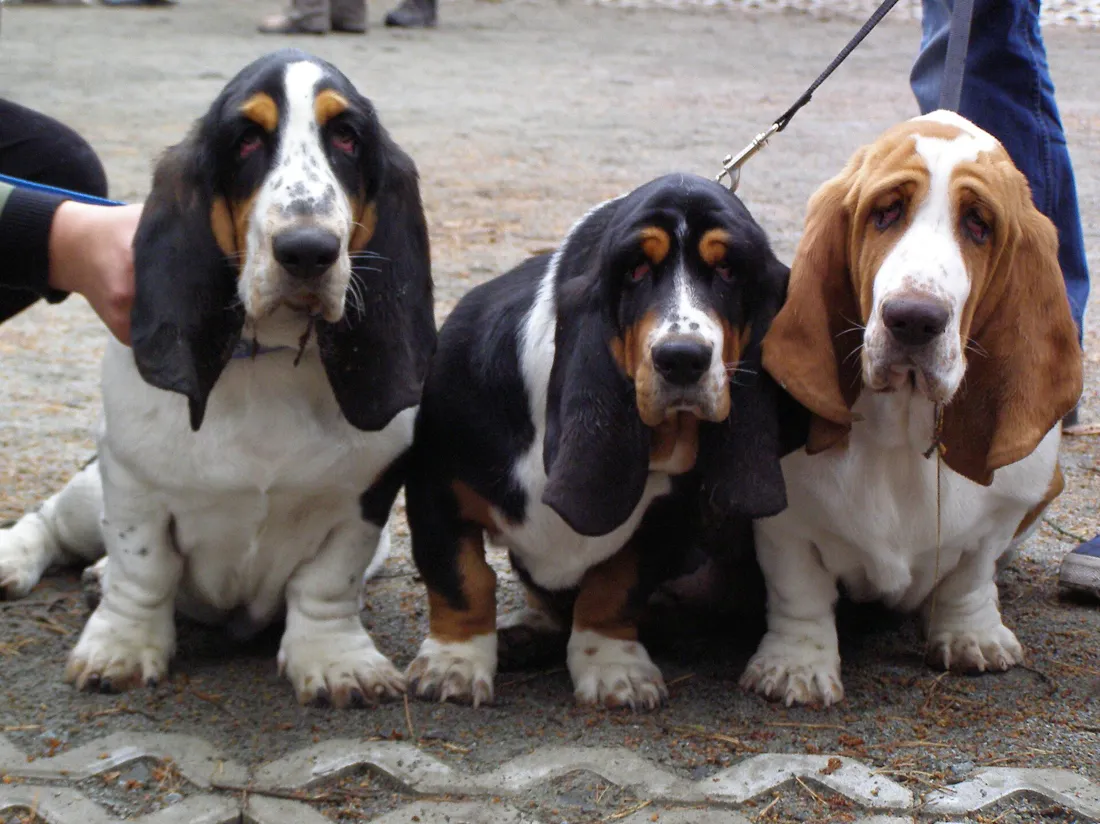

Photos show different individual dogs from licensed libraries, not one dog growing up. Stage labels are approximate, the way a careful editor would judge them.
About the Basset Hound
France produced the Basset Hound, a large scent hound bred to follow scent trails for hours, on game from rabbits to boar, baying so hunters can follow. The nose is in charge outdoors and the stomach indoors: this breed needs scent games, steady training and strict portion control.
History
The Basset Hound is a large scent hound from France. Smooth, short and close. The AKC recognizes the breed today, and its standard is the reference most US breeders work to. A typical life runs 10 to 12 years.
Personality
The Basset Hound is a study in contrasts: a solemn, almost mournful face over one of the dog world's most sociable and comical characters. Bassets are calm, steady and famously stubborn, with a single minded streak that belongs to a dog bred to follow scent for hours without human direction. Indoors, the stomach rules and the nose shops; outdoors, the nose rules entirely and the ears trail behind. They are pack dogs at heart, gentle with children, friendly with dogs and devoted to their people in an undemonstrative, always nearby way. The voice, a deep, musical bay, is used with feeling. Owners describe Bassets as living with a cheerful, immovable piece of furniture that occasionally sings.
Temperament and traits
Energy (5/5)
Trainability (3/5)
Grooming needs (2/5)
Shedding (3/5)
Barking (4/5)
Good with children: Good with children
With other dogs: Good with dogs
With strangers: Friendly with strangers
Apartment life: Not ideal
Coat and care
Coat: Smooth, short and close.
Colors: Standard colors: generally black, white and tan (tri-color) or tan/lemon and white (bi-color).
Feed to a visible waist tuck and weigh monthly; this breed does best on a routine of consistent meals, training in short sessions and daily exercise matched to its type. The easiest coat in dogs: a weekly brush with a rubber mitt and the occasional bath. Long ears drag through everything and need weekly cleaning. Weight creeps up silently in this food loving type, so weigh monthly.
Exercise and grooming
Exercise
Forty to sixty minutes a day of steady, sniff heavy walking is the Basset pattern, and the emphasis is steady: this breed was built to trail scent for hours at low speed, not to sprint. Two unhurried walks with plenty of sniffing time, plus scent games at home, satisfy the body and the famous nose. Puppies and the long back set the limits: no stair climbing routines, no jumping from cars or furniture and no forced endurance while the skeleton grows. Keep the dog lean, because every extra pound loads the spine and the short legs, and weigh monthly, as the breed's care guidance insists. A fit Basset is a cheerful walker; a fat one is an orthopedic problem.
Grooming
The smooth, short coat is one of the easiest in the dog world: a weekly brush with a rubber mitt removes loose hair, and baths are occasional, though the breed's natural hound odor means bedding washes matter more than dog washes. The standing job is the ears: those magnificent long ears drag through food, water and mud and seal the canal from the air, so clean them weekly and after wet outings, and treat any odor or head shaking promptly. Nails need regular trimming because gentle walking wears them slowly, and the skin folds around the neck should stay dry. Drool management is a cloth by the water bowl.
Training and daily life
Training
Bassets are intelligent and learn perfectly well; they simply weigh every request against their own agenda, and food usually tips the scales. Training runs on excellent treats, patience and never letting the dog learn that ignoring you works. Priorities are recall (managed honestly with long lines outdoors, because scent beats voice), lead manners without dragging a dog built like a tank, housetraining with a consistent routine and comfort with ear cleaning and handling. Socialisation matters to keep the temperament as sociable as it should be. Sessions should be short and clearly worth the dog's while; repetition without reward produces a Basset statue.
Living with a Basset Hound
A Basset needs a house more than a flat, mainly for its back: stairs are the enemy, so ground floor living or a lift is close to essential, and cars need ramps. Within the family the breed is sociable, patient and famously good with children and other dogs, greeting strangers like old friends. The lifestyle notes are sound and scent: the bay carries, and the hound odor is part of the furniture. Food must be rationed by a strict human, because a Basset's pleading eyes have ended more diets than any breed alive. For owners who walk slowly, laugh easily and keep treats locked away, a Basset is a soulful, comic companion.
What a Basset Hound costs
Food cost
About $38 per month for a typical 60 lb adult eating roughly 3.5 cups a day of a standard quality food ($1.60 per lb). Full breakdown in our food expense calculator.
Activity and exercise
Plan 40 to 60 minutes a day of walks, play and training. Under exercised dogs of most breeds invent their own projects, and they rarely pick good ones.
Insurance cost
Typical US range $42 to $77 per month for accident and illness cover. Estimate only, based on market ranges for this breed's risk profile; see the insurance estimator and the insurance guide.
On the monthly figures above, a typical adult year runs to about $451 for food and $504 to $924 for insurance, before routine vet care, grooming and gear. Year one costs more: vaccinations, spay or neuter surgery, a crate, bedding and training all land at once.
Growth: puppy to senior
How weight typically builds with age for a large breed, and when full size arrives.
| Stage | Age | Typical weight |
|---|---|---|
| Puppy | 8 weeks | about 5 to 9 lb |
| Puppy | 4 months | about 13 to 21 lb |
| Puppy | 6 months | about 22 to 36 lb |
| Young | 9 months | about 31 to 51 lb |
| Young | 12 months | about 37 to 61 lb |
| Adult | 18 months | about 43 to 71 lb |
| Adult | 24 months | about 45 to 75 lb |
| Adult | Full grown | 45 to 75 lb (standard range) |
| Senior | From about 7 years | Healthy weight stays in the adult range; watch for slow gain or loss |
Growth pattern follows the size class growth curves published by the Waltham Petcare Science Institute, applied to the adult weight range in the breed standard. Individual puppies vary; steady growth matters more than hitting any single number, and your vet's growth checks come first.
Life stages
Puppies are the priority project: protect the spine with ramps, carried stair trips and no jumping while the skeleton grows, feed measured meals and start the monthly weigh in habit from the start. Socialise widely, because a 60 pound adult that plants itself and refuses to move is a logistics problem. Adults are in a long, steady prime, and the standing jobs are weight, ears and keeping the sniff walks daily. From around eight, seniors need spinal and joint care, shorter walks more often, twice yearly vet checks and continued portion discipline. Old Bassets keep their humour, their voice and their opinions about dinner to the end.
Health
The long back and short legs put strain on the spine, so keep weight lean and limit jumping. Long ears trap moisture and need regular checks for infection. Breeders should screen elbows and eyes, and test for thrombopathia.
Conditions to know about
- Spinal strain and back problems: The long back on short legs carries real strain, which is why the breed's guidance stresses lean weight, ramps instead of jumping and limited stairs. Sudden back pain, wobbliness or reluctance to move is always a same day vet problem.
- Ear infections: The breed's most predictable health cost: long ears trap moisture and debris over the canal. Weekly cleaning and prompt treatment of infections keeps most Bassets comfortable.
- Elbow dysplasia: Breeders should screen elbows in this heavy, short legged breed, because abnormal elbow development causes front leg pain and arthritis. Limping youngsters deserve X-rays, not just rest.
- Eye conditions: Eye screening is part of the breed's recommended testing, as inherited and structural eye problems occur, helped by the breed's loose eyelids. Red, weepy or cloudy eyes deserve prompt checks.
- Thrombopathia: An inherited platelet disorder specific to Bassets that stops blood clotting properly. A DNA test identifies it, and vets must know an affected dog's status before surgery.
Facts follow the Basset Hound breed standard (AKC, The Kennel Club and FCI standards agree on the essentials for this breed). Health notes summarize the conditions breed clubs and veterinary bodies most often flag for this breed. They are general information for choosing and caring, not a diagnosis or a substitute for your vet.
Gear for Basset Hound owners
Our team is hands on testing products for this guide right now. Recommendations will only appear here after real testing, and this module will always carry a plain affiliate disclosure at the top.
Basset Hound questions
How long do Basset Hounds live?
A typical lifespan is 10 to 12 years. Weight control, dental care and screening for the breed's known conditions give a dog the best chance of reaching the top of that range.
How much does it cost to keep a Basset Hound?
Food for a typical adult runs about $38 a month at a standard quality tier, and accident and illness insurance usually falls between $42 and $77 a month in the US. Try the full cost calculator for a complete year one and yearly picture.
Are Basset Hounds good with children?
Good with children. As with every breed, supervise dogs and children together and teach children to respect the dog's space.
How much exercise does a Basset Hound need?
Plan on 40 to 60 minutes a day, split between walks, play and training games. Puppies and seniors need gentler, shorter sessions.
Why does my Basset Hound ignore me on walks?
Because the nose outranks you outdoors. Bassets were bred to follow scent single mindedly for hours, and a dog on a trail is working, not being rude. Recall training helps at home and in gardens; on scent, a long line is the honest solution.
Do Basset Hounds drool and smell?
Many drool after drinking and eating, and the breed has a distinctive hound odour stronger than average. Regular ear cleaning, bedding washes and grooming keep it proportionate, but scent sensitive households should meet adults first.
Are Basset Hounds lazy?
They are economical, not lazy. A Basset that gets its sniff walks and games is content to rest grandly for hours, but this is still a working scent hound that needs daily outdoor time and nose work to stay happy and slim.
Breeds similar to the Basset Hound Compare this breed with another